All specifications in this guide are sourced from Rockdoor’s official Technical Manual (Revision 10.2) and the 2026 Brochure. We’ve added our own installer insights based on fitting over 2,000 Rockdoors since 2010. If anything has changed since publication, please let us know and we’ll update it.
Rockdoor has been manufacturing composite doors in Blackburn, Lancashire since 1996. In that time, they’ve built a reputation as the most security-focused composite door manufacturer in the UK — and having fitted over 2,000 of them across Derby, Nottingham and Leicester, we can confirm that reputation is earned.
This guide breaks down every component of a Rockdoor — what it’s made of, how it’s constructed, why it matters, and what we’ve observed fitting them day in, day out. Whether you’re comparing Rockdoor against other brands or just want to understand what you’re paying for, this is the most detailed breakdown you’ll find anywhere.
For pricing, see our Rockdoor prices page.
Rockdoor Technical Manual
Everything in this guide is sourced from Rockdoor’s official Technical Manual. If you’d prefer to read the manufacturer’s own document in full — covering min and max sizes, threshold options, outerframe dimensions, cill specifications and u-values — you can download it below.
We’ve expanded on the technical manual throughout this page with our own installer notes based on fitting over 2,000 Rockdoors since 2010.
Rockdoor Construction: What’s Inside the Door
Every Rockdoor is made to measure in Lancashire — not cut to size from a standard slab like most composite doors. This is a critical distinction. A made-to-measure door fits the opening precisely, which means better sealing, better security, and better long-term performance.
Here’s what goes into every single Rockdoor, layer by layer.
Door Slab Construction
3mm PVC-U skins — The external and internal faces of every Rockdoor are made from 3mm thick PVC-U. This is significantly thicker than the skins on most GRP composite doors (which are typically 1.5–2mm). The thicker skin resists impacts, scratches and cutting attempts far better than thinner alternatives. Both sides are foiled with a woodgrain texture (or the exclusive Dune horizontal texture on Dune models), which means no flaking or fading paint — a common problem on painted timber and cheaper composite doors.
High-density polyurethane (PU) foam core — The entire space between the skins is filled with high-density closed-cell polyurethane foam. This isn’t just insulation — it’s a structural component. Rockdoor states their core is 60% stronger than a standard composite door core. The closed-cell structure prevents moisture absorption and provides exceptional thermal performance. The sash is 50mm thick in total.
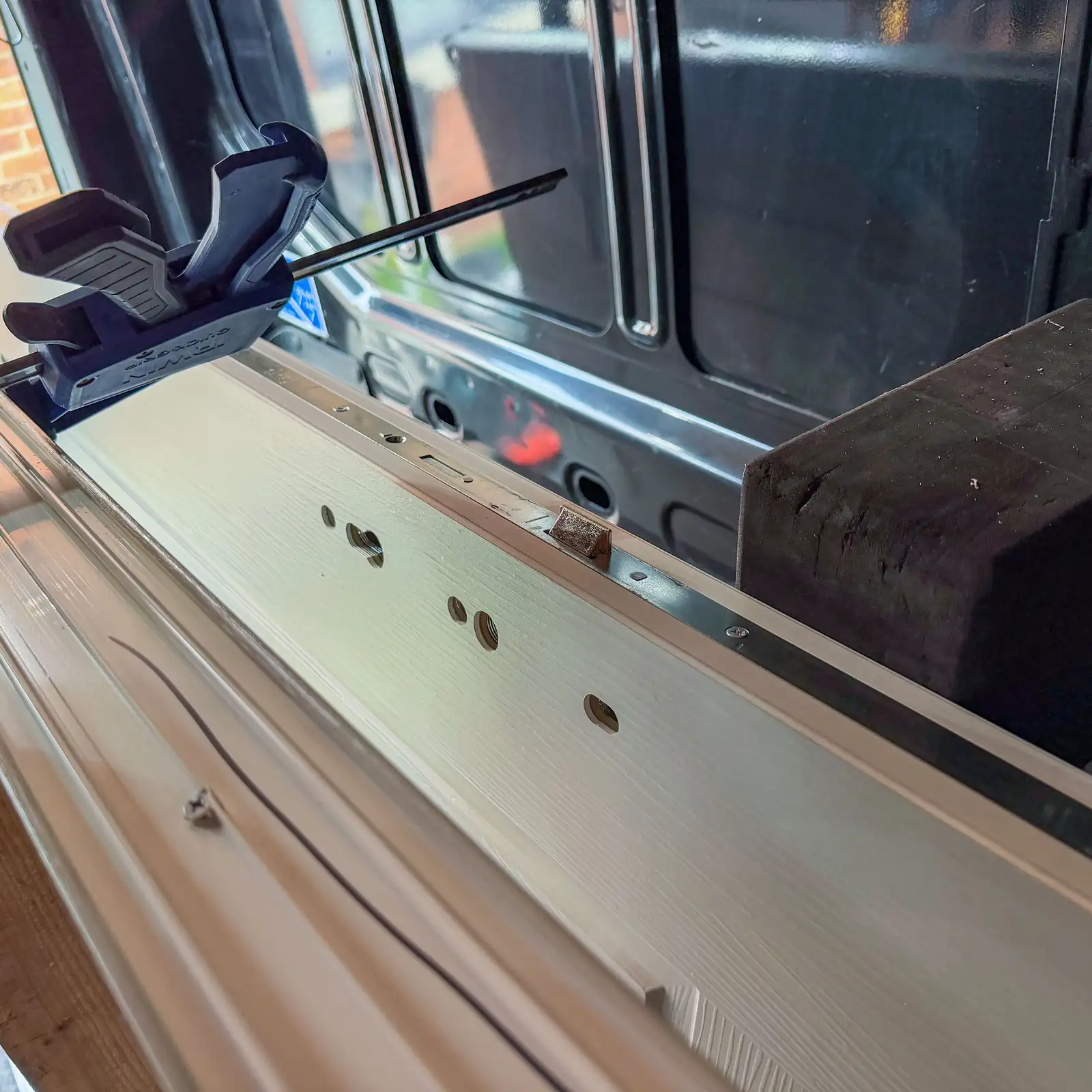
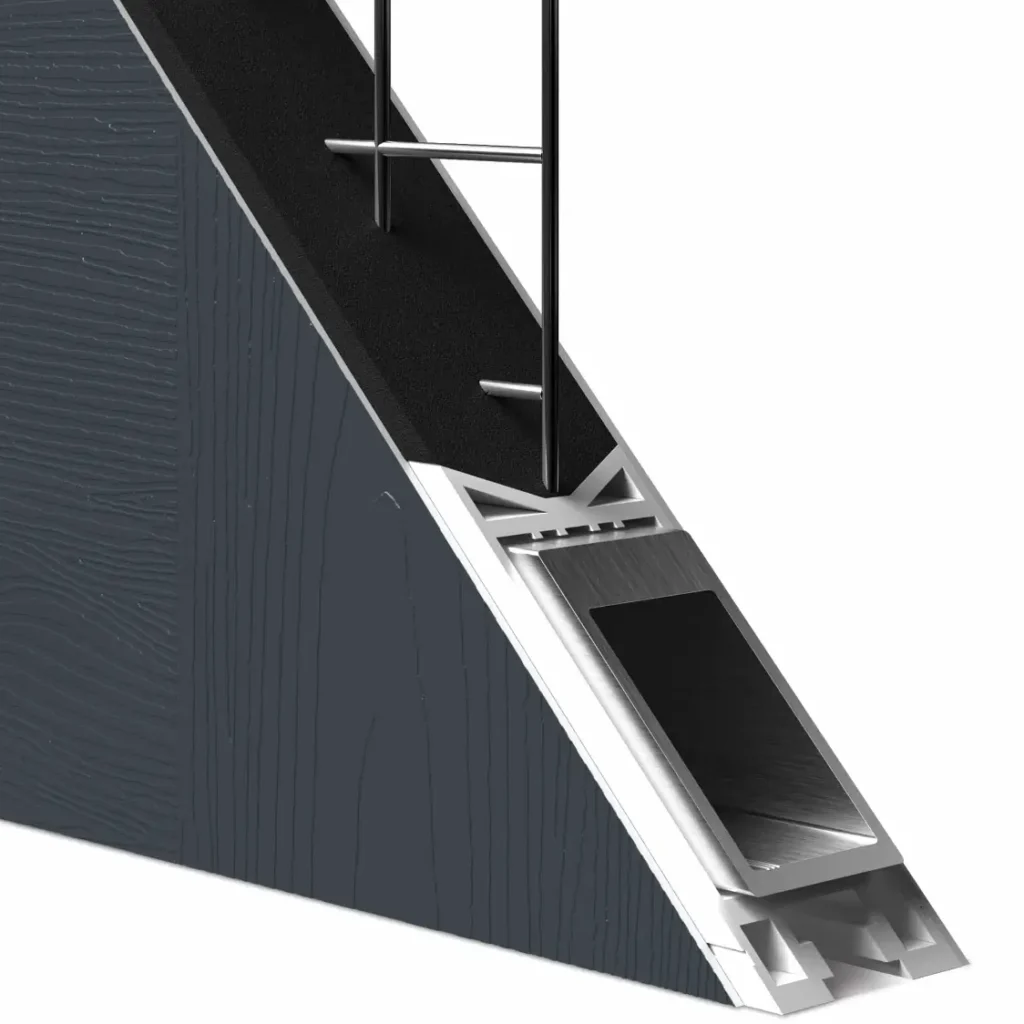
360° aluminium box-section reinforcement — This is the feature that separates Rockdoor from every other composite door on the market. A continuous aluminium box section runs around the entire perimeter of the door slab — top, bottom, and both sides. All hardware (hinges, locks, handles) bolts directly into this aluminium, not just into the door skin or foam. This is why Rockdoors don’t warp, bow or twist — the aluminium skeleton holds everything rigid regardless of temperature changes.
Extruded PVC-U inner frame — Exclusive to Rockdoor, this extruded PVC-U sub-frame works in conjunction with the aluminium box section to provide additional structural support and act as a thermal break between the aluminium and the door skin.
Steel mesh reinforcement (optional upgrade) — For maximum security, 2.5mm galvanised steel rods welded at 50mm intervals can be integrated within the door, fastened to the inner frame with P-clips and encapsulated within the polyurethane foam. This works like rebar in concrete — it makes the door virtually impossible to cut through. The Fire Service regularly visit Rockdoor’s manufacturing facility to train on breaching these doors in emergency situations, which tells you everything about how effective the mesh is.
Installer insight: We recommend the steel mesh upgrade to any customer who wants the absolute highest level of security. It’s also required for full Secured by Design accreditation alongside laminated glass and a TS008 letterplate.
For a full explanation of how laminated glass works and why it matters for security, read our guide to laminated glass in composite doors.


The Outerframe
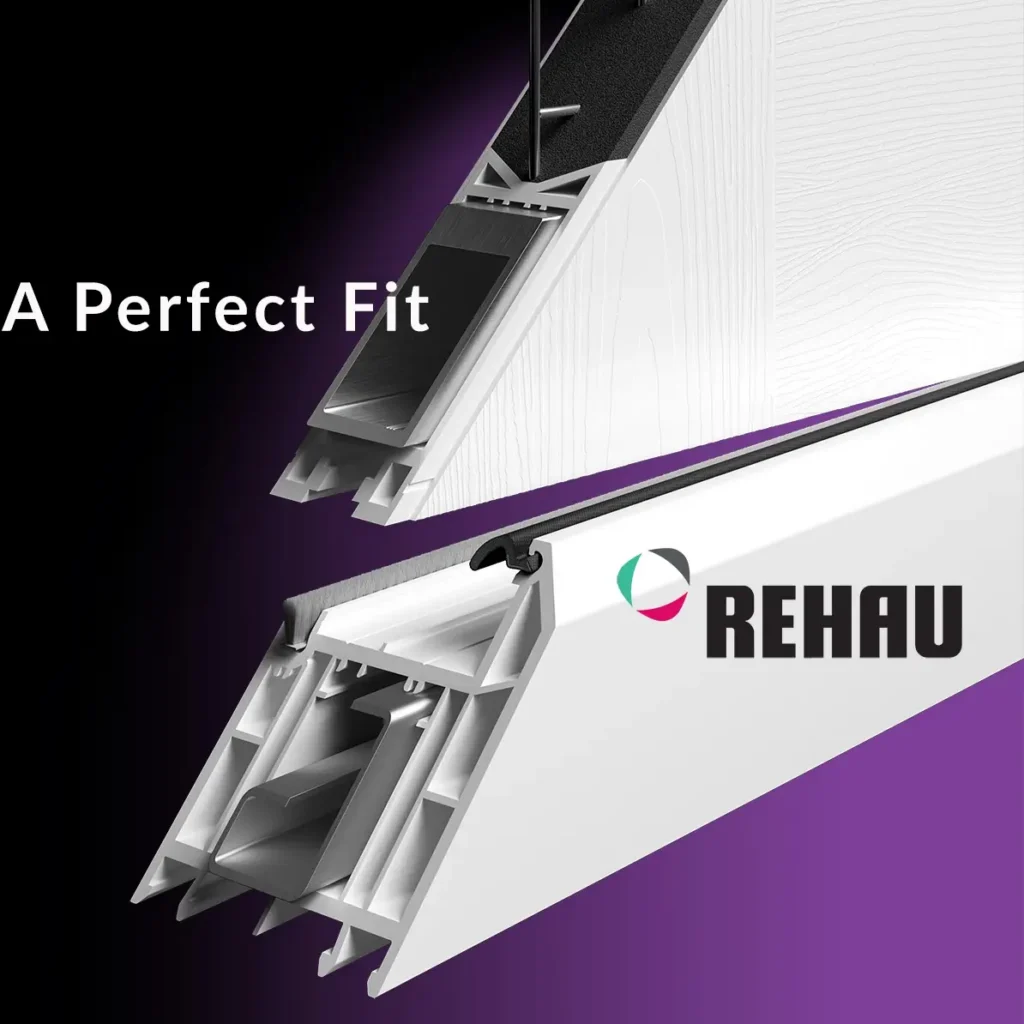
The outerframe is the part that gets fixed into the brickwork of your home. Rockdoor uses a Rehau profile — one of the most respected names in PVC-U extrusion — available in two sizes:
72mm outerframe (standard) — The standard profile for most installations. The overall frame depth including the 4mm air gap between sash and frame is 56mm per side. This gives a total frame-to-frame addition of 112mm to the sash width.
52mm outerframe (slim) — A narrower profile for properties where space is limited or where a slimmer frame aesthetic is preferred. The overall depth is 36mm per side.
Both frames are multi-chambered for thermal insulation and structural strength, and both accept 15mm or 45mm frame extensions (add-ons) for non-standard wall thicknesses.

Thresholds
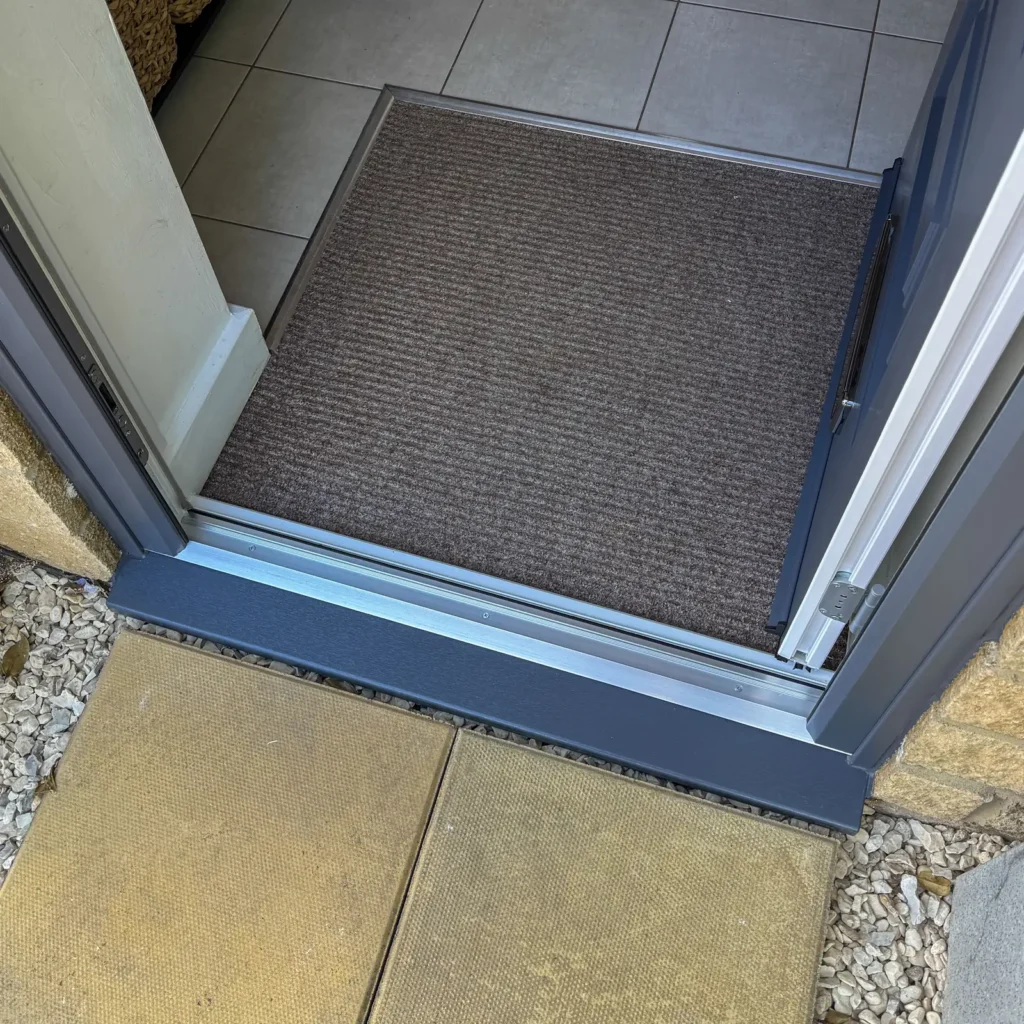
Low aluminium threshold (open in) — 20mm height. Our most popular choice by far — around 85% of the doors we fit use this threshold. The low profile makes it easy to step over and is suitable for wheelchair access, meeting Document M requirements. Available in black, silver or gold to match your furniture colour.
Low aluminium threshold (open out) — 17mm height. For outward-opening doors. Features a face-fix drip bar with separate gasket carrier, colour matched to the door.
72mm PVC-U threshold — Full-height PVC-U threshold that matches the frame colour. Maximum thermal performance and works well on carpeted entrances. Features face and concealed drainage.
52mm PVC-U threshold (slim) — A lower-profile PVC-U option. Same material and drainage as the 72mm but with a reduced height.
The threshold gasket is essential for a watertight door — the technical manual is explicit about this. On aluminium thresholds, the drip bar and gasket carrier must be correctly fitted and the drainage slots must never be blocked with silicone.
Cills
Rockdoor offers four cill sizes to suit different installations: 95mm, 150mm, 180mm and 225mm. If a cill is fitted to a Rockdoor with a sideframe, a reinforced cill must be used — this is a manufacturer requirement, not optional.
S-Glaze Technology: Why It Matters
S-Glaze is Rockdoor’s proprietary glazing system and arguably their single most important innovation. Understanding why it matters requires understanding what every other composite door manufacturer does instead.
Standard composite doors use glazing cassettes — separate plastic frames that clip onto the outside of the door to hold the glass in place. These cassettes are a known security weakness because they can technically be prised off from the outside, giving access to the glass unit. They also degrade over time — the plastic fades, discolours and can crack, particularly on south-facing doors.
Rockdoor’s S-Glaze eliminates cassettes entirely. During manufacture, the double-glazed glass unit is bonded directly into the door sash. The glass becomes part of the door itself — it cannot be removed from the outside or the inside without destroying the door.
The advantages are significant:
Security — There is no cassette to attack. The only way to get past the glass is to break through it, which is why Rockdoor offers laminated glass as an upgrade for customers who want the highest possible security.
Weatherproofing — The permanent bond between glass and sash eliminates any possibility of air or water leaking around the glazing. On cassette-based doors, the seal between cassette and door degrades over time, leading to draughts and water ingress.
Aesthetics — No plastic cassette frames means cleaner lines and a sleeker appearance. The glass sits flush with the door surface. On darker coloured doors especially, the absence of a fading white or grey cassette frame makes a noticeable difference to the overall look.
No fading — Glazing cassettes on standard composite doors are notorious for fading and discolouring within a few years, particularly on south-facing doors. S-Glaze eliminates this problem entirely.
Installer insight: We’ve replaced dozens of GRP composite doors where the cassettes have yellowed, cracked or started letting in water within 5–8 years. The door itself is often fine — it’s the cassettes that fail first. S-Glaze removes this entire failure point. It’s one of the main reasons we supply and fit Rockdoors over other brands.
All Rockdoor glass is toughened as standard. For enhanced security, laminated glass (two pieces of glass with a plastic interlayer, like a car windscreen) is available as an upgrade and is required for Secured by Design accreditation.
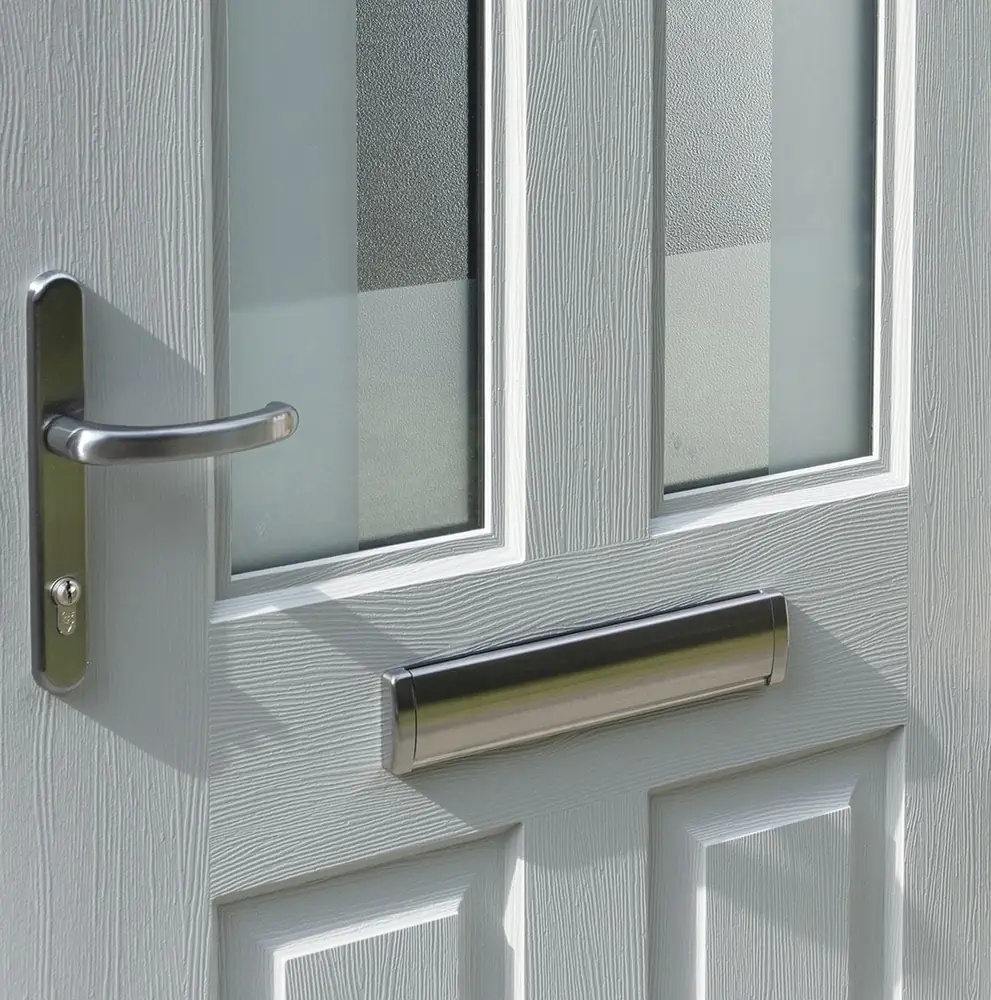
Security Features
70% of burglaries involve forced entry through the front or back door. Rockdoor’s entire design philosophy is built around making this as difficult as possible. Here’s every security feature, with the technical detail behind it.
Avocet ATK 3-Star Cylinder
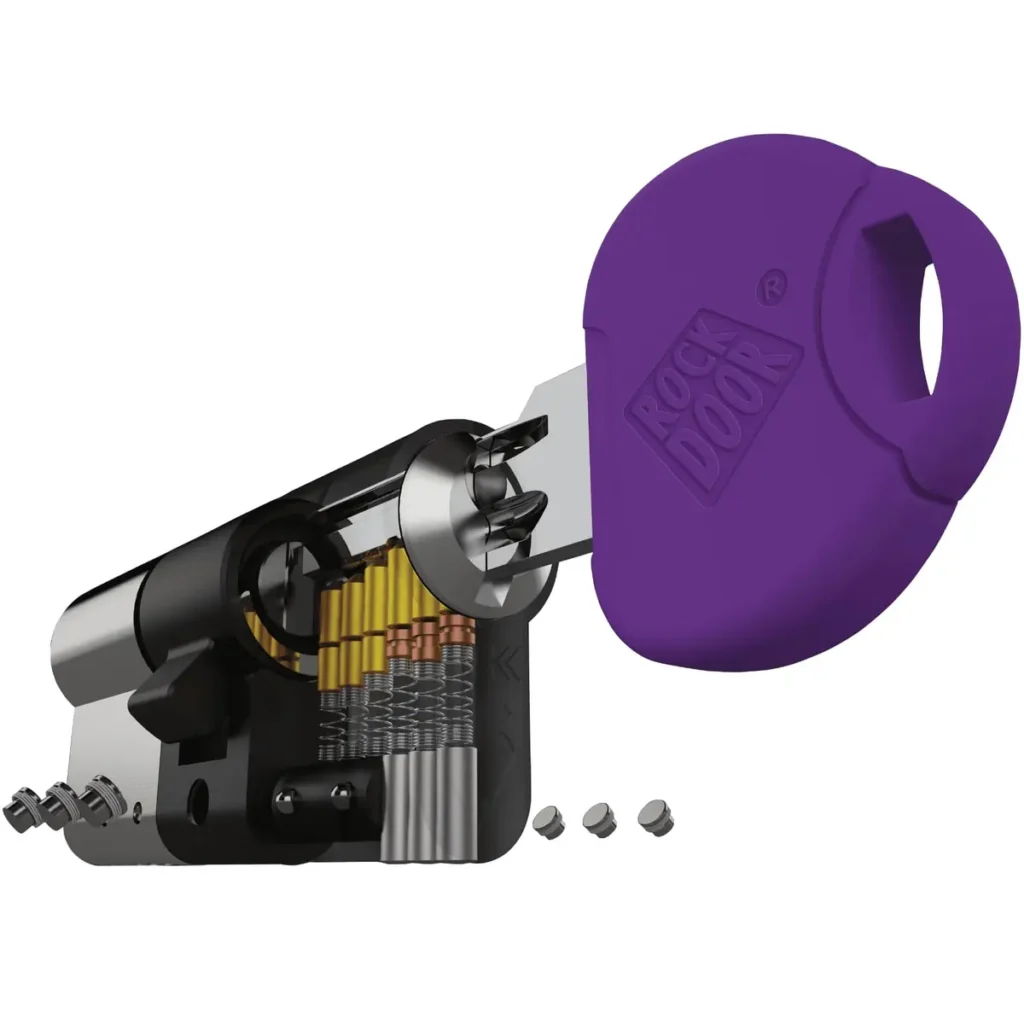
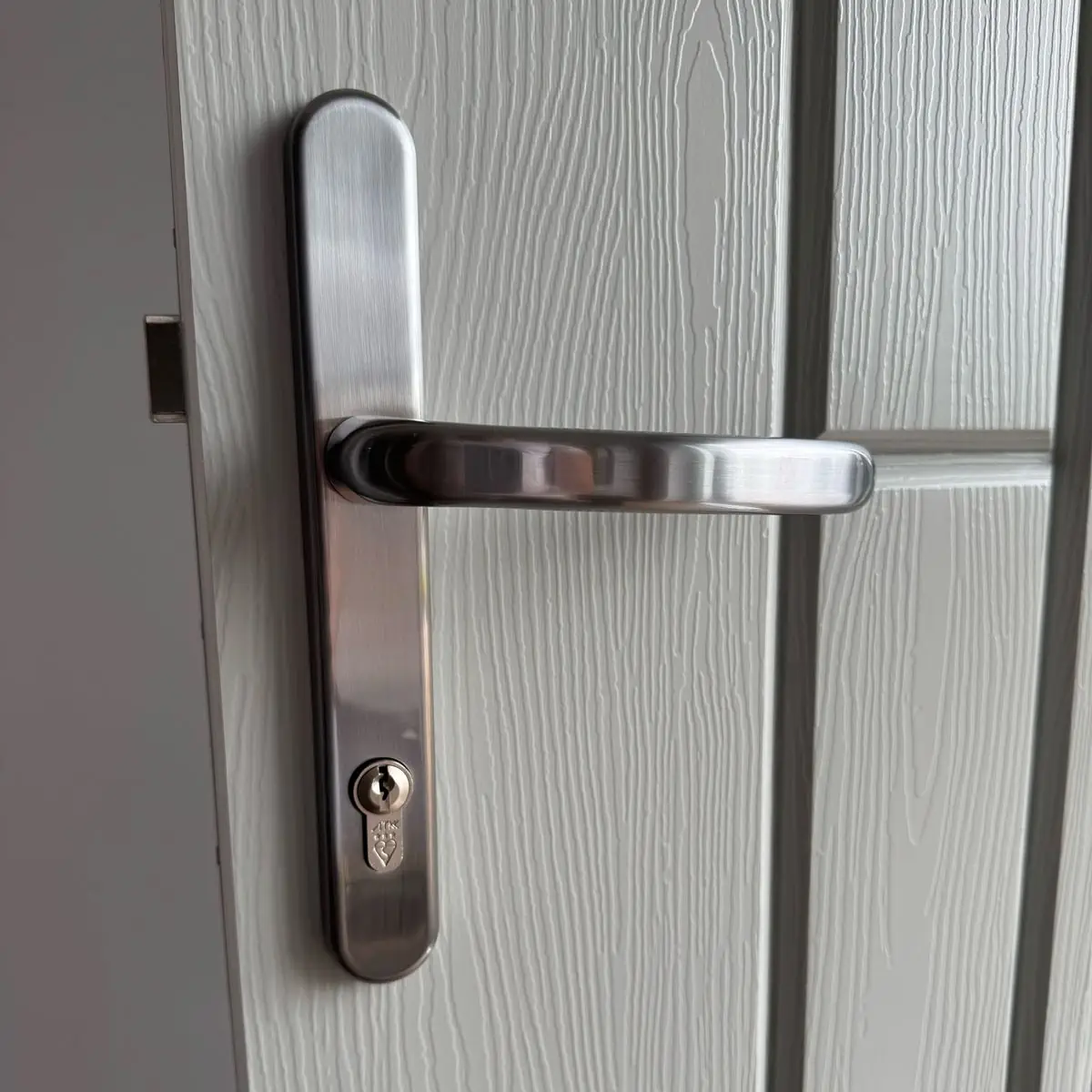
Every Rockdoor is fitted with a Rockdoor-branded Avocet ATK cylinder as standard. This is one of the highest-rated lock cylinders available in the UK.
Certifications and ratings:
- SS312 Sold Secure Diamond Grade — the Master Locksmith Association’s highest possible rating
- 3-star British Kitemark to TS007:2014 (certificate KM 586153)
- Secured by Design accredited (Police Preferred Specification)
Security features:
- Patented Snap Secure technology — the sacrificial section snaps away if attacked, shutting down the mechanism to prevent access
- Pick resistant — 6 trap pins for advanced pick resistance
- Drill resistant — 10 anti-drill pins
- Bump resistant
- Solid Molybdenum cam — stronger than steel
- Lock-down mode — the cylinder detects forced entry attempts and locks down
Practical details:
- Size: 40mm/40mm
- Three Rockdoor-branded keys supplied per cylinder
- Keyed-alike key/key pairs available (useful if you’re having front and back doors fitted)
- The sacrificial section must be installed facing the external side of the property
- The key must be removed from the cylinder for the full security features to be enabled
The £2,000 lock guarantee: Rockdoor is so confident in this cylinder that they offer a £2,000 guarantee. If a burglar gains entry by snapping the cylinder, you receive £2,000. For a detailed explanation of what the Rockdoor guarantee covers, how claims work, and why your choice of installer matters, see our Rockdoor guarantee guide.
For a detailed comparison of lock cylinders including the Avocet ATK, see our guide to the best door cylinder locks.

Winkhaus Multipoint Locking Mechanism
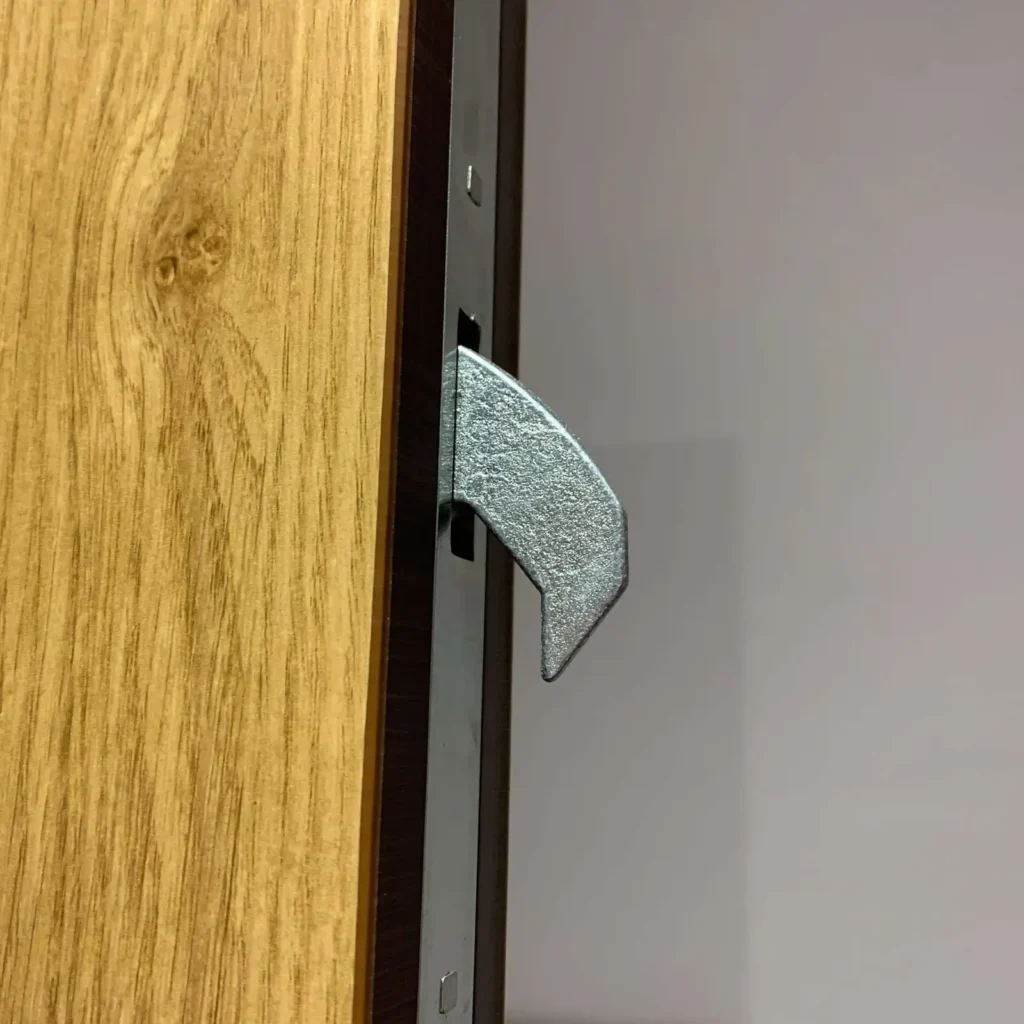
Behind the handle, every Rockdoor uses a German-engineered Winkhaus STV multipoint lock. This is the mechanism that drives the hooks and deadbolt into the frame when you lift the handle and turn the key.
Standard configuration (2-hook): The STV-FG 2060 M2 features two steel hooks with a 25mm throw, plus a central latch and deadbolt. The hooks engage into full-length steel keeps that run the entire height of the outerframe — not small individual keep plates like cheaper doors use.
4-hook upgrade: The STV-FG 2060 M4 adds two additional hooks for enhanced security. Below 1880mm sash height, a 3-hook lock is used instead (charged at the 4-hook price due to the specialist nature of the shorter lock).
Why this matters: When the hooks throw 25mm into a full-length steel keep, the door is mechanically locked to the frame at multiple points. The full-length keep distributes any impact force across the entire frame rather than concentrating it at individual keep positions. This is why Rockdoors are so resistant to being kicked or rammed open.
Installer insight: The Winkhaus lock is beautifully engineered. The action is smooth, the hooks throw positively, and the mechanism is reliable over years of daily use. We’ve fitted over 2,000 of these and can count the number of lock failures on one hand — and those were always resolved quickly for our customers with a replacement lockstrip directly from Rockdoor, no questions asked.

Three Lock Types
Rockdoor offers three different lock types to suit different preferences:
Lever lock — The standard option. Lift the handle to throw the hooks and deadbolt into the frame, then turn the key or thumbturn to secure. Available with lever/lever or lever/pad handles. The act of raising the handle also pulls the door into the frame, compressing the seals for a tight weatherproof fit.
Key lock — No handle lifting required. You manually push the door into the frame against the seals, then use a key or thumbturn to wind the lock and engage the hooks and deadbolt. Available with bar handles or a fingerpull, key locks are the most popular choice on contemporary door styles.
Instant lock (Heritage Plus) — Rockdoor’s premium locking option. The Heritage Plus uses magnetic detection to automatically throw the hooks and deadbolt the moment the door closes. There’s no need to lift a handle or turn a key — the door locks itself instantly. The cylinder sits at a high-level position (1395mm from the bottom of the sash), and the mechanism has 2 hooks, a central latch and a deadbolt.
How the Heritage Plus works in practice:
Closing the door from inside: Simply close the door. The magnetic trigger detects the door has shut and instantly throws the hooks, securing the door from the outside. To fully deadlock, turn the thumbturn one revolution — this throws the central deadbolt for complete security.
Opening from inside: Turn the thumbturn one revolution to retract the deadbolt and hooks, then open the door. If the door hasn’t been fully deadlocked (just the auto-hooks engaged), it can be opened with the thumbturn alone and a small turn.
Locking from outside: Close the door (hooks engage automatically), then turn the key one revolution to engage the deadbolt. The door is now fully secured.
Opening from outside: Turn the key one revolution to retract the deadbolt, then turn a further 45 degrees to retract the hooks and open the door.
The magnetic triggering reduces stress marks on the door frame and dampens the closing noise compared to a mechanical slam lock. The magnetic trigger and hook design also improves reliability, as it can work with slightly larger tolerances which accommodate any minor door or frame movement over time.
Important Heritage Plus installation note (from the technical manual): Because this is a slam-shut lock, installation tolerances are tighter — head gap and lock side gap must be 4mm with a tolerance of just ±0.5mm (compared to ±1mm for standard locks). This is precision fitting that requires experience.
Installer insight: The Heritage Plus is genuinely impressive when it’s fitted properly. The magnetic engagement is smooth and quiet, and customers love the convenience — particularly those who’ve had standard lever locks before and are used to the “lift and lock” routine. But it demands exact frame alignment. If the frame is even slightly out, the magnets don’t align and the auto-lock doesn’t engage reliably.
Switch latch — Standard on key locks and instant locks. When the switch latch is in the UP position, a key is required to enter the property. In the DOWN position, no key is needed and the door opens freely. On the Heritage Plus, the switch latch operates differently — in the down position, the door cannot be locked with a key or thumbturn. You must move the switch to the up position first, then close the door to lock.


Secured by Design Accreditation
Secured by Design (SBD) is the UK Police initiative that works to improve building security. A Rockdoor can achieve full SBD accreditation when fitted with:
- P1A compliant glass (6.8mm laminated)
- Steel security mesh reinforcement
- TS008 compliant letterplate
All three must be present for the accreditation to apply. The standard Rockdoor without these upgrades is already exceptionally secure — the SBD specification takes it to the absolute highest level.
PAS24 Security Testing
Rockdoor doors are tested to PAS24 — the British Standard for enhanced security performance of doorsets. The PAS24 test specification includes:
- Operating forces testing
- Air permeability testing
- Watertightness testing
- Wind resistance testing (P1, P2 and P3)
- Resistance to vertical loads
- Resistance to static torsion
- Soft and heavy body impact testing
- Hard body impact testing
PAS24 applies to all Rockdoor styles except stable doors and double doors.
Independent testing has shown that a Rockdoor is 35% stronger than a typical GRP composite door. In a well-known demonstration, it took a team of trained fire officers using specialist entry tools over 15 minutes of sustained effort to breach a Rockdoor. A typical burglar gives up in under 60 seconds.
Thermal Performance and Energy Ratings
A Rockdoor isn’t just about security — it’s also one of the most thermally efficient composite doors on the market. The combination of materials and manufacturing techniques delivers energy ratings that most competitors can’t match.
How Rockdoor Achieves Its Energy Ratings
Several features work together:
High-density PU foam core — The closed-cell polyurethane foam filling the 50mm sash is the primary insulator, preventing heat transfer through the door.
S-Glaze technology — By sealing the glass directly into the door, all draughts and heat loss around glazing apertures are eliminated. Cassette-based doors leak air around the cassette-to-door junction — S-Glaze removes this entirely.
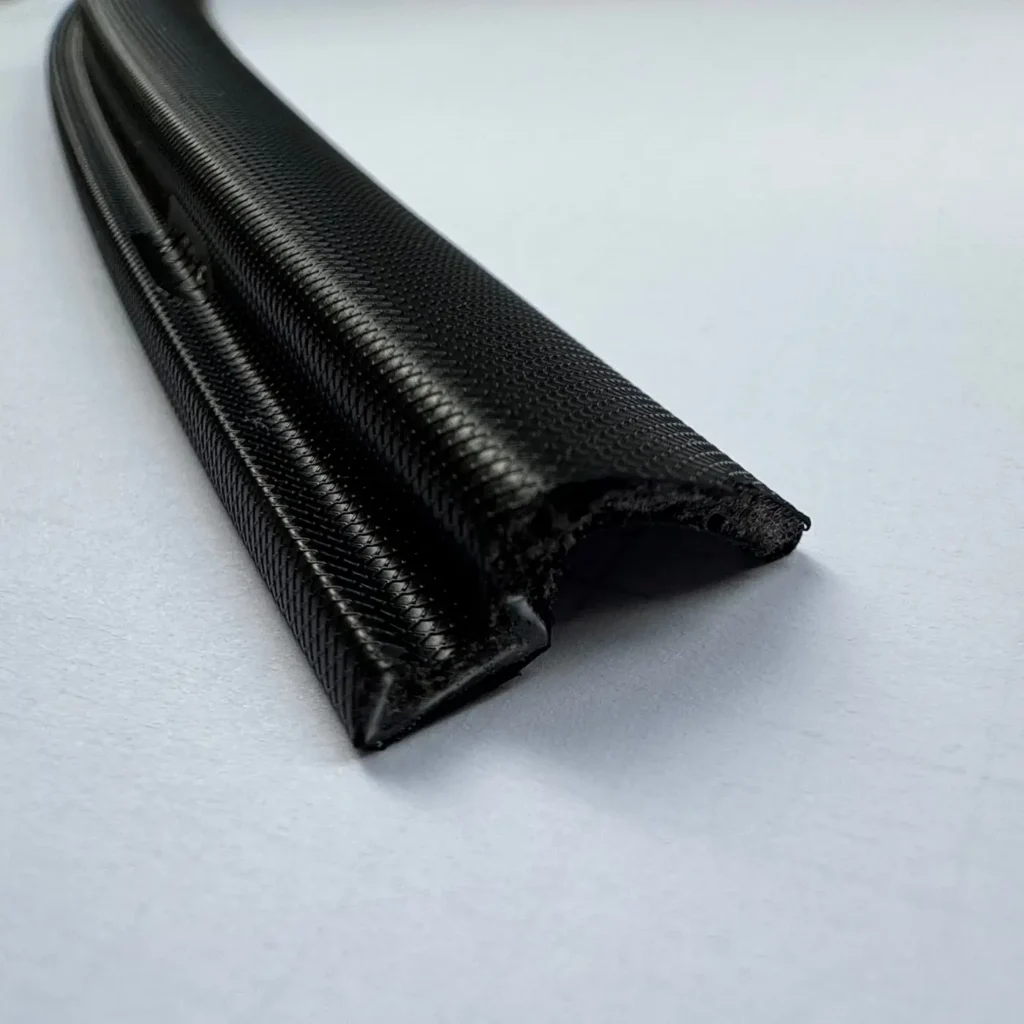
Q-Lon 7000 gaskets by Schlegel — Rockdoor uses Q-Lon gaskets (the name stands for “Quality & Longevity”) made from polyurethane foam with a polyethylene weather-resistant liner. Critically, the Q-Lon seal runs as one continuous piece around the entire frame — not four separate pieces joined at the corners like most competitors. This eliminates the corner gaps that are a common source of draughts on other doors. The memory foam outperforms standard seals and won’t shrink, perish or distort over time.
14mm brush pile — On the sash side, a 14mm brush pile seal (with a 6.8mm base) provides additional weatherproofing and acts as a secondary barrier against draughts.
Multi-chambered outerframe — The Rehau PVC-U outerframe features multiple internal chambers that trap air and prevent cold bridging through the frame.
Warm-edge spacer bars — The double-glazed glass units use advanced spacer bars that prevent cold bridging between the inner and outer panes, keeping the internal glass surface warmer.
Energy Ratings by Door Style
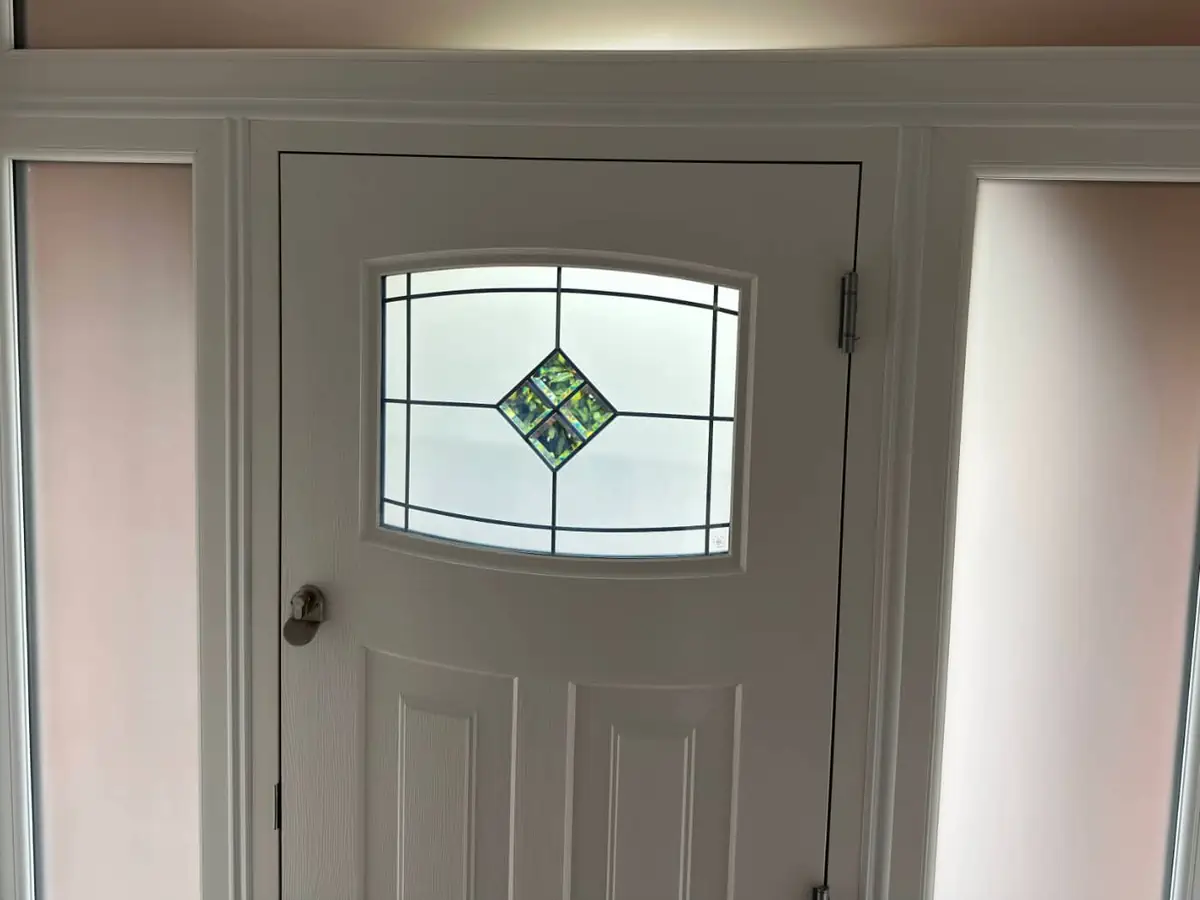
Rockdoor publishes Door Set Energy Ratings (DSER) for every door style across all threshold types. Based on the technical manual, the majority of Rockdoor styles achieve an A rating with clear backing glass — including popular models like the Vermont, Colonial, Newark, Manhattan, Dakota, and English Cottage.
Some styles with larger glazing areas achieve a B rating — including the Classic, Vogue, Windsor, and Portland. This is because more glass means more potential heat loss, even with high-quality sealed units.
Choosing an obscure backing glass instead of clear glass will reduce the DSER slightly, so if energy rating is a priority, clear backing glass with a decorative front design gives you the best of both worlds.
Installer insight: For most homeowners, the difference between an A-rated and a B-rated Rockdoor is negligible in real-world energy savings. Both are significantly better than the old door you’re replacing. Choose the door style you love — the energy performance will look after itself.
For a full breakdown of what Rockdoors and other composite doors actually cost fitted, including every upgrade and hidden cost, see our composite door prices guide.
Hinges
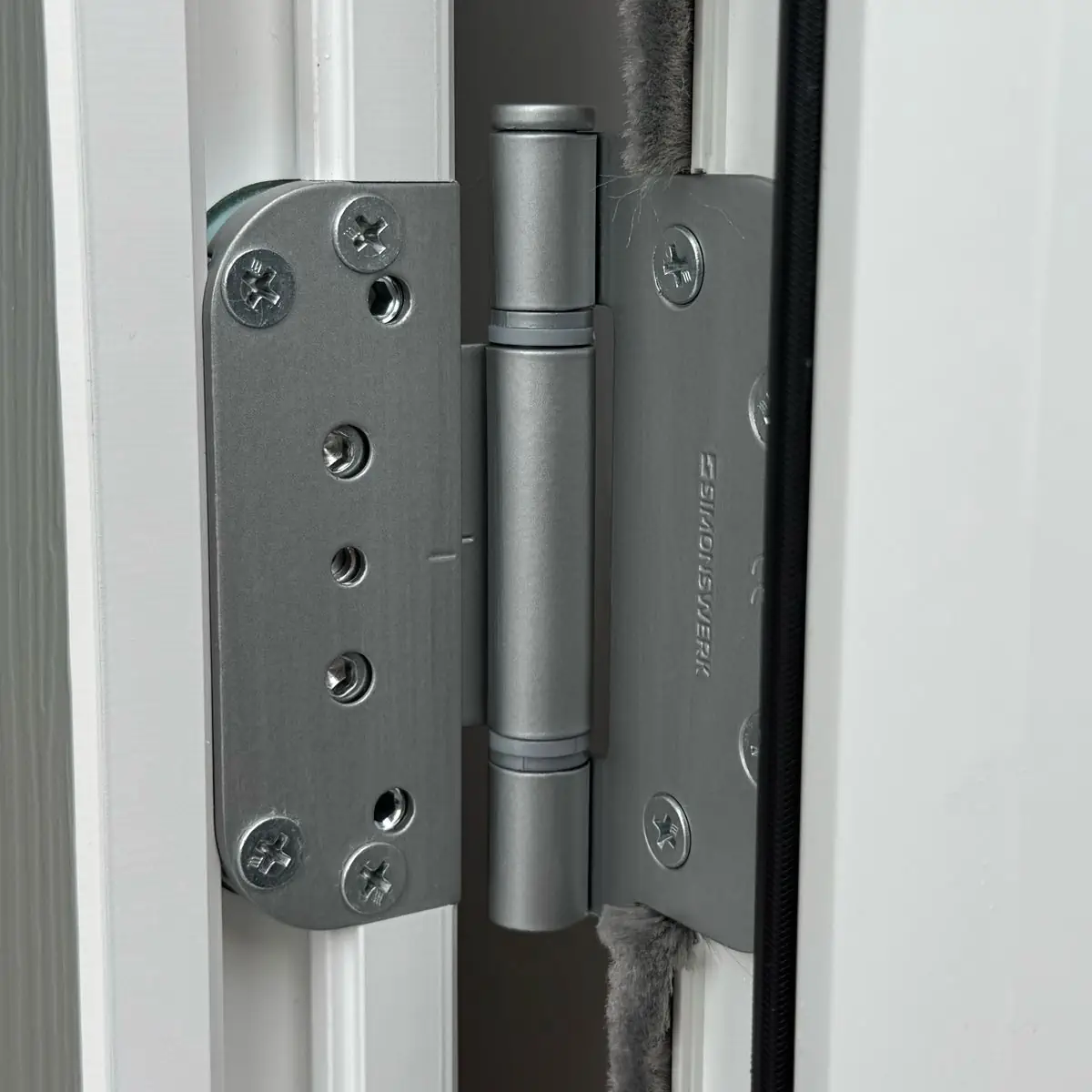
Rockdoor uses German-engineered 3D adjustable hinges that have been supplied by the same manufacturer for nearly 30 years. These are routed into the frame so the full hinge body supports the door’s weight — not just the screws.
Adjustment range:
- Up/down: ±3mm
- In/out: ±2mm
- Left/right: ±2mm
- Adjusted using a 4mm Allen key
PTFE (Teflon) bushings — Every hinge features PTFE bushings for frictionless operation. These are the same type of bushings used in industrial machinery and automotive applications. They ensure the door swings smoothly for decades without the hinge action stiffening or wearing.
Open-out hinges feature concealed grub screws that engage into a groove in the hinge pin, preventing the pin from being removed when the door is closed. The grub screws are only accessible when the door is in the open position — a simple but effective anti-tamper measure.
When fitted, the door and frame sit flush with a consistent 4mm gap around the entire door.
Installer insight: The 3D adjustability is one of the things we appreciate most about Rockdoor. If a door needs fine-tuning after fitting — or even years later if the property settles slightly — we can adjust the hinges in minutes with an Allen key. On cheaper doors with non-adjustable flag hinges, the only option when a door drops is to remove it, re-cut the hinges, and rehang it. Rockdoor’s hinges mean you’re never stuck with a door that catches or doesn’t close properly.

Door Styles and Colours
30+ Door Styles
Rockdoor offers one of the widest ranges of any composite door manufacturer, with over 30 individual door styles covering everything from traditional to ultra-contemporary:
Contemporary styles: Manhattan, Vogue, Vermont, Aspen, Hudson, Indiana, Dune Vision, Dune Retreat
Traditional styles: Jacobean, Newark, Astoria, Colonial, Regency, English Cottage, Tennessee, Kentucky, Arcacia, Windsor, Georgia, Montana
Modern-traditional blend: Warwick, Illinois, Portland, Carolina, Dakota, Diamond
Stable doors: Stable Spy View, Stable View Light, Stable Diamond View
French and double doors: Classic French Door, Vogue French — available with French door locks (lever handles on both leaves) or double door locks (one operating leaf with bar handle option)
The Dune range deserves special mention — it’s an industry first. Instead of the traditional woodgrain texture found on every other composite door, the Dune features a horizontal pattern reminiscent of sand dunes. It’s designed specifically for contemporary homes where a woodgrain effect doesn’t suit the architecture.
Every style is available as a single door, and most are available as stable doors, French doors or double doors. Maximum sash dimensions are typically 908mm wide x 2098mm tall, with minimum sizes varying by style.
14 Colours
All Rockdoors are available in 14 colours, inside and out:
- White
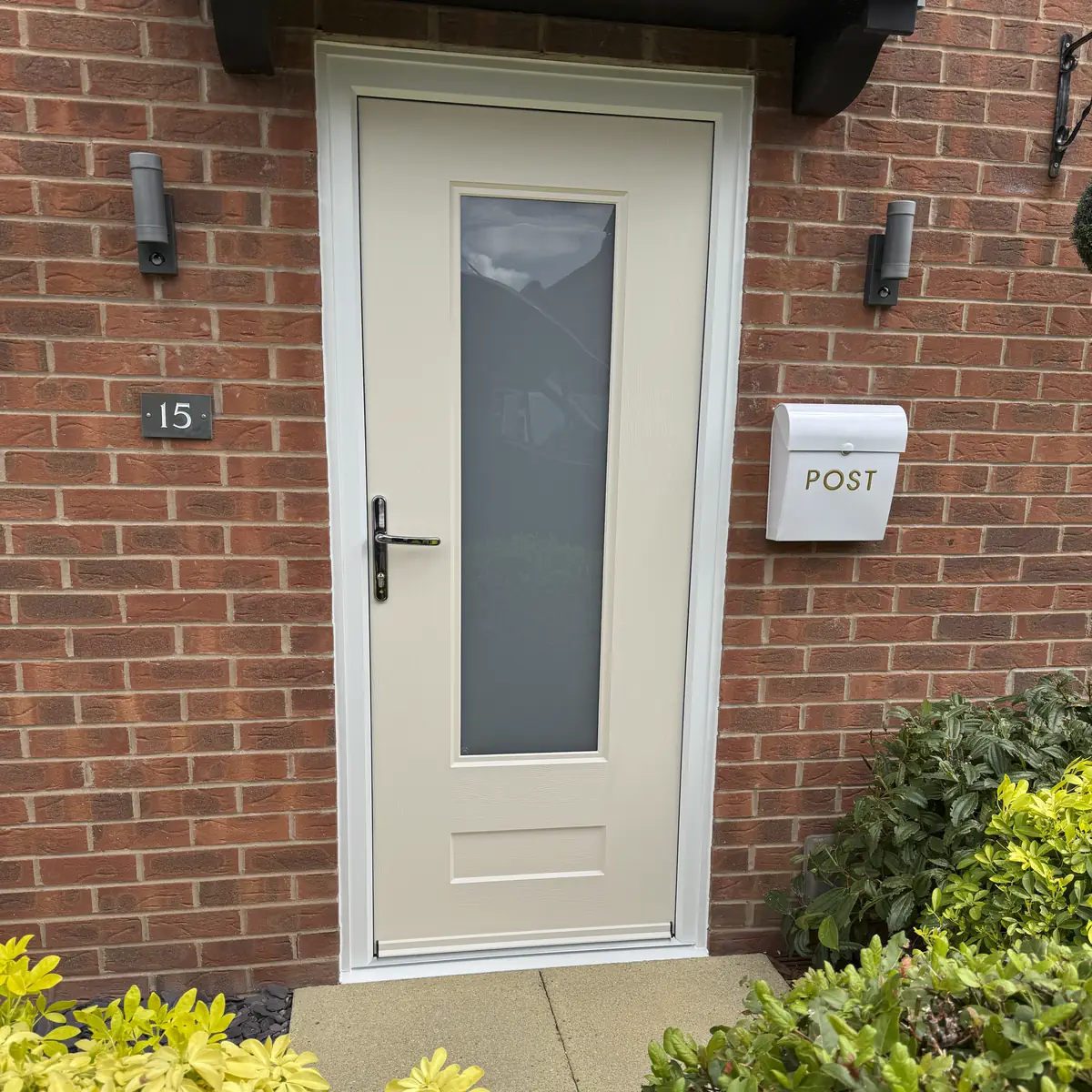
- Cream (RAL 9001)
- Black (RAL 8022)
- Anthracite Grey (RAL 7016)
- Slate Grey (RAL 7015)
- Agate Grey (RAL 7038)
- Pebble Grey (RAL 7032)
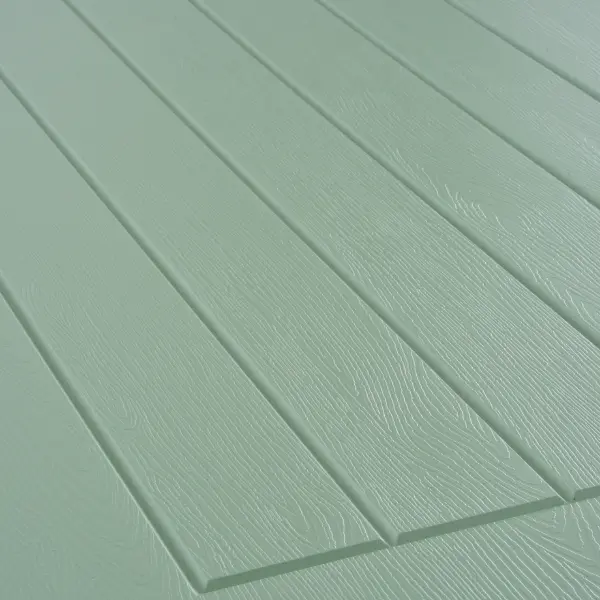
- Chartwell Green
- Emerald Green (RAL 6009)
- Ruby Red (RAL 3011)
- Sapphire Blue (RAL 5011)
- Rosewood
- Light Oak
- Irish Oak
Most colours are available with a matching outerframe. Because Rockdoors are made to order (not cut to size), all colours are available on both the internal and external faces — you’re not limited to white on the inside.
The colours are foiled (bonded to the PVC-U skin), which means no flaking or fading paint. This is a significant advantage over painted timber doors and some cheaper composite doors where the colour is sprayed on and degrades over time.
A note on dark colours and south-facing doors: Dark colours like anthracite grey and black absorb more solar radiation than lighter colours. On south-facing doors, this can cause slightly more thermal movement during hot weather. Rockdoor’s aluminium inner frame restricts this movement significantly, and they offer a 3mm no-bow guarantee. In our experience fitting doors since 2010, any thermal movement on dark Rockdoors has been slight and has never affected the door’s operation — but it’s worth knowing if your door faces south. Always lift the handle to fully engage the locking mechanism when closing, especially on darker colours.
For a detailed breakdown of all 14 colours including RAL codes, frame and cill colour matching rules, which colours show dirt the most, and what we’re fitting most in 2026, see our complete Rockdoor colours guide.
Hardware and Furniture
Lever Handles
Rockdoor offers a range of lever handles in multiple finishes including polished chrome, graphite, polished gold, midnight black and white. Options include standard lever, pad handle, D handle, stainless steel lever, curved rose handle, European rose handle, twist lever and arched lever.
The stainless steel, wrought iron twist and arched lever handles feature an important fitting detail: grub screws that splay the spindle for a permanent, secure grip. This prevents the handle from loosening over time — a common issue on doors with simple screw-through fixings. The standard lever and other handle types use conventional through-bolt fixings.
Bar Handles
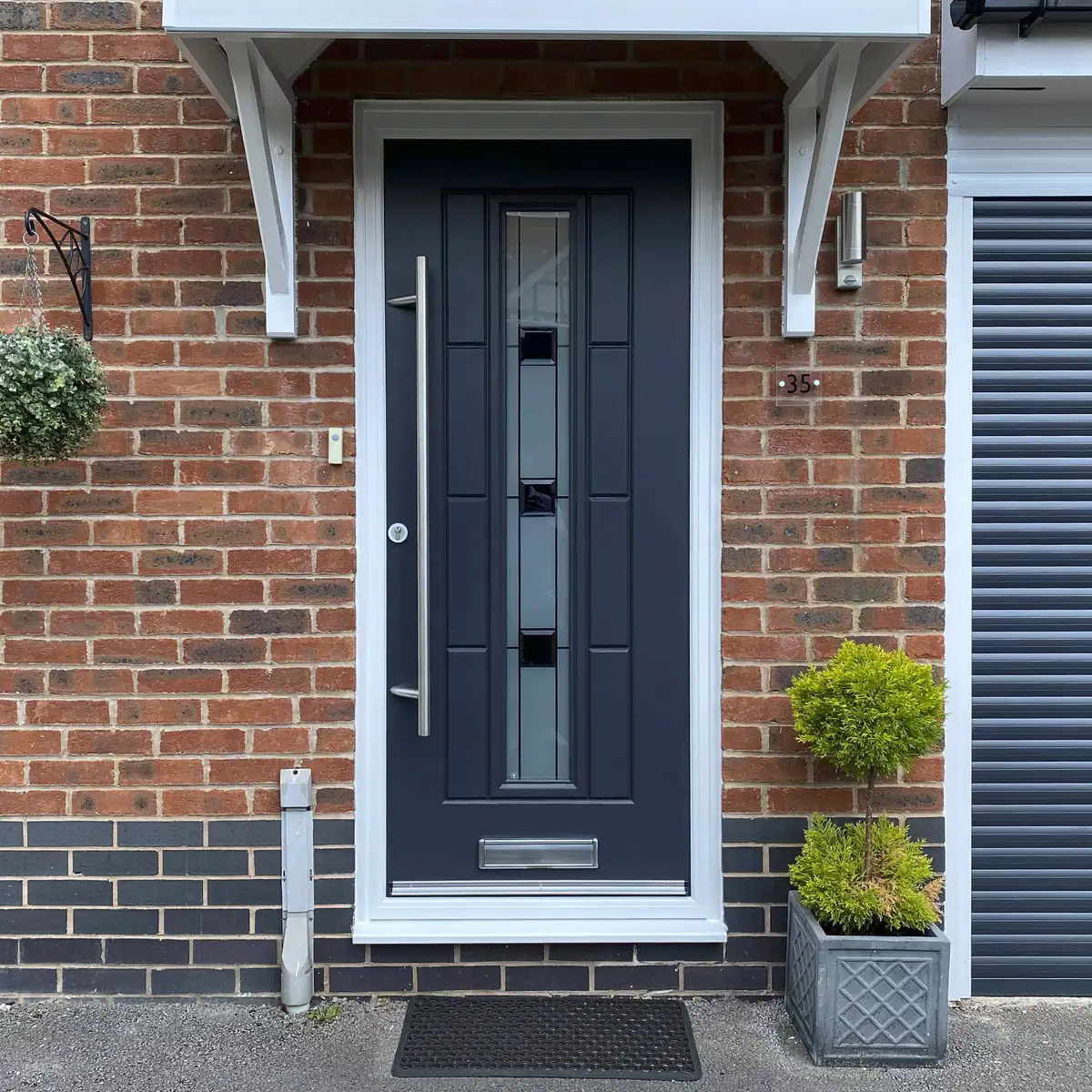
Bar handles are available in round, square, offset and mitred profiles in lengths of 600mm, 900mm and 1200mm. All bar handles are manufactured from stainless steel and come with a key lock and switch latch as standard (upgradable to instant lock).
In-line bar handles are fitted 115mm from the edge of the door to the centre of the fixing hole. Offset bar handles are fitted 45mm from the edge. Mitred bar handles are fitted 115mm from the edge. The positioning varies by door style — on glazed doors, handles are centred with the glass; on moulded doors, they’re centred with the mouldings.
Letterplates
Rockdoor offers five letterplate options, each with different specifications:
Standard letterplate — Zinc construction with Hardex coating. Flap cycle tested to 30,000 cycles. Conforms to BS EN 13724:2002. Meets BS EN 1670:2007 Grade 5 (480 hours corrosion resistance).
Stainless steel letterplate — 304 stainless steel construction. Cycle tested to 20,000 cycles. Corrosion tested in excess of 1,000 hours based on BS EN 1670.
Contemporary letterplate — 316 grade marine stainless steel. Achieved “Best in Class” BS6375-1 weather test results: Air Permeability Class 4, Water Tightness Class A9, Wind Resistance Class 5. Features integral gaskets, brushes and telescopic liner for enhanced weather and draught protection. Built-in inner security flap helps prevent “fishing” (reaching through the letterbox to access the handle or lock). Ideal for coastal environments where corrosion levels are high.
Architectural letterplate — A premium design option.
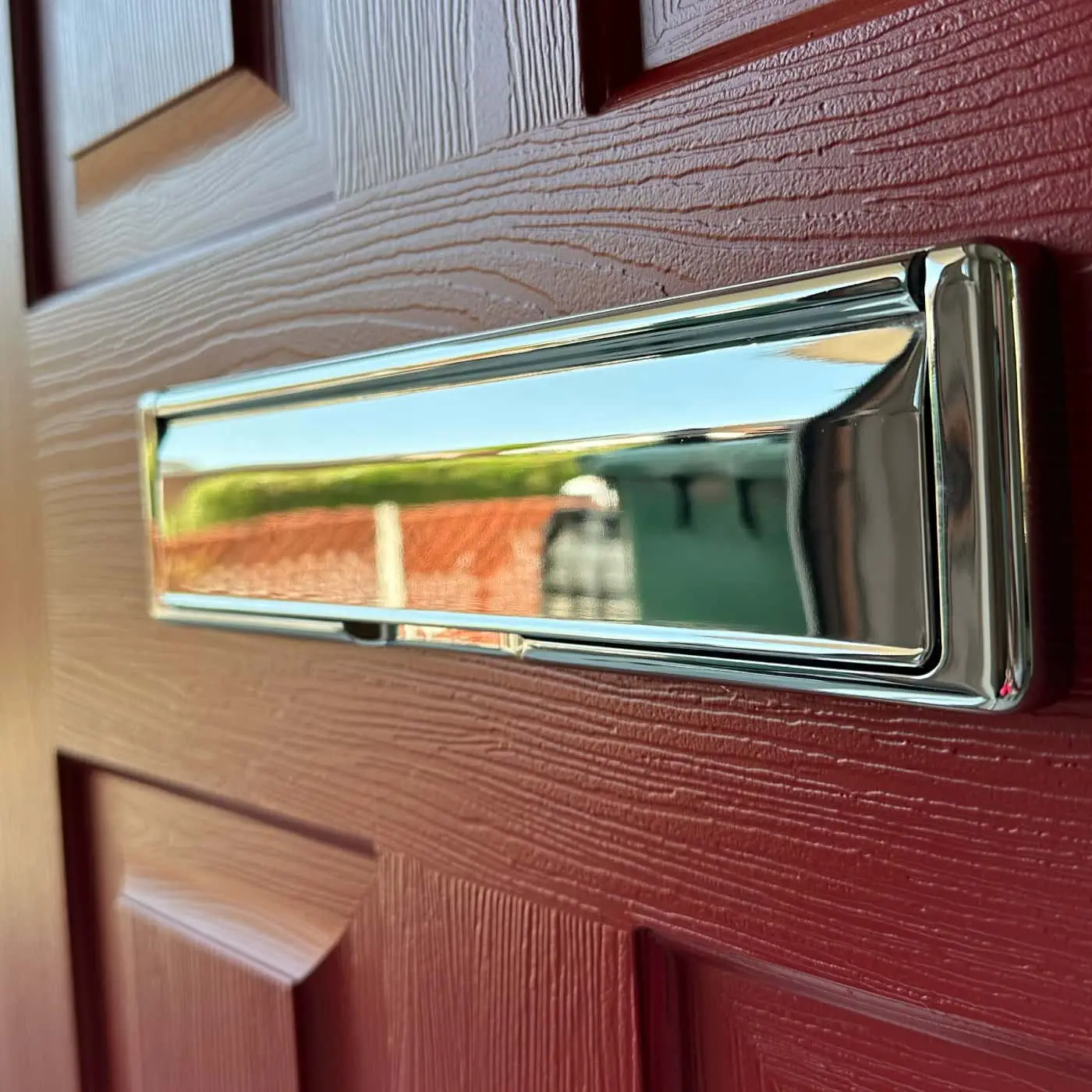
TS008 letterplate — 304 stainless steel external with white PVC-U internal. Cycle tested to 20,000 cycles. Corrosion tested in excess of 1,000 hours. Features a concealed hinge mechanism for attack resistance. Required for Secured by Design accreditation.Standard and stainless steel letterplates cannot be fitted into midrails.
Additional Furniture
Rockdoor’s furniture range also includes: Victorian centre knobs, square centre knobs, urn knockers, architectural knockers, contemporary knockers, bull ring knockers (stainless steel and architectural), spy holes, numerals (standard and contemporary/stainless steel), door pulls, round knobs, door chains, and cat flaps (magnetic and manual, available on selected door styles).
Installation Tolerances
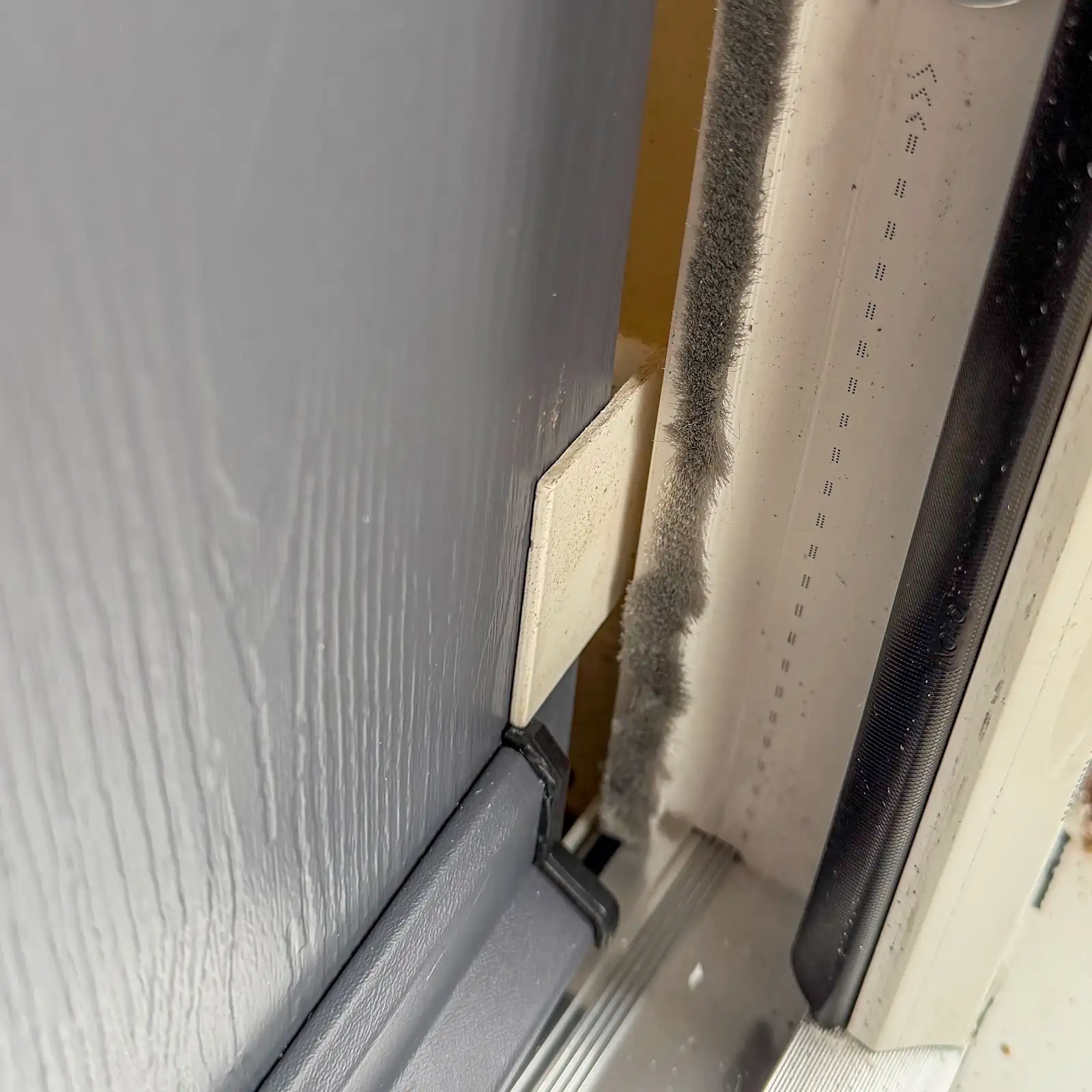
The Rockdoor technical manual specifies precise installation tolerances that must be met for the door to function correctly. These are tighter than most composite doors, particularly for Heritage Plus locks.
Single doors and stable doors:
- Head gap: 4mm, parallel the full width of the door (tolerance ±1mm)
- Lock side gap: 4mm, parallel the full height of the door (tolerance ±1mm)
- Viewing gap: parallel the full height of the door (tolerance ±1mm)
Heritage Plus and all doors with AV locks:
- Head gap: 4mm (tolerance ±0.5mm)
- Lock side gap: 4mm (tolerance ±0.5mm)
- Viewing gap: parallel (tolerance ±0.5mm)
French doors and double doors:
- Head gap: 4mm (tolerance ±1mm)
- Lock side gap: 4mm (tolerance ±1mm)
- Viewing gap: parallel (tolerance ±1mm)
- Gap between doors: 7mm (tolerance ±1mm)
Clear opening (for accessibility): With a 72mm outerframe, the clear opening equals the frame width minus 194mm. With a 52mm outerframe, it’s the frame width minus 154mm. To comply with Document M (accessibility), a private or communal entrance must have a clear opening greater than 775mm.
Installer insight: These tolerances are why professional installation matters. A 0.5mm tolerance on a Heritage Plus lock means the frame must be perfectly level, perfectly plumb, and consistently gapped. If the frame is packed even slightly unevenly, the magnetic lock won’t engage properly.
Rockdoor Installation Guides
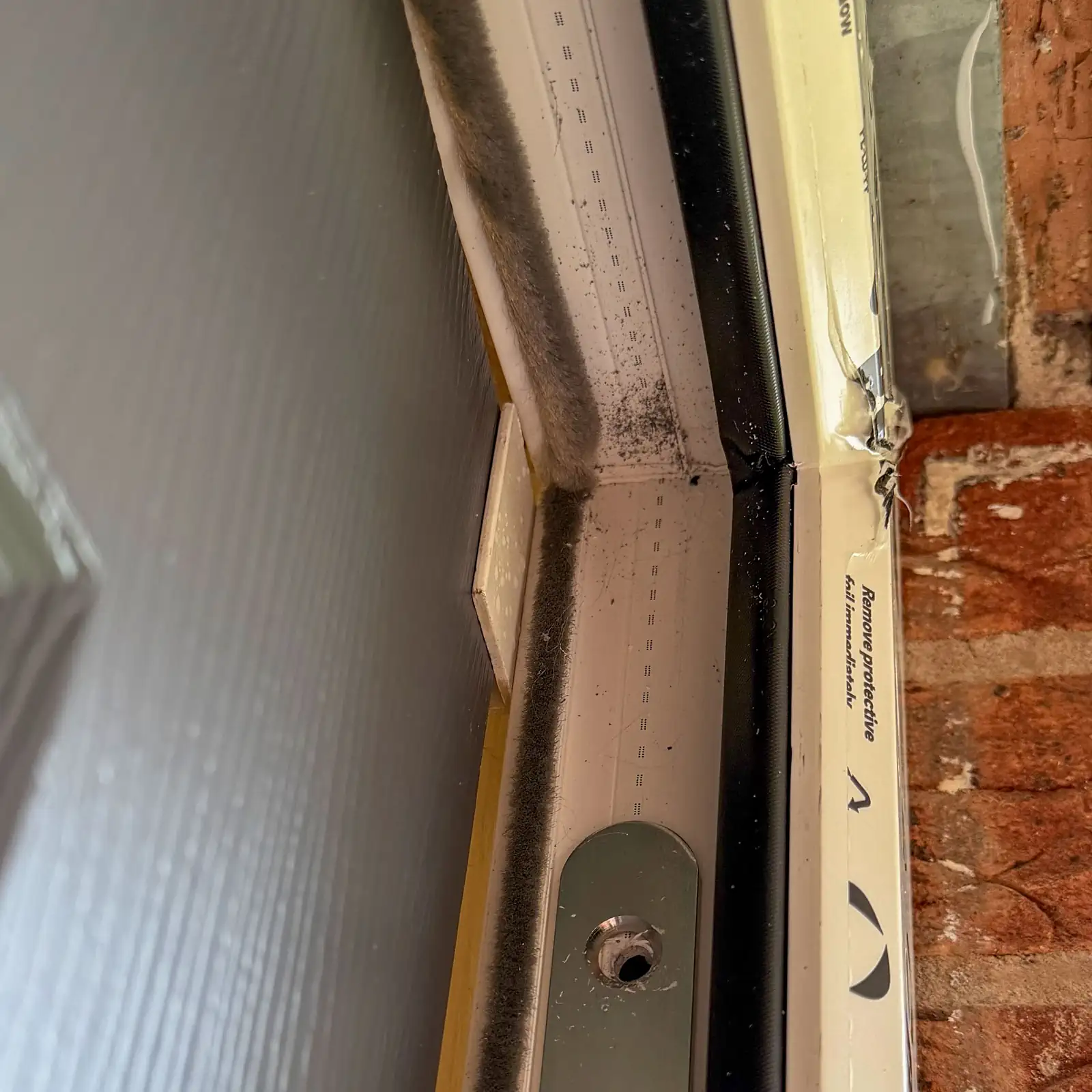
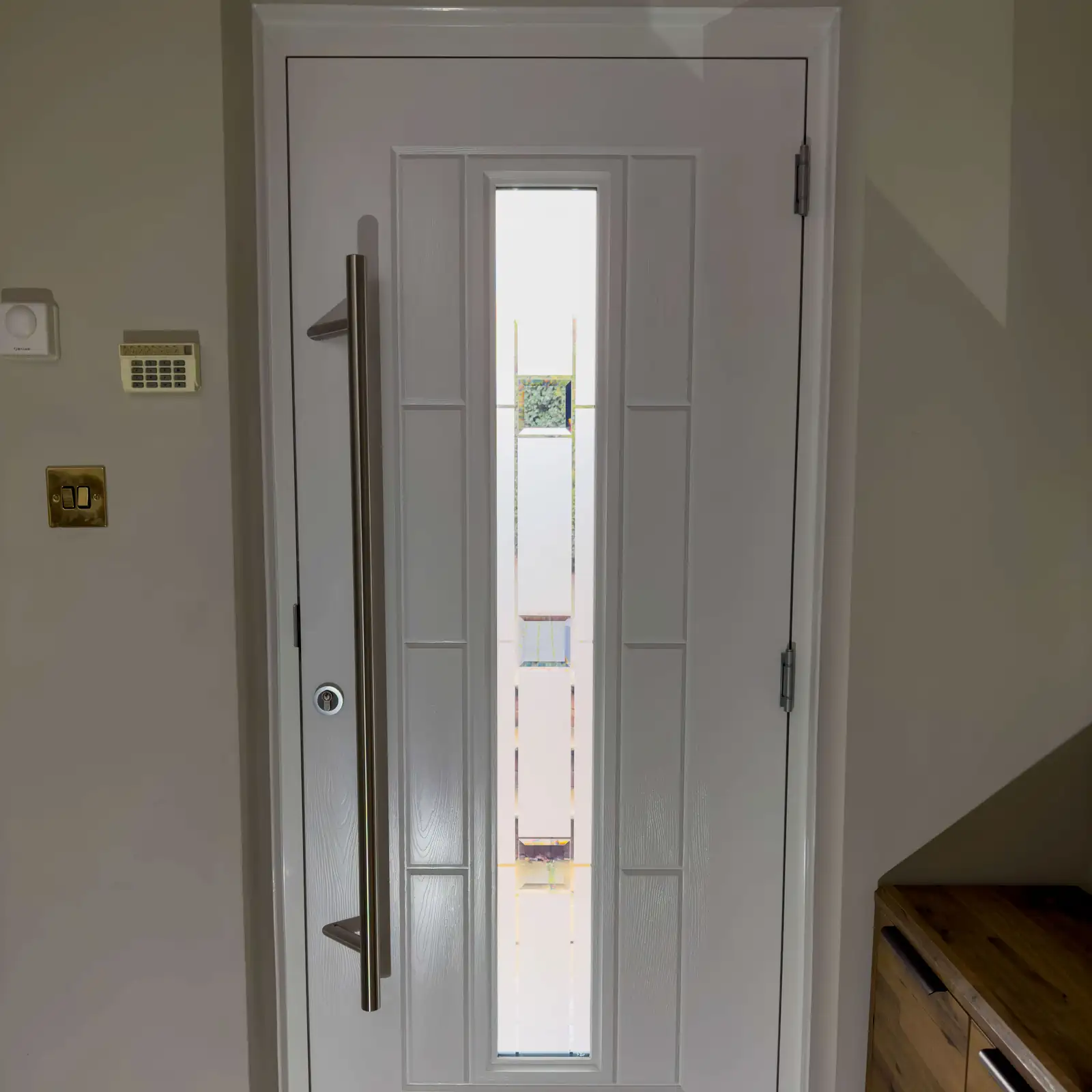
Rockdoor publishes detailed installation guides for every door configuration. These are the same documents we use as reference on site and are worth reading if you want to understand what goes into a proper installation — or if you’re checking whether your existing door was fitted correctly.
Each guide covers frame preparation, fitting tolerances, hardware installation, sealing, threshold fitting and final adjustment procedures specific to that door type.
If you’re having a new Rockdoor fitted, your installer should be following these procedures as a minimum. If you’re having issues with an existing Rockdoor that was fitted by someone else, these guides can help identify whether the installation was done to Rockdoor’s standards — and if it wasn’t, get in touch and we can take a look.
Condensation: What to Expect
The Rockdoor technical manual includes a section on condensation, and it’s refreshingly honest. Even with industry-leading thermal performance, condensation can still form on certain parts of the door under specific conditions.
Where condensation can appear on a Rockdoor:
- The locking cylinder
- The hinges
- The aluminium threshold
- The area around the perimeter where the aluminium reinforcement sits inside the door
These are the coldest parts of the door — metal components that conduct cold from outside. When warm, moisture-laden indoor air meets these cold surfaces, condensation can form.
This is physics, not a defect. Every door manufacturer experiences this. The key is managing indoor humidity through proper ventilation — opening windows, using extractor fans in kitchens and bathrooms, and ensuring trickle vents (where fitted) are in the open position.
Installer insight: We mention this proactively to every customer. A small amount of condensation on the cylinder or threshold on a cold morning is completely normal and nothing to worry about. If condensation is persistent or excessive, it usually indicates a humidity problem in the property rather than an issue with the door. A dehumidifier during winter months can make a significant difference.
Maintenance
Rockdoors require minimal maintenance to stay looking and performing their best:
Cleaning the door: Wipe down with a soft cloth and warm soapy water (mild washing-up liquid is fine). Never use abrasive pads, solvents or pressure washers. For minor scuffs, a Rockdoor touch-up pen can restore the finish.
Lubricating the lock: Apply graphite powder only to the locking cylinder — never use GT-85, WD-40 or any other liquid lubricant, as these can cause more issues over time. Insert the key and work it in and out a few times to distribute the powder.
Threshold channel: Vacuum or brush out the threshold drainage channel periodically to prevent debris blocking the drainage slots.
Hinges: The PTFE bushings mean the hinges shouldn’t need lubrication, but a light spray of GT-85 annually does no harm.
Gaskets and seals: The Q-Lon gaskets are designed to last the lifetime of the door. If they do need replacing eventually, we stock genuine Rockdoor replacement seals and replacement brush pile in our online shop.
Stainless steel furniture: If you have stainless steel bar handles, letterplates or knockers, a dedicated stainless steel cleaner will keep them looking their best — particularly in areas with hard water or coastal exposure.
For common issues like stiff locks, draughty seals or alignment problems, Rockdoor’s own troubleshooting guide covers the most frequent fixes.
Replacement Parts
If you need a replacement part for your Rockdoor, we stock the most commonly needed Rockdoor replacement parts in our online shop, including handles, cylinders, keys and letterplates.
What We Notice When Fitting a Rockdoor vs Other Doors
We fit both Rockdoors and GRP composite doors — so we handle both types every week. Here’s what we notice as installers, not as marketers.
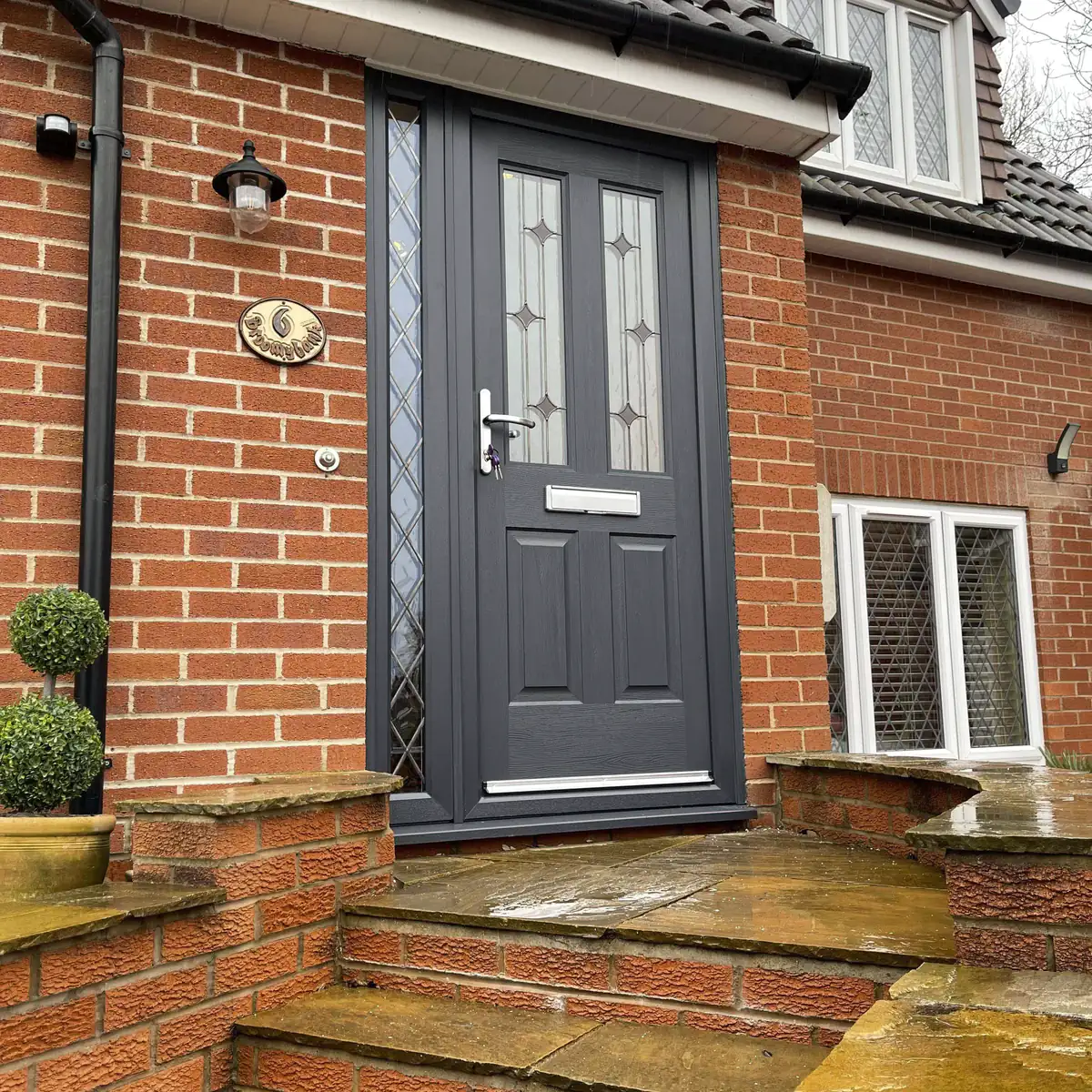
The weight. A Rockdoor is noticeably heavier than a standard GRP composite door. When you lift it out of the van and carry it to the property, you can feel the density of the foam core and the aluminium reinforcement. It’s a two-person lift, always. Some GRP doors are light enough for one person to carry comfortably. The weight translates directly into how the door feels when a homeowner opens and closes it for the first time — it feels substantial, sturdy, and solid in a way that lighter doors don’t.
The outerframe. Rockdoor’s Rehau outerframe is robust. We can fix through it into brickwork with confidence — it doesn’t flex, crack or split. Some other brands use outerframes that are more brittle and can crack during installation if fixings are over-tightened or if the frame is packed under pressure. That’s not a problem we’ve ever had with a Rockdoor frame.
The closing action. When a Rockdoor closes, there’s a distinctive solid “thud” — not a hollow rattle. The Q-Lon gaskets compress smoothly, the latch engages cleanly, and the door sits firm in the frame. On a lighter GRP door, the closing action is noticeably less substantial. It’s not something you’d necessarily notice unless you’ve used both side by side, but once you have, the difference is obvious.
The locking mechanism. Lifting the handle on a Rockdoor to engage the Winkhaus lock feels smooth but substantial. You can feel the hooks throwing positively into the steel keeps. There’s no stiffness, no grinding, no uncertainty about whether the lock has fully engaged. The mechanism is well-engineered and it shows in daily use.
For a detailed side-by-side comparison of construction, security and pricing across the three most popular premium composite door brands, read our Rockdoor vs Solidor vs Endurance comparison.
Which Rockdoor Style Should I Choose?
With 35+ styles available, choosing the right Rockdoor for your property can feel overwhelming. Here’s a quick guide based on our experience fitting them across every type of home in the Midlands.
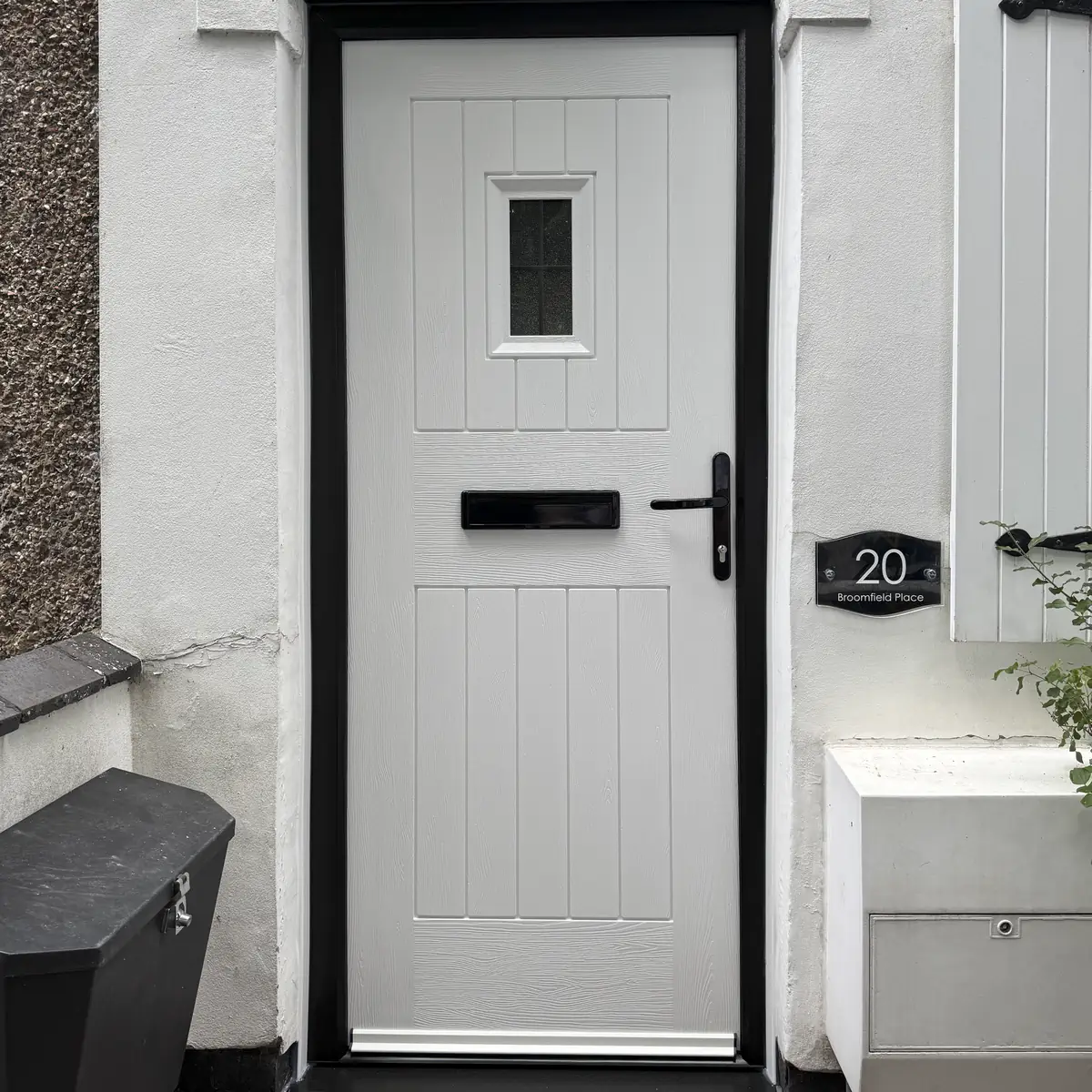
Victorian or Edwardian terrace — The Colonial, Regency, or English Cottage suit period properties beautifully. Their traditional panel layouts and proportions complement the architecture without looking out of place. If you want glass but also privacy, the Colonial with a decorative glass design strikes the right balance.
1930s semi-detached — The Newark, Tennessee, or Jacobean. These styles have traditional elements but aren’t as ornate as the full-period designs. The Newark in particular is one of our most popular choices for 1930s properties.
New build or modern property — The Vogue, Vermont, Indiana or Manhattan. Clean lines, contemporary proportions, and they look outstanding with a bar handle. The Vermont is Rockdoor’s best-selling door for a reason — it works on almost any modern property.
Cottage or rural property — The English Cottage, Cottage Spy View, or Cottage View Light. The Stable door variants are also worth considering for that authentic country look with the practical benefit of opening the top half independently.
Ultra-contemporary home — The Dune Vision or Dune Retreat. The horizontal Dune texture is unlike anything else on the market and suits cutting-edge architecture where a traditional woodgrain would look wrong.
Back door — The Warwick, Aspen or Indiana. These styles work well on rear entrances where you want something smart but don’t need the full kerb-appeal impact of a statement front door. Pair with a low aluminium threshold for easy access to the garden.
For every style with glass options and colour visualisation, use our 3D door designer to design your own Rockdoor or browse our installation gallery to see real examples on real homes.
What Our Customers Say
Two things come up more than anything else when our customers talk about their new Rockdoor:
The feel. One customer in Derby who replaced a 10-year-old GRP composite with a Rockdoor Vogue in anthracite grey told us he noticed the weight difference the moment he first opened it. The door felt solid and substantial in a way his old door never did. The locking mechanism felt robust and precise — smooth to operate but with a definite mechanical confidence that told you something serious was happening inside the door. His wife commented on the closing sound: a deep, satisfying thud rather than the hollow rattle they’d become used to. They’d never thought about how a door sounded before, but once you’ve heard the difference, you can’t unhear it.
The quiet. A customer in Nottingham who lives on a busy road had her old timber door replaced with a Rockdoor Newark. The first morning after installation, she messaged us to say she couldn’t hear the traffic. She’d lived with road noise for so long that she’d stopped noticing it — until it was gone. The combination of the 50mm dense foam core, the Q-Lon gaskets and the S-Glaze sealed glazing creates a level of sound insulation that genuinely transforms the feel of a hallway. We hear this feedback regularly, particularly from customers on main roads or near schools.
What We Do During Installation That Others Don’t
A Rockdoor is a precision-engineered product, and we believe it deserves a precision installation. Over 2,000 installations have taught us exactly what matters — and we’ve seen enough poorly fitted doors from other installers to know what gets skipped when corners are cut.
Here’s what we do on every single Rockdoor installation:
Clean CNC swarf from the locking mechanism. During manufacturing, the lock pocket and keep recesses are CNC-machined into the door slab. This process leaves fine metal and PVC-U shavings (swarf) inside the lock mechanism and the keep channels. If this debris isn’t cleaned out before the door is hung, it can interfere with the smooth operation of the hooks and deadbolt — and over time it can cause premature wear on the lock components. We clean every lock mechanism and every keep before fitting. Most installers don’t even know it’s there.
Clean CNC debris from the keeps. The full-length steel keeps in the outerframe can also contain manufacturing debris. We clean these out before hanging the door to ensure the hooks engage cleanly and fully into the keeps from day one.
Check gasket compression around the entire frame. After fitting, we close the door and check that the Q-Lon gasket is compressing evenly around the full perimeter of the frame. Uneven compression leads to draughts and potential water ingress — two problems that won’t show up on day one but will develop over the following months.
Test every locking point individually. We don’t just check that the handle lifts and the key turns. We visually confirm that every hook throws fully into its keep and that the deadbolt engages cleanly. On a 4-hook lock, that’s four individual hooks plus the deadbolt and latch — six engagement points that all need to be working perfectly.
Test the door from both sides with every key. We check the lock operates smoothly from inside and outside, with every key supplied. If a key feels stiff or the lock action isn’t perfectly smooth, we investigate before leaving. A stiff lock on day one will be a stuck lock in year three.
These aren’t extraordinary measures — they’re what a proper installation looks like. But they take time, and time is what budget installers cut first.
Rockdoor FAQs
35 individual styles, plus stable door, French door and double door variants. The range covers everything from the ultra-contemporary Dune Vision to the traditional English Cottage. Every style is available in all 14 colours.
Most Rockdoor styles have a maximum sash size of 908mm wide x 2098mm tall. Stable doors have a maximum height of 2014mm. French and double doors can reach a combined width of 1823mm. Minimum sizes vary by style — check the technical manual or ask your installer.
No. Thanks to S-Glaze technology, the glass is bonded directly into the door and cannot be removed from outside. There are no cassettes to prise off. For maximum security, upgrade to laminated glass — this is required for Secured by Design accreditation.
Secured by Design requires three specific additions: P1A compliant laminated glass (6.8mm), steel security mesh reinforcement, and a TS008 compliant letterplate. All three must be present. The standard Rockdoor is already exceptionally secure — SBD takes it to the highest possible level.
All composite doors experience minor thermal movement — this is physics, not a defect. Dark colours absorb more heat and experience slightly more movement than lighter colours. Rockdoor’s 360° aluminium inner frame restricts this movement significantly, and they offer a 3mm no-bow guarantee. In our experience, any movement we’ve seen on dark Rockdoors has been slight and has had no effect on operation. Always lift the handle to fully engage the locks when closing.
An instant-locking system that automatically throws the hooks and deadbolt when the door closes. No handle lifting or key turning needed — the door locks itself using magnetic detection. It requires tighter installation tolerances (±0.5mm) than standard locks and should only be fitted by experienced installers.
The guarantee is provided by the cylinder manufacturer. If a burglar gains entry by snapping the Avocet ATK 3-star cylinder, you receive £2,000. The key must be removed from the cylinder for the security features to be active. See Rockdoor’s website for full terms and conditions.
Rockdoor provides a comprehensive manufacturer’s guarantee covering structural integrity, performance and colour stability. The exact terms and duration should be confirmed with your installer or directly with Rockdoor, as guarantee details can be updated.
Find the 6 or 7 digit production number on the hinge side of the inner frame. Contact Rockdoor’s parts service or browse our Rockdoor replacement parts shop for commonly needed items.
Get a Rockdoor Quote
We’re one of the most experienced Rockdoor approved installers in the Midlands, with over 2,000 Rockdoors fitted since 2010 across Derby, Nottingham, Leicester, Burton upon Trent, Warwick and Crewe.
Send us photos of your existing door (inside and outside) along with the style and features you’re interested in, and we’ll have a quote back to you within 24 hours.
You can verify our status as a Rockdoor Trusted Installer directly on Rockdoor’s own website.
0800 690 6870 — Monday to Friday 08:00–18:00, Saturday & Sunday 09:00–16:00.