All pricing and specifications in this guide are accurate to the best of our knowledge as of March 2026. Prices shown are approximate ballpark figures intended to give you a general idea of what composite doors cost — they are not the exact prices we charge and should not be used to break down or compare a specific quote. Every installation is different, and your actual price will depend on the specification, property type and any additional work required. Manufacturer specifications, pricing and availability can change without notice. If you spot anything that’s out of date or incorrect, please let us know and we’ll update it.
Composite doors cost between £1,100 and £2,500 fully fitted in the UK, depending on the brand, specification and optional extras you choose. A basic GRP composite door in white with no glass starts from around £1,100 fitted, while a premium Rockdoor or Solidor with decorative glass, colour upgrade and designer hardware typically lands between £1,800 and £2,200.
Those are real numbers based on the doors we fit every week — not vague ranges pulled from manufacturer brochures.
We’re Jim and Josh, a family-run door installation business based in Derbyshire. We’ve fitted over 2,000 composite doors since 2010 across Derby, Nottingham, Leicester, Burton upon Trent, Warwick and Crewe. This guide is everything we know about what composite doors actually cost — no sales pitch, no lead-gen forms, just honest pricing from people who install them for a living.
For a full breakdown of what we offer and how the process works, see our composite doors page.
Composite Door Prices at a Glance
If you’re short on time, here’s what you can expect to pay for the most common configurations, fully fitted including VAT:
| Configuration | GRP (Door-Stop, Hallmark etc.) | Rockdoor | Solidor / Endurance |
|---|---|---|---|
| Single door (white, no glass) | From £1,100 | From £1,500 | From £1,200–£1,300 |
| Single door (colour + glass + bar handle) | £1,500–£1,800 | £1,900–£2,200 | £1,700–£2,100 |
| Door + 1 sidelight | £1,500–£2,000 | £1,850–£2,500 | £1,600–£2,300 |
| Door + 2 sidelights | £1,800–£2,400 | £2,200–£3,000 | £2,000–£2,800 |
| Door + toplight | £1,400–£1,800 | £1,800–£2,400 | £1,550–£2,100 |
| Stable door | £1,400–£1,900 | £1,800–£2,400 | £1,500–£2,200 |
| French doors | £1,800–£2,500 | £2,500–£3,500 | £2,200–£3,200 |
These are mid-range estimates. The lower end assumes white or a standard colour with basic glass; the upper end assumes a premium colour, decorative glass, bar handle and upgraded hardware. Your actual price depends on the exact specification — keep reading for a full breakdown of what drives the cost up and down.
What’s Included in a “Fully Fitted” Price?
Before comparing any numbers, you need to know what’s included. Not all quotes cover the same things, and this is where most homeowners get caught out.
A genuine fully fitted composite door price should include the door slab, outerframe, all hardware (hinges, locking mechanism, cylinder, handles), a threshold, weatherseals, professional installation, removal and disposal of your old door, and VAT.
Some companies exclude the cill (sill), low threshold, letterbox, or even the outerframe from their headline price. Others include everything upfront. Always ask for a total fitted price with no hidden extras — if a company won’t give you one, that tells you something.
Every price in this guide includes supply, professional installation, VAT and removal of the old door unless stated otherwise.
Composite Door Prices by Brand
Not all composite doors are built the same. The brand determines the core material, security level, frame construction and warranty — which is why the price range is so wide. Here’s what the most common UK brands cost fully fitted, based on a standard single door in white with lever handles, standard threshold and no glass.
GRP Composite Doors — From £1,100 Fitted
GRP (glass-reinforced plastic) composite doors are the most common type on the UK market. Brands like Door-Stop, Hallmark and Virtuoso all fall into this category. They typically use a foam-filled polyurethane core with a GRP skin that mimics the look of timber grain.
What the base price includes:
GRP doors are lighter than solid timber-core doors and offer good thermal performance, comfortably meeting Building Regulations. They’re a solid, reliable choice for the majority of homes and represent excellent value for money.
The main trade-off compared to premium brands is the glazing system. Most GRP doors use clip-in glazing cassettes that can technically be removed from the outside. In practice this isn’t a common break-in method, but it’s worth knowing — especially if you’re comparing against a Rockdoor where the glass is permanently sealed in.
We install GRP composite doors alongside Rockdoors and offer them as a more affordable alternative for customers who want a quality composite door without the premium price tag.
Door-Stop deserves a specific mention — they’re the UK’s most popular composite door brand by volume. Made in Nottinghamshire, they offer fast delivery (as quick as 3 working days), a 10-year warranty, and come fitted with Ultion lock cylinders as standard. They’re foam-filled rather than solid timber core, but they’re perfectly secure and represent some of the best value in the market. Expect to pay from £1,100 fitted for a plain white Door-Stop door.
Hallmark has been manufacturing composite doors for over 30 years and offers one of the largest design ranges in the UK — over 150 door styles with steel-reinforced frames as standard. Their foam core is 19% more thermally efficient than a 48mm solid timber core door, and they’ve won the National Fenestration Award for Composite Door Manufacturer of the Year five years running. Pricing is similar to Door-Stop.
Virtuoso are based in Gateshead and offer an enormous range of combinations — over 80,000 according to their marketing. Like Hallmark, they use a GRP skin with a foam core and come with Ultion 3-star cylinders. They’ve recently launched a Virtu-AL range with an aluminium outer frame for a more contemporary look. Pricing is comparable to other GRP brands.
Hörmann Truedor (formerly just Truedor) are manufactured in Wales and combine German engineering with UK craftsmanship. Their standard Classic44 range uses a 44mm GRP foam-core slab, but their Clima63 range pushes things further with a 63mm slab and triple glazing — some of the best thermal performance on the market. Supply-only prices start from around £815 + VAT, with fitted prices from around £1,200 depending on installer.
Rockdoor — From £1,500 Fitted
Rockdoor is a premium composite door manufactured in Blackburn, Lancashire since 1996. They take a fundamentally different approach to construction compared to every other brand on this list.
What the base price includes:
The Avocet ATK cylinder is one of the highest-rated locks on the UK market — see our comparison of the best door cylinder locks for how it stacks up against Ultion and Yale.
The key difference with Rockdoor is what’s included as standard that other brands charge extra for or don’t offer at all. S-Glaze technology eliminates the removable glazing cassettes found on every other composite door. The aluminium inner frame means all hardware bolts into metal rather than just the door skin. Independent testing shows Rockdoors are 35% stronger than standard GRP composite doors.
For a full breakdown of every Rockdoor component — from the aluminium inner frame to the Winkhaus locking mechanism — read our complete guide to Rockdoor features and technical specifications.
Most customers spend between £1,900 and £2,100 on a single Rockdoor once they’ve added a colour upgrade, glass design and hardware. See our full Rockdoor pricing for exact costs.
We’re a Rockdoor Trusted Installer with over 2,000 Rockdoors fitted since 2010. Over 95% of the doors we install are Rockdoors — we wouldn’t stake our reputation on them if we didn’t believe in the product.
Solidor — From £1,200 Fitted
Solidor is one of the most recognisable composite door brands in the UK, founded in 2004 in Stoke-on-Trent. Their defining feature is a 48mm solid timber core, which gives the door a noticeably heavier, more substantial feel compared to foam-core alternatives.
Key specifications:
Solidor’s biggest strength is colour choice and design flexibility. With 27+ colours available on both sides of the door, they offer more customisation than any other brand. Their Italia Collection of contemporary door styles has been particularly popular in recent years.
The main trade-off is frame reinforcement — Solidor uses plastic (Werbar) reinforcement in their frames rather than steel or aluminium. This is adequate for the vast majority of installations, but it’s a difference worth noting if security is your absolute top priority.
Solidor doors are also more susceptible to thermal movement than some competitors. Dark-coloured Solidor doors facing south can experience noticeable bowing in direct sunlight. This is a known issue across the industry, but Solidor’s timber core makes it slightly more pronounced. Always lift the handle to fully engage the locking mechanism when closing the door — don’t just push it shut on the latch.
Expect to pay from £1,200 for a basic Solidor fitted in white, rising to £2,000–£2,500+ with colour upgrades, decorative glass and premium hardware.
Endurance — From £1,300 Fitted
Endurance Doors are manufactured in Lincoln (as part of the Rocal Group) and have been operating since 2002. Like Solidor, they use a solid timber core — but Endurance goes further with a 48mm cross-laminated structure made from 17 layers of laminated veneer.
Key specifications:
Endurance’s biggest strength is design variety. With 85+ styles across four distinct collections, they offer the widest choice for homeowners who want something specific — whether that’s a traditional cottage door, a contemporary flat-panel design, or something in between. Their Contemporary collection in particular competes well with Rockdoor’s modern styles.
Expect to pay from £1,300 for a basic Endurance door fitted, rising to £2,000–£2,500+ with upgrades.
For a detailed security-by-security comparison of these three premium brands, read our Rockdoor vs Solidor vs Endurance comparison.
CompDoor — Mid-Range
CompDoor is a newer brand that’s gained a strong reputation quickly. Their doors feature a 48mm cross-laminated Albasia Falcata timber core wrapped in their proprietary CoolSkin technology, which protects the door surface from extreme temperature changes. They offer some of the best thermal performance among timber-core doors.
CompDoor offers over 250 colour combinations and comes with PAS24:2016 compliant locks and an ABS security cylinder as standard. Pricing sits between GRP and premium brands — typically £1,300–£2,200 fitted depending on specification.
Quick Brand Comparison
| Brand | Core Type | Frame Reinforcement | Standard Cylinder | Fitted From | Best For |
|---|---|---|---|---|---|
| GRP (Door-Stop, Hallmark, Virtuoso) | Foam (PU) | Steel (varies) | Ultion / brand dependent | £1,100 | Value for money |
| Hörmann Truedor | Foam (PU) | Steel | Kinetica 3-star | £1,200 | Thermal performance |
| Solidor | 48mm solid timber | Plastic (Werbar) | Ultion 3-star | £1,200 | Colour choice |
| Endurance | 48mm laminated timber (17 layers) | Plastic (Werbar) | ABS 3-star | £1,300 | Style variety |
| CompDoor | 48mm cross-laminated timber | Steel | ABS | £1,300 | Thermal performance |
| Rockdoor | High-density PU foam | 360° aluminium | Avocet ATK 3-star | £1,500 | Security |
Optional Extras and What They Cost
The base price of any composite door is just the starting point. The specification you choose is the second biggest factor in the final price — and extras add up faster than most people expect.
These prices are typical across most composite door brands. They’ll vary slightly between manufacturers and between installation companies based on overheads, area and margin — but they give you an accurate ballpark.
Door Colour — From £50
The base price on every brand assumes a white door, inside and out. Choosing a colour for the external door sash — anthracite grey, black, green, whatever — typically adds around £50. This covers the external face of the door only; the internal side stays white and the frame stays white.
For Rockdoor specifically, the colour upgrade is £70, and there are 14 colours to choose from — including four modern greys, three woodgrain finishes and seven classic shades. For a full breakdown of every Rockdoor colour with RAL codes, frame matching options and which colours work best on different property types, see our complete Rockdoor colours guide.
If you want a coloured frame to match (common with anthracite grey or black), that’s an additional cost on top. And if you want a different colour inside to outside (dual colour), expect to pay more again. Solidor offers the widest colour range here — 27+ colours available on both sides — but every brand charges for the upgrade.
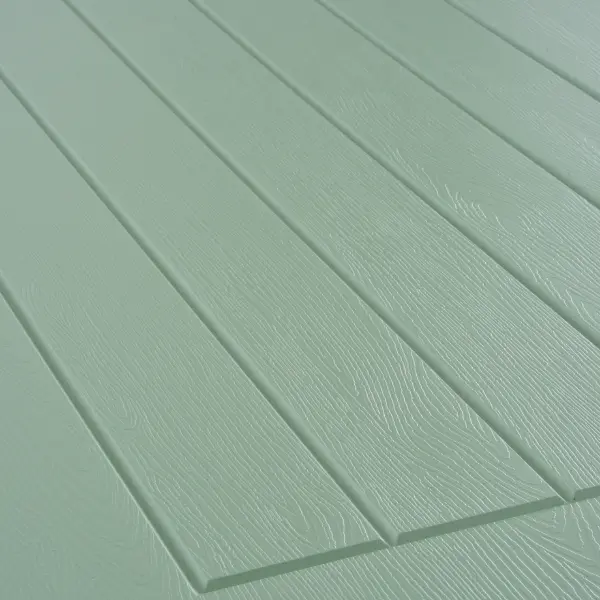
Anthracite grey is currently the most popular composite door colour in the UK, followed by black and Agate grey. A quick note: darker colours absorb more heat, which can increase thermal movement on south-facing doors. Lighter colours like agate grey, cream or chartwell green are worth considering if your door faces south.
Low Aluminium Threshold — £20
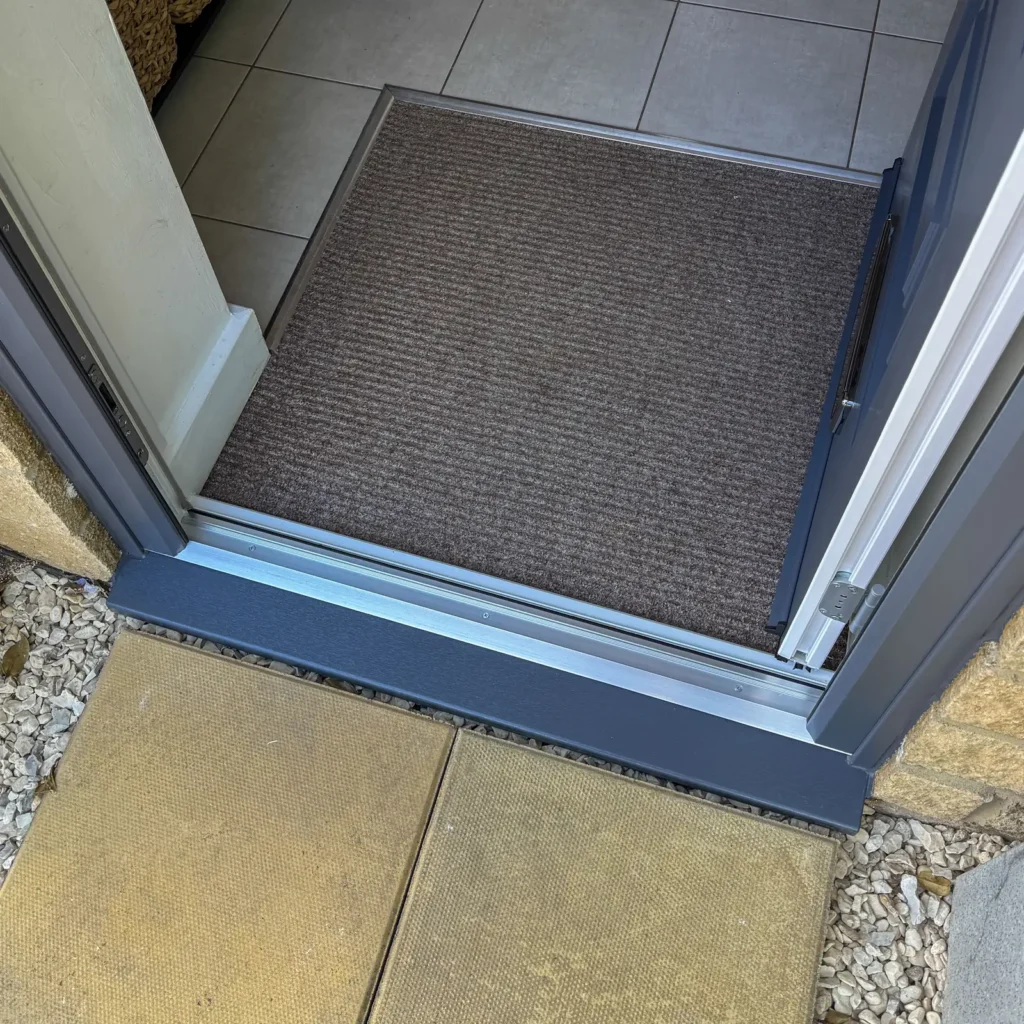
Most composite doors come with a standard PVC threshold. Upgrading to a low aluminium threshold costs around £20 and is worth doing in almost every installation. The aluminium threshold sits lower than the standard PVC version, which makes it easier to step over — particularly important for accessibility. Around 85% of the doors we fit include a low threshold upgrade.
Cill (Sill) — £15–£30
A cill is the external part that sits beneath the door, directing rainwater away from the threshold and the base of the frame. Roughly 95% of the doors we fit require a cill. The price varies based on the size (length) and the colour — a standard white cill for a single door costs around £15, while a larger coloured cill for a door with sidelights will be closer to £30.
Letterplate — £50
A standard letterplate typically adds around £50 to the price. Some brands include a basic letterplate in the base price; others don’t. If security is a priority, look for a TS008-compliant letterplate with restricted opening — this prevents anyone reaching through the letterbox to access the handle or lock mechanism. On Rockdoors, the letterplate is particularly important for achieving Secured by Design certification.
Contemporary or architectural letterplates cost more — expect to pay between £80 and £130 for premium options like Coastal letterplates. These tend to only be available on the higher-end brands like Rockdoor, Solidor and Endurance. If you’re choosing a modern door style with a bar handle, a contemporary letterplate to match is worth the upgrade.
Bar Handle — £80–£160
Bar handles (also called pull handles) have become the most popular hardware choice on contemporary composite doors. Prices range from around £80 for a shorter bar handle to £160 for a full-length 1800mm option. The price difference comes down to length, material grade and finish.
Rockdoor and most GRP brands now use 304-grade stainless steel bar handles from suppliers like Fab & Fix — good quality and durable for the vast majority of UK homes. If you live in an exposed coastal location, 316L marine-grade stainless steel handles are available as an upgrade and are specifically designed to resist salt air corrosion — but they’re significantly more expensive. For most homeowners, 304-grade is more than sufficient and will last years with basic maintenance.
Standard lever handles are included in the base price of every brand, so a bar handle is always an upgrade cost.
Knocker — £20–£40
A door knocker adds £20–£40 depending on the style and finish. Contemporary bullring knockers sit at the higher end and can be upwards of £90 to £120; traditional knockers at the lower end. Most knockers are face-fixed, so there are no visible bolt holes on the inside of the door, but always double check if it’s a concern.
Spyhole (Peephole) — £15
A spyhole costs around £15 and is factory-fitted during manufacture. If you want one, make sure to include it when ordering — retrofitting a spyhole into a composite door isn’t recommended as it can compromise the door’s structure and void the warranty.
Cat Flap — £90
A factory-fitted cat flap costs around £90. This must be ordered at the point of manufacture — cutting a cat flap into a composite door after installation will void the guarantee. The manufacturer uses CNC machines to precision-cut the aperture, and the door passes full quality checks before leaving the factory. If you need a cat flap, tell your installer at the quoting stage.
Glass Upgrades — £60–£300
The base price of most composite doors includes plain clear glass (if the door style has glass) or no glass at all (for solid panel doors). Upgrading to decorative, obscured or designer glass adds between £60 and £300 depending on the design.
On the lower end (£60–£90), you’ll find basic options like satin (frosted) glass and simple leaded designs. At the higher end (£200–£300), you’ll find exclusive 3D designs, bevelled glass, decorative fusions and premium privacy options.
Rockdoor’s glass designs are particularly distinctive — their exclusive 3D glass range (designs like Haze, Cube, Shade and Optima) starts from around £250 and isn’t available from any other manufacturer. If you’ve seen a glass design you like on a Rockdoor, you can only get it from Rockdoor.
For additional security, laminated glass is available on most brands and is significantly harder to break through than standard toughened glass. On Rockdoor, laminated glass combined with the steel mesh upgrade (£90) and a TS008 letterplate achieves full Secured by Design accreditation.
Sidelights — £240–£400 Per Panel
A sidelight is a glazed panel fitted alongside the main door — either on one side or both. Adding sidelights transforms the look of an entrance and lets significantly more natural light into the hallway, but they do add substantial cost.
Expect to pay £240–£400 per sidelight panel depending on the brand, size, glass design and colour. A door with one sidelight typically adds £240–£400 to the total; a door with sidelights on both sides adds £480–£800. The sidelight price also affects the cill cost (a wider opening needs a longer cill) and may require additional structural work if the existing opening needs widening.
Toplights — £210–£370
A toplight is a glazed panel above the main door. They’re common on properties with taller openings and add a finished look while letting light in above the doorframe. Prices range from £210–£370 depending on the size and glass specification. Like sidelights, the cost varies by brand, colour and glass design — but the differences between brands are relatively small for sidelights and toplights.
How Optional Extras Add Up: A Worked Example
This is where composite door pricing catches people out. Here’s a real-world example of how a £1,500 Rockdoor becomes a £2,030 door:
| Item | Cost |
|---|---|
| Rockdoor Colonial (white, lever handle, standard threshold) | £1,500 |
| Anthracite grey colour upgrade | £50 |
| Haze glass design | £275 |
| 1200mm stainless steel bar handle | £120 |
| Standard letterplate | £50 |
| White cill | £15 |
| Low aluminium threshold | £20 |
| Total (fully fitted inc. VAT) | £2,030 |
Add a spyhole (£15), a knocker (£30) and upgrade to a larger bar handle (£160 instead of £120), and you’re past £2,100. Add a sidelight and you’re approaching £2,500.
The same principle applies to every brand. A GRP Door-Stop that starts at £1,100 can easily reach £1,600–£1,800 with colour, glass, hardware and a sidelight.
This is why the “from” price you see online rarely reflects what you’ll actually pay. Always get a full specification and total fitted price before comparing quotes.
Watch Out for Pricing That Looks Cheaper Than It Is
Something we see regularly — and that catches homeowners out — is the way different companies structure their pricing. Not all companies price things the same way, and what looks like a bargain on paper can end up costing more overall.
Here’s how it works. Some companies charge several hundred pounds more for the base door than we do, but then sell extras like a cill, low threshold or satin glass for half the price. When you’re comparing line items, their extras look like great value — “they’re only charging £8 for a low threshold and £30 for satin glass!” But the base door price already has that margin built in. The total fitted price ends up the same or higher — the cost is just distributed differently across the quote.
Other companies do the opposite — a low base price that grabs your attention, but every single extra is marked up significantly. A cill that costs £15 elsewhere becomes £35. A bar handle that should be £120 becomes £200. By the time you’ve specified the door you actually want, the “cheap” quote is the most expensive one on the table.
This is exactly why we always say: compare the total fitted price for the exact same specification. Not the base price, not the extras individually — the total. Ask every company to quote for the same brand, same door style, same colour, same glass, same handle, same cylinder, same cill, same threshold, same letterplate, with installation and VAT included. That’s the only number that matters.
Real Customer Examples
To show how this works in practice, here are three real installations we’ve completed recently (customer details anonymised):
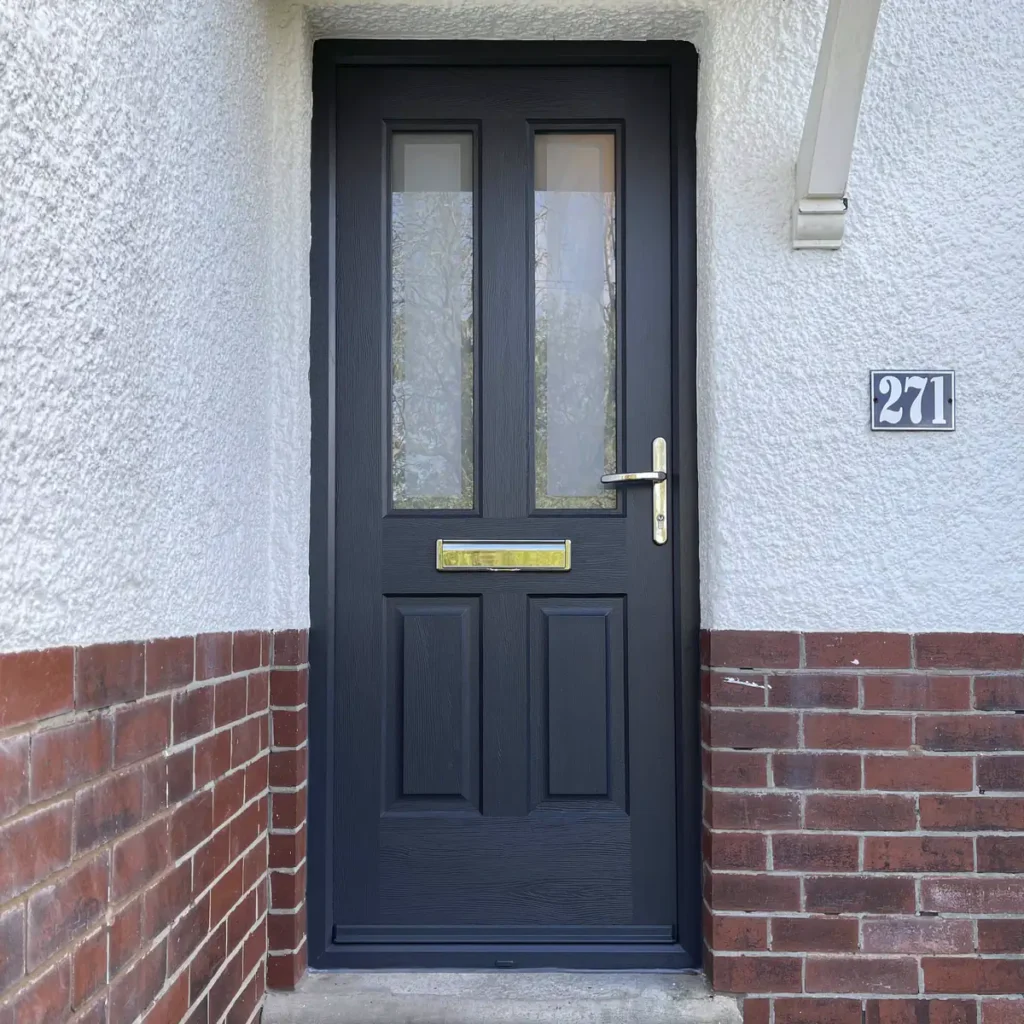
Customer in Nottingham — Victorian terrace, 1930s timber frame Replaced a draughty original timber door with a Rockdoor Newark in anthracite grey. The old timber frame needed completely replacing — we removed it carefully in small pieces to avoid disturbing the surrounding plaster, which on properties of this age is often loose and fragile. The reveals were out of level (common on older properties where the building has settled over decades), so the new frame needed precise packing to sit plumb and square. The plaster reveals required making good after the new frame went in, and we fitted 25mm internal trims to finish the job cleanly. Bright star glass design, lever handles, white cill, low threshold. Total: £2,350 fully fitted.
Customer in Derby — 2015 new build, standard opening. Straightforward swap from a builder’s-grade GRP composite to a Rockdoor Vermont in agate grey. This is the kind of installation that new builds make easy — clean plasterboard, no loose plaster to worry about, reveals that are almost level and square, no old architrave to remove, and no surprises behind the existing frame. No electrics or plumbing near the opening. Standard 25mm internal trims, no additional making good required. Satin glass, lever handles, low threshold. Total: £1,680 fully fitted.
Customer in Leicester — Semi-detached, door with one sidelight. Replaced an old uPVC door and sidelight with a GRP composite door and matching sidelight in chartwell green. This property had already had several doors fitted over the years, and each previous installation had left the reveals slightly worse — loose plaster, old fixing holes, and trim damage from previous removals. We took extra care removing the old frame and trims, made good the reveals, and fitted new 25mm internal trims throughout. New cill for the wider opening, low threshold, standard glass in both door and sidelight. Total: £1,550 fully fitted. When we publish installation photos on our site, we include approximate pricing — so you can see exactly what a door like yours might cost. Browse our installation gallery for examples.
Why Older Properties Cost More to Fit
The examples above show why we can’t give a single “fitted price” that applies to every home. New builds are generally straightforward — clean plasterboard, level reveals, no electrics or plumbing near the door, and simple trimming.
Older properties are a different story. Victorian, Edwardian and pre-war houses almost always have timber frames that need removing carefully in small pieces to avoid pulling away the surrounding plaster — which after 40-60 years can be loose and fragile. The reveals are often out of level after decades of settlement, meaning the new frame needs careful packing to sit true. There may be electrics running near the frame (light switches, doorbells, alarm sensors) that need working around with care. And if the property has had previous door replacements, the reveals can be in progressively worse condition — each removal takes its toll.
The internal trims tell the story too. Around 90% of the doors we fit use standard 25mm trims internally — this covers the gap between the new frame and the plaster or plasterboard neatly. On rare occasions (less than 1% of our installations), a wider 90mm trim is needed — usually on much older properties where the reveals have been damaged by previous installations or where the walls are significantly out of level.
We also frequently deal with cill height differences on older properties. Many older doors sit on deep timber cills — 50–60mm or more — whereas a standard modern cill is 30mm. Because we fit low aluminium thresholds wherever possible (for easier step-over access), the cill height needs building up to maintain proper floor clearance. This is a small but important detail that inexperienced installers often get wrong — resulting in a threshold that’s too high or a door that doesn’t clear the internal flooring.
None of this is a problem — it’s what we do every day, and every issue is identified at the survey stage so there are no surprises on installation day. But it’s why a door fitted to a 1920s terrace costs more than the same door fitted to a 2015 new build, even though the door itself is identical.
One thing we never do — regardless of property type — is reuse any part of the old door. Every installation gets a completely new frame, cill, threshold, hardware and locking mechanism. Some installers will reuse an existing cill or rehang old furniture to keep costs down, but we don’t. Old components have old wear, old weathersealing and old tolerances. If you’re paying for a new door, everything that comes with it should be new too.
Supply-Only vs Fully Fitted
If you’re a competent DIYer or have a trusted installer, buying a composite door supply-only can save money. Supply-only prices are typically 40–50% lower than fully fitted prices because you’re removing the labour, survey, waste disposal and guarantee management from the equation.
Typical supply-only prices, depending on specification:
| Brand | Supply-Only From |
|---|---|
| GRP (Door-Stop, Hallmark) | £500–£800 |
| Hörmann Truedor | £1,000+ |
| Solidor | £1,100–£1,400 |
| Endurance | £1,100–£1,400 |
| CompDoor | £750–£1,000 |
| Rockdoor | £1,300–£1,700 |
A few important caveats with supply-only:
Warranty — most manufacturers’ warranties require the door to be installed by an approved or registered installer. If you fit the door yourself or use an unregistered fitter, the manufacturer’s warranty may not apply. Check with the specific brand before purchasing supply-only.
Building Regulations — replacing an external door in England and Wales requires compliance with Building Regulations Part L (thermal performance). If you use a FENSA, Certass or QANW-registered installer, they can self-certify compliance. If you fit the door yourself, you’ll need to apply for a building control inspection from your local authority — which costs money and adds hassle.
Getting it wrong — composite doors need precise measurements and proper installation to perform correctly. An incorrectly fitted door will have poor weathersealing, may not lock properly, and can cause premature wear on hinges and locking mechanisms. We regularly get calls from homeowners who bought supply-only and had the door fitted by someone without composite door experience — the cost of putting it right often exceeds what they saved.
That said, if you’re buying supply-only and fitting yourself, you’ll need to know how to handle the cylinder — our guide to measuring and swapping a door cylinder lock walks you through it.
We offer supply-only Rockdoor pricing for tradespeople and homeowners who have the skills and experience to install them correctly.
What Does a Composite Door Installation Actually Involve?
If you’ve never had a door replaced before, it’s natural to wonder what the process looks like. Here’s what happens on installation day — based on a standard single composite door replacement.
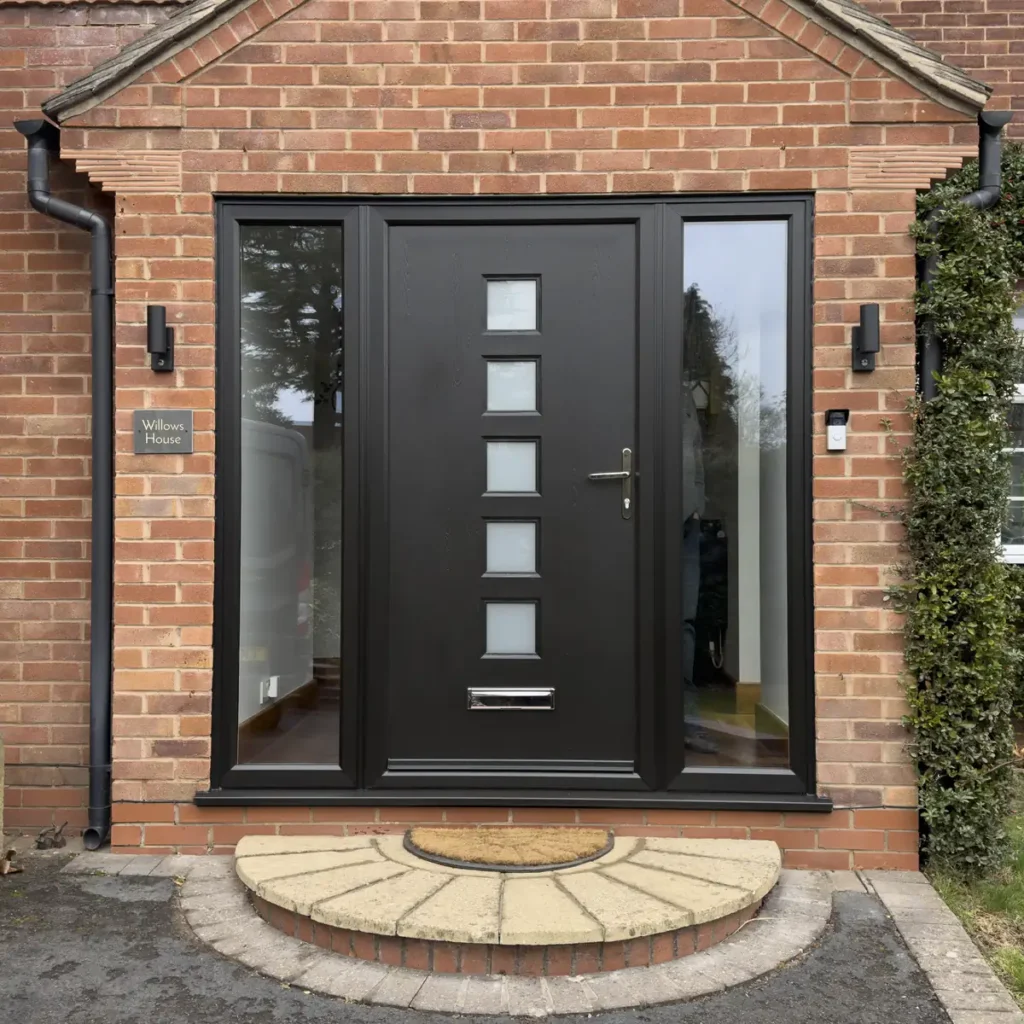
Before the fitters arrive, the door has already been manufactured to the exact measurements taken during your survey. Everything is checked and prepared in advance — the correct door, frame, hardware, cill and threshold are all confirmed before installation.
Protecting your home comes first. We lay dust sheets in the hallway and around the entrance. If it’s raining, we lay extra dust sheets down to soak up any water— a standard door swap takes on average 3–5 hours, so the opening is never exposed for long.
Removing the old door is straightforward on most properties. We take the door off its hinges, unscrew the old frame from the brickwork, and remove everything cleanly. On older properties with timber frames that have been painted over multiple times, this can take a little longer. All old materials are taken away — you don’t need to arrange skip hire or disposal.
Fitting the new frame is the most critical part of the installation. The outerframe is positioned in the opening, checked for level and plumb (straight and square in all directions), and packed with shims where needed to ensure a perfect fit. It’s then fixed through the frame into the brickwork using frame fixings — never just expanding foam alone, which is a shortcut some budget installers take.
Sealing and finishing is the final step. The gap between the frame and the brickwork is filled with expanding foam for insulation, then sealed externally with silicone to prevent water ingress. The cill is fitted beneath the threshold, and any minor making good (filling small gaps in plaster or brickwork) is completed. We test the door thoroughly — opening, closing, locking from inside and outside with all keys — before walking you through how everything works.
The whole process takes 3–5 hours for a standard single door, or a full day if the opening needs widening for sidelights or if there’s significant making good required on an older property. We leave everything clean and tidy — the only evidence that anything happened is a brand new front door.
What Affects Composite Door Prices?
Beyond the brand and specification, several practical factors influence the final cost.
Old Houses vs New Builds
Fitting a composite door to a new-build property is generally simpler. They typically have good plasterboard, reveals that are fairly level, clean brickwork, and the existing door is easy to remove. This is the scenario most “from” prices assume.
Older properties are a different story. Victorian, Edwardian and pre-war houses often have non-standard openings — wider, taller, or with arched brickwork above the door. The existing frame may be timber rather than uPVC, which usually means the entire frame needs replacing rather than just the door slab. There may be thick plaster reveals, architrave to work around, or render that needs cutting back.
None of this is a problem — we’ve fitted doors to every type of property across the Midlands since 2010 — but it can add time and cost. If your property has a non-standard opening or an old timber frame, expect the fitted price to be higher than the baseline figures in this guide. A survey will confirm exactly what’s involved.
Single Door vs Door with Sidelights
A single composite door is the simplest and cheapest installation. Adding sidelights means a wider opening, a wider cill, more glass, more frame, and more time on the installation. If your existing opening isn’t wide enough for sidelights, it may need widening — which involves structural work (a lintel) and building control approval. This can add £500–£1,500+ to the project depending on the extent of the work.
If your property already has sidelights and you’re replacing like-for-like, the additional cost is just the sidelight panels themselves (£240–£400 each).
Cill and Threshold
As mentioned earlier, roughly 95% of the doors we fit need a cill and 85% need a low threshold. These are usually included in our quotes as standard because they’re almost always necessary — but some companies exclude them from their headline price to make the base figure look lower. Always check.


Trimming and Architrave
If your existing door has decorative architrave (wooden trim around the frame), this may need removing and refitting or replacing during installation. Some installers include this in the price; others charge extra. If the architrave is old or damaged, replacing it at the same time as the door makes sense and avoids a second job later.
How Local Your Installer Is
Installers factor travel time and distance into their pricing. A local installer with low overheads will almost always be cheaper than a company travelling from 50 miles away. We cover roughly a 40-mile radius from our base in Derbyshire — close enough to keep travel costs low for our customers.
National companies like Everest and Anglian charge significantly more than independent installers — partly because of their brand marketing costs and partly because of their sales model. Everest’s composite doors start from £2,500+, which is roughly £500–£1,000 more than a comparable door from a local installer.
Where You Live
Regional pricing varies across the UK. Labour costs in London and the South East are typically 15–20% higher than the Midlands, the North or the South West. A door that costs £1,500 fitted in Derby might cost £1,800 in London for the same brand and specification. The door itself costs the same — it’s the labour, premises and overhead that differ.
Front Doors vs Back Doors — Is There a Price Difference?
The short answer is: the door itself costs the same whether it’s going on the front or back of your house. A Rockdoor Colonial is the same price regardless of which entrance it’s fitted to.
In practice though, back doors tend to cost less overall because homeowners typically choose simpler specifications — a plain colour, basic or no glass, lever handles rather than an expensive bar handle. A back door doesn’t need the same kerb appeal as a front door, so the upgrades that push front door prices towards £2,000+ are often skipped.
If you’re replacing both front and back doors at the same time, most installers (ourselves included) can offer a better price than two separate installations — you’re saving on survey time, travel and setup.
Energy Ratings and Thermal Performance
Every composite door sold in the UK must meet Building Regulations Part L for thermal performance. In practice, this means the complete door set — door, frame and glazing combined — must meet a minimum thermal efficiency standard before it can be legally installed.
Some manufacturers quote Door Set Energy Ratings (DSER), which work like the A–G ratings you see on appliances. An A-rated composite door is excellent; a C-rated door still meets Building Regulations. Rockdoor achieves up to A ratings depending on specification, largely thanks to their S-Glaze technology and Q-Lon gaskets which eliminate air gaps.
In terms of pricing impact, better thermal performance doesn’t necessarily cost more. The difference between a lower-rated and a higher-rated door from the same brand is often just the glass specification and seal quality — features that are already included in premium brands. You shouldn’t need to pay a significant premium specifically for energy efficiency.
Composite Doors vs uPVC vs Timber
If you’re weighing up whether to go composite at all, here’s how the three main door materials compare on price.

uPVC doors start from around £500–£900 fully fitted. They’re the cheapest option and require minimal maintenance, but they offer less security, less thermal performance and less kerb appeal than composite doors. A uPVC door will do the job, but it won’t feel or look like a proper front door.
Composite doors range from £1,100–£2,500 fully fitted (as covered in this guide). They combine the low-maintenance benefits of uPVC with the look and feel of timber, plus significantly better security and thermal performance. For most homeowners, a composite door is the best balance of cost, performance and appearance.
Timber doors range from £1,500–£4,000+ fitted depending on the timber species, style and finish. A well-made timber door is beautiful, but it requires regular maintenance — sanding, priming and painting every 2–3 years, or more frequently in exposed locations. Timber doors can also warp, swell and shrink with moisture changes, and are less secure than composite alternatives unless you invest heavily in ironmongery. Most homeowners who previously would have chosen timber now opt for composite as a lower-maintenance alternative with similar aesthetics.
Why the Cheapest Quote Isn’t Always the Best
This is worth saying because we see the consequences regularly. The cheapest composite door quote you receive might be cheap for very good reasons — and those reasons will cost you later.
Installer longevity — your composite door comes with a manufacturer’s warranty, but that warranty is administered through the installer. If the installer goes bust in year 3, your warranty goes with them. This is the single biggest risk when buying a composite door, and it’s the reason we register every installation with Certass and provide an insurance-backed guarantee. That guarantee protects you even if our business ceased trading. Many budget installers don’t offer this — always ask. Every brand structures their guarantee differently, and the fine print matters more than the headline number. Our Rockdoor guarantee guide explains exactly what’s covered, what can void it, and why the installer you choose is just as important as the door.
Installation quality — a composite door is only as good as the installation. Poor fitting leads to draughts, water ingress, locking problems and premature wear. A cheaper installer might cut corners on preparation, sealant application, or frame packing — none of which you’ll notice on day one, but all of which will cause problems within a few years.
What’s actually included — as we’ve covered, headline prices can exclude cills, thresholds, low-threshold upgrades, letterplates and even frames. A quote that looks £200 cheaper might actually be £100 more expensive once you’ve added everything that was missing.

High-pressure sales tactics — if an installer visits your home, quotes a high price, then immediately “calls their manager” to offer you 30% off if you sign today, that’s not a genuine discount — it’s a scripted sales technique. The original price was never real. Reputable companies — ourselves included — quote a fair price from the start, put it in writing, and are happy for you to take your time, compare quotes and come back when you’re ready. Our prices don’t change based on when you say yes or whether we’re sat in your kitchen.
To put this into perspective: one of our customers told us he’d been quoted over £4,000 for a single uPVC door back in 2015 by a national company using exactly this kind of sales process. He came to us instead, and we fitted two Rockdoors — two premium composite doors, not uPVC — for less than that single quote. That’s the difference between a fair price and a sales-inflated one.
We hear this kind of thing more often than you’d think. In fact, some customers have genuinely questioned whether our Rockdoors are the real thing — because the prices they’ve been quoted elsewhere are so much higher that ours seem too good to be true. We understand the scepticism. But the doors are identical. Same factory in Blackburn, same specification, same manufacturer’s warranty. The difference is that we’re a family-run business with low overheads, no showroom, no salespeople and no commission structure. We don’t need to charge £2,500 for a door that costs us far less to supply and fit — so we don’t. You can verify our status as a Rockdoor Trusted Installer directly on Rockdoor’s own website.
How to Get the Best Price on a Composite Door
A few practical tips that can save you hundreds:
Get at least three quotes. This is obvious but worth repeating. Prices for the same brand, same specification and same installation vary by 30–40% between companies. We regularly hear from customers who were quoted £2,500+ elsewhere for a door we’d fit for under £2,000.
Compare like-for-like. Make sure every quote is for the same brand, same door style, same colour, same hardware and same glass design. A £1,200 quote for a foam-core GRP door is not comparable to a £1,800 quote for a Rockdoor — they’re fundamentally different products.
Ask what’s included. Does the price include the outerframe, cill, threshold, letterplate, removal of the old door, and VAT? If any of these are excluded, the “total” isn’t the total.
Check the installer’s credentials. Are they registered with a competent person scheme (FENSA, Certass, QANW)? Do they offer an insurance-backed guarantee? Are they approved by the door manufacturer? These aren’t nice-to-haves — they’re the difference between being protected and being exposed.
Choose standard colours and consider your hardware carefully. Standard colours like anthracite grey, black, white, green and cream are the cheapest options and are available from every manufacturer. The biggest cost jumps come from hardware upgrades — a bar handle adds £80–£160 over a standard lever handle, and contemporary or architectural letterplates like Coastal designs add £80–£130 over a standard letterplate. If budget is tight, a standard colour with lever handles and a basic letterplate will keep costs down without compromising the door itself.
Consider the door style. Solid panel doors (no glass) are cheaper than glazed doors. If budget is tight, a solid panel design in a good colour with a quality bar handle can look just as striking as a glazed door — and it’s more secure too.
Don’t hold out for a sale. Manufacturer promotions are rare — Rockdoor might run one once a year, and even then it’s down to the individual installer whether they pass that saving on to the customer. Small businesses like ours don’t typically run Black Friday or seasonal promotions because our prices are already set fairly year-round. The companies that do run big headline promotions — “50% off this weekend only!” — are usually larger outfits who’ve inflated the base price first, then knocked it back down to what it should have been anyway. If a deal seems too good to be true, it usually is.
What’s Typically Included in a Composite Door Quote
Before you start comparing quotes, it helps to know what should be included as standard. If you receive a quote for, say, £1,800, this is generally what that price covers — along with anything else specifically listed on the design, illustration or quote document:

If any of these are missing from a quote, ask why. A new cill should always be included — no good tradesperson will reuse an old cill, as the fit and seal need to match the new frame exactly. Most of these items should be included as standard on any reputable fully fitted quote. A quote that excludes the frame, the cill, or the Building Regulations certificate isn’t a complete quote — it’s a headline number designed to look competitive.
How to Compare Composite Door Quotes: A Checklist
When you’ve got two or three quotes in front of you, use this checklist to compare them properly. Not every quote presents information the same way, and the cheapest headline figure isn’t always the cheapest once you add everything up.
| Check | What to Look For |
|---|---|
| Brand and model | Confirm the exact brand (Rockdoor, Solidor, Door-Stop etc.) and door style name. “Composite door” alone tells you nothing. |
| Door colour | Is the colour upgrade included or listed separately? |
| Glass design | What glass is specified? Plain, satin, decorative? Is it named? |
| Handle type | Lever handle (usually included) or bar handle (usually extra)? What length and material grade? |
| Cylinder lock | What brand and star rating? A 3-star anti-snap cylinder should be standard. |
| Outerframe | Is a new outerframe included, or is the quote for a door slab only? A slab-only quote is not a fitted price. |
| Cill (sill) | Included or extra? What colour and size? |
| Low threshold | Included or extra? Standard PVC or aluminium? |
| Letterplate | Included or extra? TS008 security rated? |
| Removal of old door | Is disposal of the old door and frame included? |
| Making good | Does the price include any plaster/render repairs after the old frame is removed? |
| VAT | Is the price inclusive of VAT? Some trade-focused quotes show ex-VAT prices. |
| Competent person scheme | Is the installer registered with FENSA, Certass or QANW? This covers Building Regulations compliance. |
| Insurance-backed guarantee | Does the installer provide one? This protects you if the company ceases trading. |
| Manufacturer warranty | What does the manufacturer’s warranty cover, and for how long? Is it dependent on using an approved installer? |
If a quote doesn’t clearly state the brand, cylinder, and what’s included in the price, ask. A reputable company will be happy to provide a detailed breakdown — if they won’t, that’s a red flag.
Financing a Composite Door
A composite door is a significant purchase, and some homeowners prefer to spread the cost. Some of the larger companies with showrooms and dedicated sales teams offer finance options — typically 0% interest over 12 months, or low-interest plans over 2–5 years. Smaller independent installers like ourselves don’t offer finance — we’ve been asked about it, but fewer than 2% of our customers have ever enquired. Most of our customers pay by bank transfer because the overall price is low enough that finance isn’t needed. If you’re considering finance, check the APR, the total amount repayable, and whether the finance is provided by a regulated lender (FCA-authorised).
We’ve spoken to someone who used to work as a salesperson for one of the larger national door and window companies, and what they told us was eye-opening. They said they felt uncomfortable knowing the door they were selling was worth a fraction of the price they were quoting — but the sales process was designed around finance. Instead of saying “this door costs £4,000,” they’d break it down: “it’s just £67 a month over 8 years.” That sounds manageable — until you do the maths.
£67 a month for 96 months is £6,432. For a door that should cost £1,500–£1,800. And that’s at 12.9% APR — some finance plans run as high as 16.9%, which pushes the total past £7,300. You’d be paying nearly double the inflated price, for a door worth a third of the original quote.
This is a common tactic. By framing the price as a monthly payment, the actual total becomes invisible. If you’re offered finance, always ask for the cash price first, and compare that cash price against quotes from other installers. If the cash price is £3,000+ for a standard composite door, the finance is just spreading an inflated price over a longer period — and adding thousands in interest on top.
If you’re buying on a budget, a GRP composite door at £1,100–£1,400 fitted is a genuine quality product that will last 25+ years. You don’t need to finance a premium brand if it stretches you — a well-fitted Door-Stop or Hallmark is a far better choice than an overfinanced Rockdoor you can’t comfortably afford.
Composite Door Prices: FAQs
A composite door costs between £1,100 and £2,500 fully fitted in the UK. Budget GRP brands like Door-Stop and Hallmark start from around £1,100, mid-range brands like Solidor and Endurance from £1,200–£1,300, and premium brands like Rockdoor from £1,500. Most homeowners spend £1,500–£2,000 once upgrades are added.
GRP foam-core brands like Door-Stop, Hallmark and Virtuoso are the most affordable, with fitted prices starting from around £1,100 in white with standard hardware. They use a foam-filled core rather than solid timber, which keeps manufacturing costs lower, but they still offer good security and thermal performance.
For a front door, yes. Composite doors are significantly more secure (multipoint locking with 3-star cylinders as standard), better insulated, and look considerably better. They last 25–35 years with minimal maintenance compared to 15–20 years for uPVC. The extra £500–£1,000 over a uPVC door pays for itself in security, kerb appeal and longevity.
Rockdoor costs more because it includes features no other manufacturer offers as standard — S-Glaze technology (no removable glazing cassettes), a 360° aluminium-reinforced inner frame, Winkhaus multipoint locking with solid brass hooks, and Q-Lon continuous gaskets. Every other brand on this list uses clip-in glazing cassettes and uPVC or timber frame construction. You’re paying for a genuinely different product, not just a brand name.
There isn’t a single “best” — it depends on your priorities. Rockdoor is best for security, Solidor is best for colour choice and design flexibility, Endurance is best for style variety, and GRP brands like Door-Stop are best for value. For a detailed comparison, read our Rockdoor vs Solidor vs Endurance guide.
Yes, significantly. A single sidelight adds £240–£400 to the total price depending on the size, colour and glass design. Sidelights on both sides add £480–£800. The cill cost also increases because the opening is wider. If the existing opening needs widening to accommodate sidelights, structural work (lintel installation) is required at additional cost.
Yes. A toplight adds £210–£370 to the total price. As with sidelights, the cost varies by size, colour and glass specification. The differences between brands for sidelights and toplights are relatively small — all the major brands price these similarly.
Foam-core doors (Rockdoor, Door-Stop, Hallmark, Virtuoso, Truedor) use a polyurethane insulating core. They’re lighter, typically offer better thermal performance, and are less susceptible to swelling. Timber-core doors (Solidor, Endurance, CompDoor) use a solid or laminated timber core. They feel heavier and more substantial, which some homeowners prefer. Both types meet Building Regulations and offer excellent security — the difference is mainly in feel, weight and subtle performance characteristics.
Rockdoor is unique in being a foam-core door that achieves premium-level security through its aluminium-reinforced frame and S-Glaze construction, rather than relying on a timber core for strength. Despite being foam-core, Rockdoors feel substantially heavier and more solid than both the other foam-core brands and most timber-core doors — the aluminium reinforcement adds significant weight. When you close a Rockdoor, it feels and sounds like a serious front door.
Most composite doors last 25–35 years with basic maintenance. Premium brands with better hardware and construction may last longer. The main maintenance requirements are wiping down the door with soapy water, vacuuming the threshold channel, and lubricating the lock mechanism annually (use GT-85, not WD-40 which can gum up the lock). For more on this, see our cylinder lock guide.
You can buy supply-only from most brands, but we’d caution against DIY fitting unless you have genuine experience. Composite doors require precise measurements, correct frame packing, proper sealing and careful adjustment of the multipoint locking mechanism. An incorrectly fitted door will have poor weathersealing, may not lock properly, and could void the manufacturer’s warranty. You’ll also need to arrange your own Building Regulations compliance — either through a local authority building control inspection or by using a registered installer.
Lead times vary by brand. GRP doors like Door-Stop can be delivered in as little as 3 working days — one of the fastest in the industry. Solidor and Endurance typically take 4 weeks. Rockdoor currently runs at approximately 4 weeks from order. Bespoke colours or unusual specifications can extend lead times on any brand.
Local installers are almost always cheaper than national companies for the same product. National brands like Everest and Anglian spend heavily on TV advertising, showrooms and sales teams — all of which is reflected in their prices. A local FENSA or Certass-registered installer will typically quote £500–£1,000 less for the same door. Be wary of high-pressure sales tactics and finance-led pricing from larger companies — as we’ve covered in this guide, a door quoted at £4,000 on finance is the same door a local installer might fit for under £2,000 paid by bank transfer. The key is to verify credentials, check reviews, and ensure they offer an insurance-backed guarantee.
All composite doors experience minor thermal movement — this is physics, not a defect, and no manufacturer has eliminated it entirely. Dark-coloured doors facing south experience the most movement because they absorb more heat. Timber-core doors (Solidor, Endurance) are slightly more susceptible than foam-core doors. Rockdoor’s aluminium inner frame restricts movement significantly and they offer a 3mm no-bow guarantee. In our experience fitting doors since 2010, any movement we’ve seen has been slight and has had no effect on the door’s operation.
The key advice: always lift the handle to engage the full locking mechanism when closing any composite door, especially darker colours. Don’t just push it shut on the latch.
At minimum, a 3-star anti-snap cylinder rated to TS007 or equivalent. This protects against lock snapping — the most common method of forced entry on composite and uPVC doors. Most premium brands include this as standard (Rockdoor fits Avocet ATK, Solidor fits Ultion, Door-Stop fits Ultion). If your composite door doesn’t have a 3-star cylinder, you can upgrade it yourself for £30–£60.
In most cases, no. Replacing a front door on a standard residential property is classed as a permitted development and doesn’t require planning permission — as long as the new door is similar in appearance to the original and the property isn’t a listed building.
However, there are exceptions. If your property is a listed building, you’ll almost certainly need listed building consent before changing the door — and there may be restrictions on style, colour and materials. If your property is in a conservation area, permitted development rights may be more limited, and your local authority may have specific guidance on acceptable door styles and colours. In both cases, check with your local planning department before ordering.
We’ve fitted doors in conservation areas ourselves — we replaced four doors on a row of seven period houses in the centre of a well-known town, all with Rockdoors matched like-for-like to the originals. The colour, panel layout and proportions were carefully chosen to replicate the existing doors, and once fitted you’d hardly tell the difference. Composite doors have come a long way in terms of authenticity — but it’s always worth confirming with your local authority before ordering, especially in a conservation area.
Separately from planning permission, replacing an external door does require compliance with Building Regulations Part L (energy efficiency). This isn’t optional — it applies to every door replacement in England and Wales. The simplest way to comply is to use an installer registered with a competent person scheme (FENSA, Certass, or QANW), who can self-certify the work. If you use an unregistered installer or fit the door yourself, you’ll need to arrange a building control inspection through your local authority, which typically costs £200–£300.
The door itself costs the same regardless of whether it’s fitted to the front or back of your house. However, homeowners typically spend less on back doors because they choose simpler specifications — a plain colour, basic glass or no glass, and lever handles rather than a premium bar handle. A back door doesn’t need the same kerb appeal, so the upgrades that push front door prices towards £2,000+ are often skipped. If you’re replacing both doors at the same time, most installers can offer a slightly better combined price.
Get a Composite Door Quote
Ready to get a price? Send us photos of your existing door (inside and outside) along with the style and features you’re interested in, and we’ll have a quote back to you within 24 hours — no home visit needed at this stage. Every price includes supply, installation, VAT and removal of your old door.