
Introduction: Why Choosing the Right Door Lock Matters
Door lock security is the final line of defence between your home and opportunistic burglars. Yet most homeowners give it little thought—until they read a headline about a break-in using a compromised lock.
Over 15 years and more than 2,000 composite door installations across the Midlands, we’ve seen firsthand how the right lock transforms home security from a weakness into a strength. The difference between a standard lock and a premium 3-star certified lock isn’t minor—it’s the difference between a door that takes a burglar 30 seconds to breach and one that takes 30 minutes (or more).
But which lock should you choose? The UK market offers hundreds of options, but three consistently emerge as the gold standard: Avocet ABS, Ultion Plus, and Yale Platinum. Each excels in different ways—and choosing the wrong one for your needs means compromising on security, compatibility, or value.
This guide compares all three based on security certifications, real-world durability, price, and our professional recommendation. By the end, you’ll know exactly which lock suits your home—why Avocet is the industry standard fitted on Rockdoor composite doors, and where the newer Diamond 2024-certified Ultion Plus fits in.
Why Door Lock Security Matters
Burglary remains a significant concern for UK homeowners, with 245,284 incidents recorded in the year ending March 2025—and the West Midlands recording 15,997 burglaries, amongst the highest in England and Wales. More alarmingly, 76 percent of burglars gain access through doors, often by forcing locks.
Your door lock is the primary barrier between your home and intruders. Yet most homeowners fit standard, low-security locks that take mere seconds to break under pressure. In 66% of burglaries, homeowners report damage to an outside door, with 42% experiencing damage to the lock itself.
This is why security certification matters. High-security locks—those certified to British Standard or anti-snap specifications—offer significantly more resistance to forced entry, lock snapping, and drilling. Premium 3-star locks like Avocet ABS, Ultion Plus, and Yale Platinum are tested and certified to withstand these attacks for a minimum of 3 minutes—the time most burglars allow before moving to an easier target.
Investing in the right lock transforms your door from a vulnerability into a fortress.
Security Standards Explained: TS007 vs SS312 Diamond
Door locks aren’t created equal. In the UK, security standards dictate how rigorously locks are tested and certified. Understanding these standards is crucial to choosing the right lock for your home.
TS007 3-Star Certification
TS007 is the British Standard for lock security. The 3-star rating is the highest tier, certifying that a lock has been tested and resists:
- Anti-pick: Locks cannot be opened without a key
- Anti-snap: Cylinders resist snapping under force
- Anti-drill: Drill-resistant materials prevent drilling attacks
- Anti-bump: Bump keys cannot open the lock
All three locks in this guide—Avocet ABS, Ultion Plus, and Yale Platinum—hold TS007 3-star certification. This is the baseline for modern door security.
SS312 Diamond: The Higher Tier
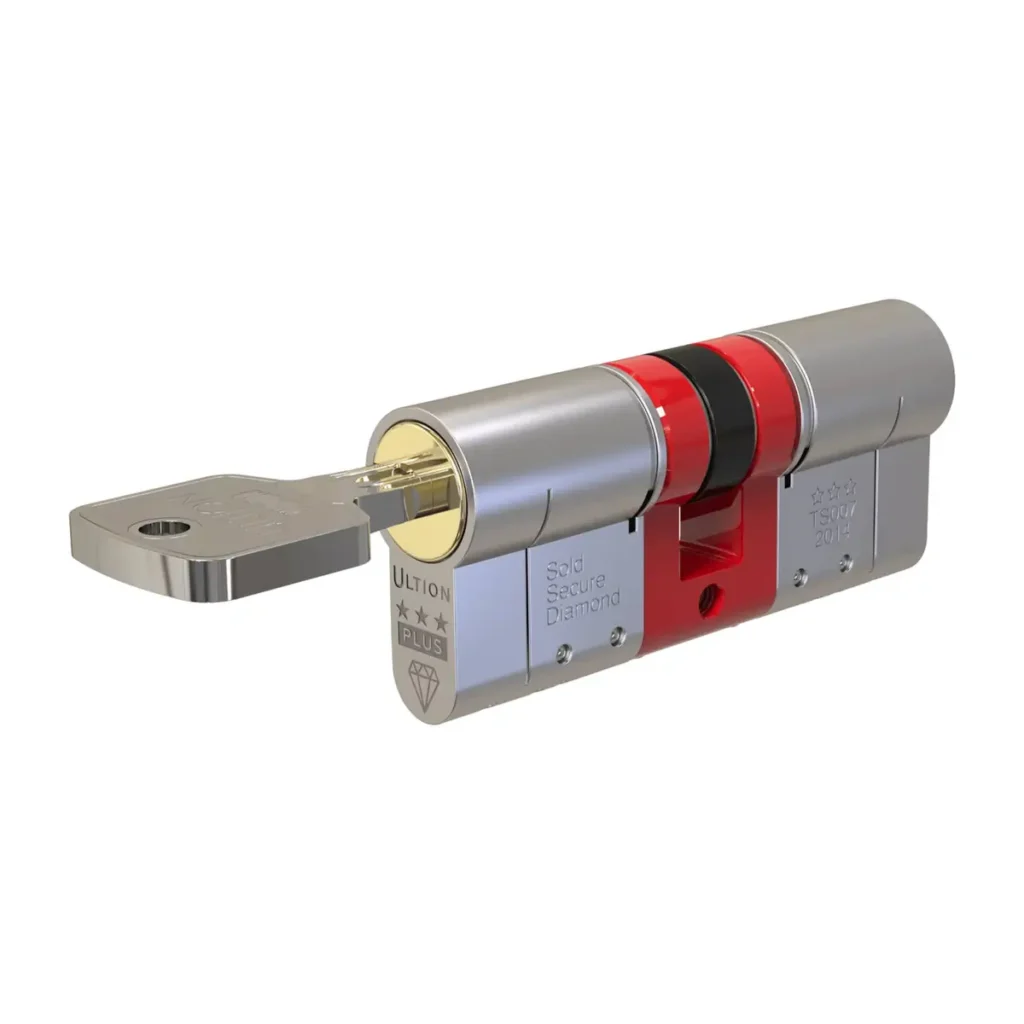
SS312 Diamond is a premium certification that exceeds TS007 3-star requirements. Among mainstream locks, Avocet ABS holds SS312 Diamond, and the Ultion Plus was the first lock to pass the updated Sold Secure Diamond 2024 test — the newest version of the standard.
In practical terms: A TS007 3-star lock resists attack for 3+ minutes. An SS312 Diamond lock extends this significantly, offering forensic-level security.
Why It Matters
Most burglars abandon attempts within 3–5 minutes. A premium SS312 lock places your home outside their target window entirely.
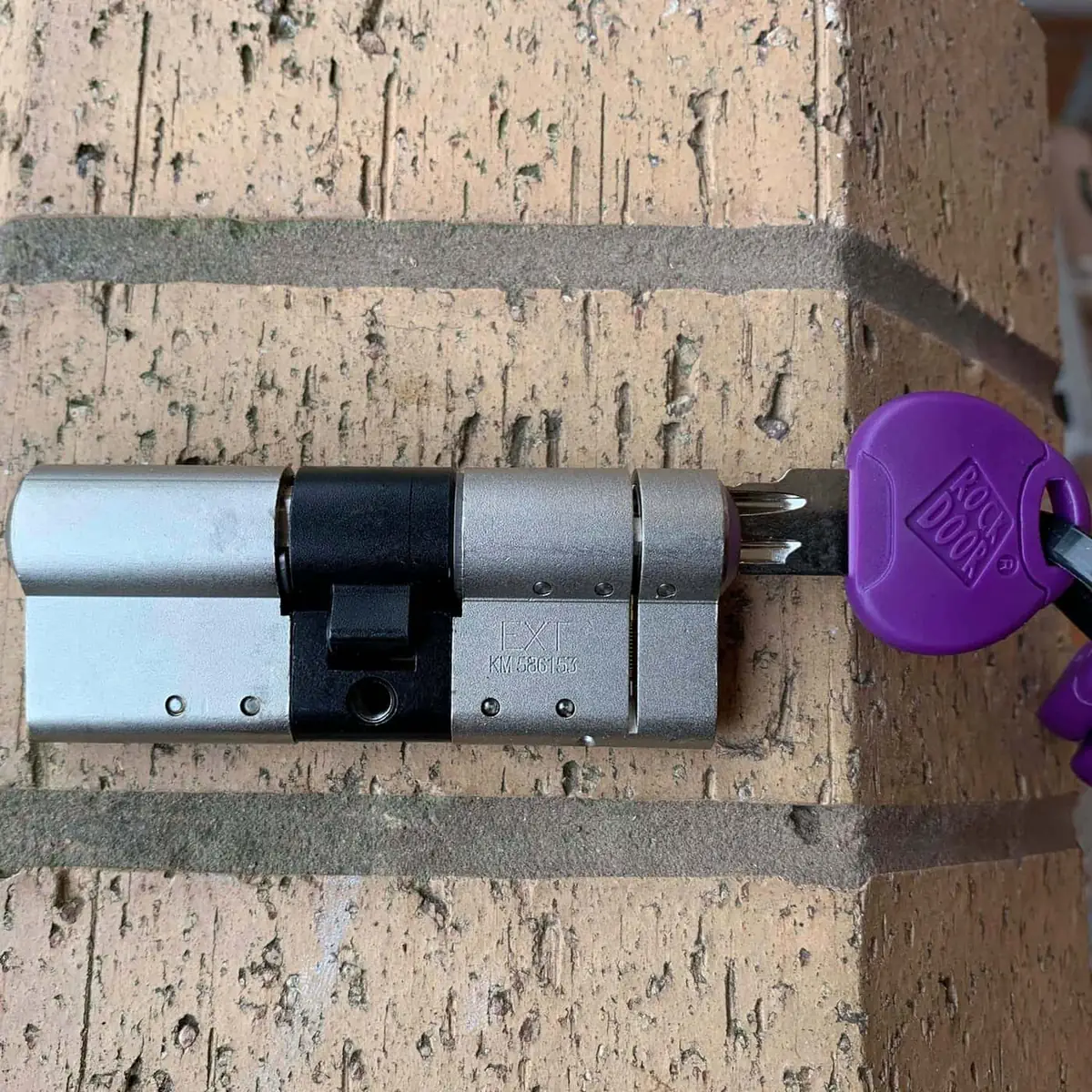
For Rockdoor composite doors, an Avocet lock comes as standard. However, upgrading to Avocet ABS or SS312 Diamond certification provides an additional security layer above the base specification.
A high-security cylinder is just one part of the picture — Secured by Design accreditation also requires laminated glass and a TS008 letterplate.
The Three Top Door Locks Compared
Now that you understand security standards, let’s compare the three leading locks in detail. Each has distinct strengths—and the best choice depends on your priorities: maximum security, anti-snap innovation, or versatility.
Certifications & Security Rating
Avocet ABS is certified to SS312 Diamond—the highest security standard available for residential locks. This certification places it in the top tier of door lock security, exceeding standard TS007 3-star requirements.
Key Features:
- SS312 Diamond certified (highest UK residential standard)
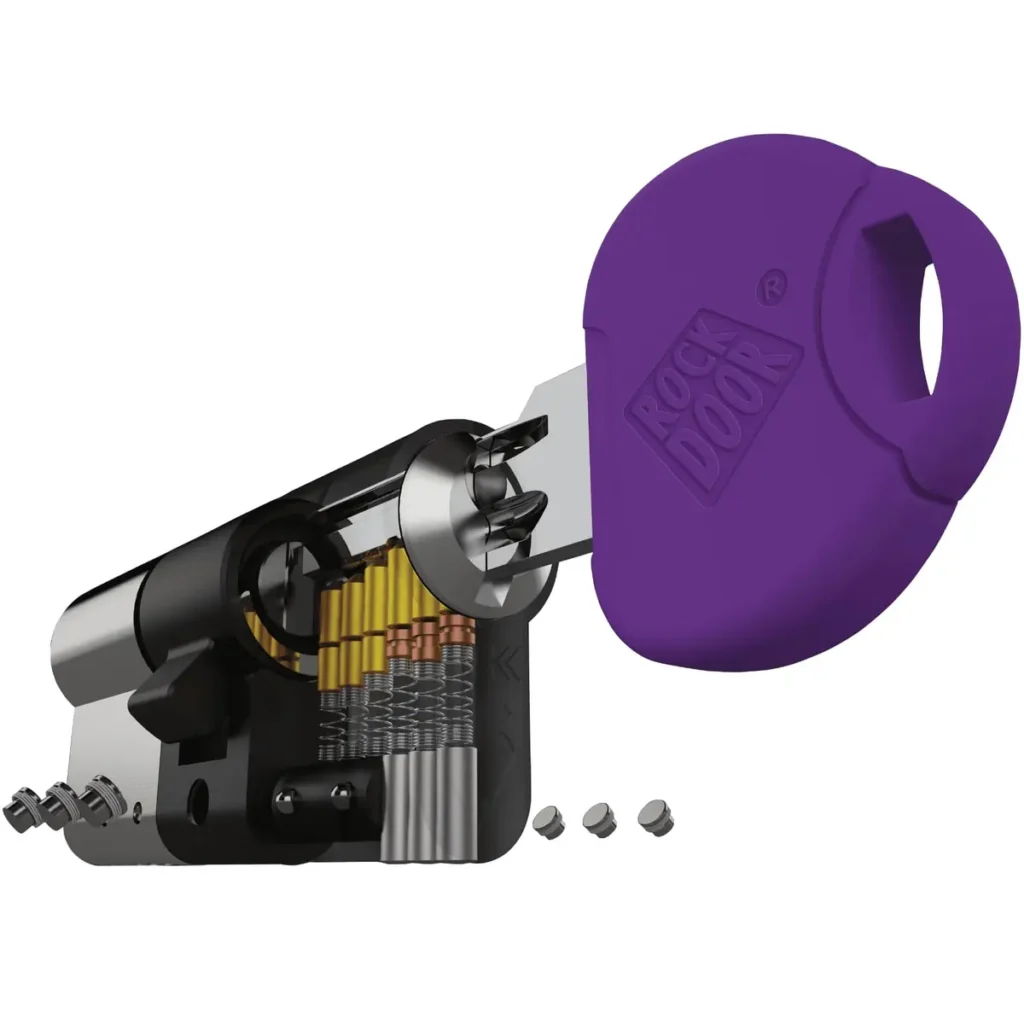
- Anti-snap cylinder: Breaks at the shear line, preventing full cylinder removal
- Anti-pick & anti-drill: Hardened steel components resist forced entry
- Mushroom pins: Advanced locking mechanism prevents manipulation
- Bi-directional locking: Operates smoothly from both sides
Real-World Performance
Over 15 years and 2,000+ door installations, Avocet ABS has proven itself in the field. It’s the industry standard fitted on composite doors, and for good reason: burglars recognise it as a significant deterrent. The lock’s reputation alone discourages casual break-ins. This is the lock fitted on my own home—when security matters most, Avocet ABS is my choice.
For a detailed look at how the Avocet cylinder works alongside the Winkhaus multipoint lock and aluminium-reinforced frame in a Rockdoor, see our guide to Rockdoor features and technical specifications.
Durability & Longevity
Avocet ABS cylinders are designed to last 10+ years under normal use. The hardened steel construction resists wear, and the anti-snap design means the lock rarely requires replacement due to damage.
Price Point
Avocet ABS typically costs £40–£80 for a high-security cylinder replacement. We stock the genuine Avocet ATK 3-star cylinder used in Rockdoors in our online shop.
Best For
Homeowners prioritising maximum security and long-term value. If security is your primary concern, Avocet ABS is the gold standard.
Ultion Plus Lock — Anti-Snap Innovation
Certifications & Security Rating
Ultion Plus holds TS007 3-star certification and was the first lock to pass the Sold Secure Diamond 2024 test — the Master Locksmiths Association’s newest and toughest cylinder standard. Its ALPS technology also protects against twist and thermal attacks, two methods most locks aren’t even tested against.
Key Features:
- TS007 3-star and Sold Secure Diamond 2024 certified (first lock to pass the 2024 test)
- Ultion’s patented anti-snap design: Unique cylinder profile resists snapping at the shear line
- Reinforced hardened steel: Additional internal components prevent drill attacks
- Laser-cut keys: High precision manufacturing reduces copying risks
- Smooth operation: Designed for ease of use without compromising security
Real-World Performance
Ultion Plus gained prominence following high-profile burglary campaigns targeting lock snapping. Its anti-snap innovation addresses this specific vulnerability head-on. In testing, Ultion cylinders consistently resist snapping longer than standard 3-star locks. Ultion was historically sold mainly through trade channels, but we now stock it in our online shop, so homeowners can fit the same cylinder the trade uses.
Durability & Longevity
Ultion Plus cylinders typically last 8–12 years. The anti-snap design means even if an attacker attempts snapping, the lock remains operational (the cylinder breaks safely, but the lock doesn’t fail completely).
Price Point
Ultion Plus typically costs £60–£90 for a cylinder replacement. We stock the genuine Ultion Plus 3 star cylinder in our online shop, in 35/35 and 40/40, key/key or thumbturn, with next-day delivery available.
Best For
Homeowners who want the newest certification on the market — Sold Secure Diamond 2024 — plus Ultion’s £5,000 registered guarantee. If you want the most heavily-certified aftermarket upgrade available, buy the Ultion Plus lock from our shop.
Yale Platinum Lock — Versatility & Accessibility
Certifications & Security Rating
Yale Platinum holds TS007 3-star certification, meeting modern UK security standards. Yale’s strength lies in versatility and compatibility across multiple door types.
Key Features:
- TS007 3-star certified (standard premium security)
- Modular design: Adapts to various door thicknesses and installation configurations
- Anti-pick & anti-snap: Standard premium security mechanisms
- Wide compatibility: Works with more door types than Avocet or Ultion
- Established brand heritage: Yale’s 160+ year reputation backing the product
Real-World Performance
Yale Platinum performs reliably across diverse installations. Its modular design means it fits a broader range of doors, making it ideal for properties with non-standard door specifications. Performance data shows consistent TS007 3-star resistance across all tested scenarios.
Durability & Longevity
Yale Platinum cylinders typically last 8–10 years. Solid construction and proven materials mean minimal wear under normal use.
Price Point
Yale Platinum typically costs £40–£70 for cylinder replacement. The most affordable of the three, making it attractive for budget-sensitive homeowners.
Best For
Homeowners seeking a reliable, widely-compatible premium lock at the lowest cost. Ideal for rental properties, multi-door installations, or non-standard door configurations where Avocet or Ultion may not fit.
Comparative Summary
| Aspect | Avocet ABS | Ultion Plus | Yale Platinum |
|---|---|---|---|
| Certification | SS312 Diamond (Highest) | Sold Secure Diamond 2024 + TS007 3-Star | TS007 3-Star |
| Anti-Snap | Yes (Shear line break) | Yes (Patented design) | Yes (Standard) |
| Anti-Drill | Yes (Hardened steel) | Yes (Reinforced) | Yes (Standard) |
| Lifespan | 10+ years | 8–12 years | 8–10 years |
| Price | £40–£80 | £60–£90 | £40–£70 |
| Compatibility | Standard | Standard | Wide/Modular |
| Best For | Maximum security | Anti-snap focus | Budget + versatility |
Head-to-Head Comparison Table
The comparison table above provides a quick overview, but security decisions deserve deeper insight. Below, we’ve expanded the comparison to cover the factors that matter most when choosing between these three locks: certification level, real-world accessibility, installation compatibility, and long-term value.
Use this detailed table to cross-reference specific features against your priorities. Are you maximising security? Prioritising anti-snap protection? Seeking ease of purchase? Each column tells a different story.
Key takeaway: Avocet ABS and Ultion Plus both sit in the Diamond tier — Avocet with SS312 Diamond, Ultion Plus as the first to pass the Diamond 2024 test — and both are available in our shop. Yale Platinum wins on affordability and compatibility—making it ideal for multi-door properties or non-standard installations.
The best lock for your home depends on three factors: your security budget, your door type, and whether you’re upgrading independently or working with an installer.
Detailed Comparison Table
| Feature | Avocet ABS | Ultion Plus | Yale Platinum |
|---|---|---|---|
| Certification | SS312 Diamond (Premium) | Sold Secure Diamond 2024 + TS007 3-Star | TS007 3-Star |
| Anti-Snap Protection | Yes (Shear line break) | Yes (Patented design) | Yes (Standard) |
| Anti-Pick | Yes (Mushroom pins) | Yes (Advanced mechanism) | Yes (Standard) |
| Anti-Drill | Yes (Hardened steel) | Yes (Reinforced) | Yes (Standard) |
| Lifespan | 10+ years | 8–12 years | 8–10 years |
| Price Range | £40–£80 | £60–£90 | £40–£70 |
| Homeowner Availability | Widely available | Widely available | Widely available |
| Door Compatibility | Standard | Standard | Wide/modular |
| Installation Difficulty | Easy (standard) | Easy (standard) | Easy (standard) |
| Warranty | 5 years (typical) | 5 years (typical) | 5 years (typical) |
| Best For Security | ⭐⭐⭐⭐⭐ | ⭐⭐⭐⭐ | ⭐⭐⭐⭐ |
| Best For Budget | ⭐⭐⭐ | ⭐⭐ | ⭐⭐⭐⭐⭐ |
| Best For Availability | ⭐⭐⭐⭐⭐ | ⭐⭐ | ⭐⭐⭐⭐⭐ |
Installation & Maintenance Guide
Installing a new door lock doesn’t require a professional—but it does require care. This section covers when to DIY, when to call a tradesperson, and how to keep your lock functioning perfectly for years.
Measuring & Installing Your Lock
For a step-by-step walkthrough, see our guide on how to measure and swap a door cylinder lock.
This covers:
- Checking lock protrusion (external/internal)
- Removing and measuring your current cylinder
- Calculating your ideal replacement size
- Safe installation and testing
- Common mistakes to avoid
Time required: 10–15 minutes for experienced DIYers; 20–30 minutes for first-timers.
Maintenance: Keeping Your Lock in Perfect Working Order
Regular Care (Monthly)
- Clean around the lock: Remove dust and debris from the barrel and surrounding area
- Check for stiffness: If your key feels tight, don’t force it—lubricate instead
- Test both sides: Ensure the lock operates smoothly from inside and outside
Lubrication (Every 6 Months)
Use graphite powder lubricant (NOT WD-40 or oil-based products—they attract dirt).
- Apply a small amount to your key
- Insert and remove the key several times
- Wipe away excess powder
- Test the lock operation
Why graphite, not oil? Oil accumulates dust and can jam the lock mechanism. Graphite is dry and won’t degrade your lock’s internal pins.
Annual Inspection
Once yearly, inspect:
- Cylinder condition: No visible cracks or damage
- Retaining screw: Still tight (check with a screwdriver)
- Key condition: No bending or wear
- Lock body: No rust or corrosion (especially on composite doors exposed to weather)
Signs Your Lock Needs Attention
- Key feels loose or rattles in the barrel
- Lock requires excessive force to turn
- Key occasionally sticks or catches
- Visible rust or corrosion
- Cylinder rattles when locked/unlocked
If you notice any of these, contact a locksmith promptly. Early intervention prevents lock failure.
When to Replace Your Lock
Door locks don’t last forever. Replace your lock if:
- Snapping damage: The cylinder has been attacked or damaged
- Age: Beyond 10–12 years of use (wear accumulates)
- Mechanical failure: Internal mechanisms no longer operate smoothly
- Lost keys: You can’t locate all original keys and need new ones
- Security upgrade: You’re moving to a higher-security standard (e.g., upgrading to SS312 Diamond)
A damaged lock is a security liability. Don’t delay replacement.
FAQs — Common Questions About Door Locks
Short answer: Dust, debris, or lack of lubrication inside the barrel.
What our installers see: This is the most common complaint we hear. A stiff lock doesn’t mean it’s broken—it usually means the internal mechanism needs cleaning and lubricating.
Quick fix:
- Try lubrication first: Apply graphite powder lubricant to your key, insert and remove it 5–6 times, then test
- If still stiff: Remove the lock cylinder
- Clean inside: Use a small vacuum or compressed air to remove dust and debris from inside the barrel
- Reseat the mechanism: Sometimes simply removing and reinserting the cylinder resets the pins and improves operation
- Test: Insert your key and turn smoothly
When to call a locksmith: If the lock remains stiff after cleaning and lubrication, the internal pins may be worn or damaged. A locksmith can assess whether repair or replacement is needed.
Short answer: Probably not. This is usually an orientation issue.
What we’ve learned: A customer recently had a lock and they were convinced it was faulty because her key was “stuck.” Turns out, she’d inserted the key horizontally instead of vertically. Once rotated to the correct angle, it came out without issue.
How to check:
- Check your lock’s orientation first — some locks are designed with vertical key insertion, others horizontal. Look at how the key goes in naturally (this is the correct way)
- Ensure the key matches that orientation — don’t force it the “wrong” way
- Turn the key fully to the locked or unlocked position—don’t leave it mid-turn
- Gently pull the key straight out without twisting
- If it resists: Don’t force it. Wiggle gently while pulling, or apply a tiny amount of graphite lubricant around the key shaft
If the key is genuinely stuck:
- Stop pulling immediately (you may break the key)
- Apply graphite powder lubricant around the key
- Wait 10–15 minutes for it to penetrate
- Gently wiggle and pull
- If still stuck, call a locksmith—forcing it risks breaking the key inside the lock
Every 6 months with graphite powder lubricant (not WD-40 or oil).
Why graphite? Oil-based lubricants attract dust and can jam the mechanism. Graphite is dry and won’t degrade internal components. Apply a small amount to your key, insert and remove it several times, then wipe away excess.
No. WD-40 is a penetrating oil, not a lubricant designed for locks.
Why it’s a bad idea:
- Attracts dust and debris inside the barrel
- Can gum up the internal pins over time
- Makes the lock stickier, not smoother
- Difficult to clean out once applied
Use graphite powder instead. It’s designed specifically for locks and won’t cause buildup.
Typically 10–12 years with regular use and maintenance, often longer.
What affects lifespan:
- Usage: Frequently used locks wear faster than rarely used ones
- Maintenance: Regular lubrication extends life significantly
- Environmental exposure: Outdoor locks in wet climates corrode faster
- Key condition: Worn or bent keys can damage internal pins prematurely
Signs it’s time to replace: If your lock becomes stiff, requires excessive force, or feels loose after 10+ years, replacement is usually more cost-effective than repair.
These numbers refer to how the cylinder protrudes from each side of the door.
- 35/35: Equal protrusion on both sides (35mm external, 35mm internal)—most common for balanced security
- 30/70: Longer on the inside (30mm external, 70mm internal)—used when internal security is prioritized
- 35/65, 40/40: Other ratios exist depending on door thickness and security needs
How to measure: See our detailed installation guide for step-by-step instructions.
BS EN 1303 is the legal baseline for most residential doors in the UK.
However: If you want higher security, consider:
- SS312 Diamond: Insurance-approved, superior anti-snap protection
- TS007 2-star or 3-star: Enhanced resistance to forced entry
Choose based on:
- Your location (higher crime areas = higher security recommended)
- Insurance requirements (check your policy)
- Personal preference (budget vs. peace of mind)
For most homeowners, BS EN 1303 is adequate. Upgrade if your insurer requires it or if you live in a high-risk area.
A cylinder is the part where your key goes in. It houses the pins and springs inside. When you turn the key, it moves the internal mechanism to unlock the door.
A cam is a metal piece attached to the cylinder. As the cylinder turns with your key, the cam moves and retracts the latch, which is what holds the door closed.
Lock snapping is when a burglar breaks the outer casing of the lock to expose the cylinder, then uses a tool to break the cylinder and access the locking mechanism. It takes seconds and requires no skill—which is why TS007 anti-snap protection is essential.
TS007 is a British security standard for door locks developed by Secured by Design (police crime prevention). It tests locks against physical attack, drilling, picking, bumping, and snapping. Cylinders are rated 1-Star or 3-Star depending on which protections they have.
A 3-Star lock passes all the tests of a 1-Star lock PLUS it must resist lock snapping attacks without needing protective handles or escutcheons. It’s the standard most insurers require.
SS312 Diamond is one of the highest security standards for locks. It was the first standard developed to fight lock snapping. It’s tested rigorously and is police-approved (Secured by Design). Most locksmiths agree it’s a more challenging test than TS007.
Both are excellent. SS312 Diamond uses heavier tools and more rigorous testing, making it slightly harder to pass. TS007 3-Star is tested over a longer period. Most insurers require TS007 3-Star. SS312 Diamond is the premium choice if you want maximum security.
Security Compliance & Standards
When choosing a door lock, you’ll see references to different security standards. These aren’t just marketing jargon—they represent real levels of protection tested against actual break-in methods. Here’s what you need to know.
The Standards Explained
BS EN 1303 (British Standard)
BS EN 1303 classifies cylinders for locks using an 8-digit coding system, with each digit referring to a particular feature of the product measured against the standard’s performance requirements.
In plain English: This is the baseline UK standard for all residential locks. It tests cylinders against drilling, picking, and basic forced entry. However, it does not test against lock snapping—which is why BS EN 1303 alone isn’t enough.
Bottom line: Legal minimum, but inadequate for modern security.
TS007 (Technical Specification)
TS007 was introduced to increase the security of front entrance doors as a collective industry response to growing concerns that homes are under threat from burglars learning new attack methods specifically targeting cylinders.
TS007 has three rating levels:
1-Star: Meets BS 3621:2017 and BS EN 1303 requirements, covering tests against physical attack, key security, fire resistance, durability, plug extraction, and lock bumping. However, a one-star rating alone cannot pass the TS007 lock standard since it is not resistant to snapping, and must be used in conjunction with two-star-rated door hardware.
2-Star: The two-star rating is not applicable for cylinders but classifies hardware such as door handles, which must be tested to equal the PAS24 cylinder test, and will have enhanced security such as enlarged backplates and robust fixings.
3-Star: A 3-star cylinder must withstand all 1-star requirements but also withstand attacks to PAS24 standards and must resist an attack by snapping without the benefit of security handles or escutcheons.
Important: To achieve the level of security required to resist known attack methods, a minimum requirement of three stars is required. If you fit a 1-star cylinder with a 2-star door handle, you can achieve a TS007 3-star rating.
Bottom line: TS007 is mandatory for proper door security.
SS312 Diamond (Sold Secure)
Sold Secure is owned by the Master Locksmith Association and undertakes independent tests on security products, with Diamond Standard being the highest level that can be awarded to a cylinder.
What it tests: Both TS007 3-star and SS312 Diamond are tested against forced entry, but the TS007 3-star is tested over a more extended period, while a heavier toolset is used when testing the SS312 Diamond, with most locksmiths agreeing that the SS312 Diamond is the more challenging test standard.
Bottom line: Exceeds TS007 3-star. Premium security with the most rigorous testing.
Comparison Table
| Standard | Snap Resistant | Drill Resistant | Pick/Bump Resistant | Insurance Approved | Best For |
|---|---|---|---|---|---|
| BS EN 1303 | ❌ | ✅ | ✅ | ⚠️ Limited | Budget baseline only |
| TS007 1-Star(+ 2-star handles) | ✅ | ✅ | ✅ | ✅ | Budget option (requires compatible handles) |
| TS007 3-Star | ✅ | ✅ | ✅ | ✅ | Standard recommendation |
| SS312 Diamond | ✅ | ✅ | ✅ | ✅ | Maximum security |
Cost Difference — And Why TS007 Minimum Makes Sense
Here’s the reality: the cost difference between BS EN 1303 and TS007 is negligible.
- BS EN 1303: £8–£15 per lock
- TS007 1-Star: £12–£20 per lock
- TS007 3-Star: £30–£50 per lock
- SS312 Diamond: £35–£50 per lock
For just £5–£15 more, you get protection against snapping, lock bumping, drilling, and picking.
For just £20–£30 more, you get the highest tested standard available.
Consider: A basic lock costs you £10 extra but saves you from a £3,000–£5,000 burglary. The math is simple.
For a broader look at what you’ll spend on a complete composite door including locks, hardware and installation, see our composite door prices guide.
Which Standard Should You Choose?
Our recommendation: The lock Euro cylinder must meet the TS007 3-star or SS312 Diamond Approved Standard to have the latest security features.
For most homeowners: TS007 3-Star is the sweet spot.
- Excellent protection against all known attack methods
- Most insurers require it or recommend it
- Affordable price increase over basic locks
- Available in various finishes and styles
For maximum security: SS312 Diamond.
- Rigorous independent testing by the Master Locksmith Association
- Police-approved (Secured by Design)
- Best protection if you live in a high-crime area
- Higher cost but worth it for peace of mind
Budget option: TS007 1-Star only if paired with TS007 2-star handles. Standalone 1-star cylinders do NOT meet TS007 requirements.
What Your Insurer Actually Requires
The TS007 lock standard may be recognised by insurance companies as evidence of the security of PVC and composite front doors.
Check your policy. Most insurers now require TS007 minimum. Some require 3-star specifically. A few high-value homes or high-crime locations may require SS312 Diamond.
Pro tip: Call your insurer before upgrading. They’ll tell you exactly what’s required—and some policies offer small discounts for TS007 or SS312 compliance.
Key Takeaway
BS EN 1303 alone is not enough. Upgrade to TS007 3-Star minimum—or SS312 Diamond if budget allows. For such a small cost difference, modern security standards are a no-brainer investment.
The Bottom Line
You now know more about door locks than most homeowners. Here’s what matters:
Don’t settle for BS EN 1303. The cost difference to upgrade to TS007 is negligible—just £20–£30 per lock. For that small investment, you’re protected against snapping, drilling, picking, and bumping. Your insurer will thank you. Your home will be safer.
For most homes, TS007 3-Star is the sensible choice. It’s tested, proven, and affordable. It meets modern security standards without breaking the bank.
If you want the absolute best? Go for SS312 Diamond. It’s the highest-tested standard available, approved by police (Secured by Design), and worth every penny if security is your top priority.
The hard truth: A lock that costs £20 more today prevents a burglary that costs thousands tomorrow. It’s not an expense—it’s insurance.
Ready to upgrade?
We stock quality TS007-compliant locks that fit most composite doors. Our Rockdoor Lock is a solid, tested option that meets modern security standards without compromise.
Browse our locks: https://www.verysecuredoors.co.uk/product/rockdoor-lock/
Not sure which lock is right for your door? Check your current lock’s specifications, verify your door type, and compare against our range. If you’re still unsure, get in touch—we’re here to help.
Your door security is too important to guess about. Choose wisely.
