What Is a Composite Door?
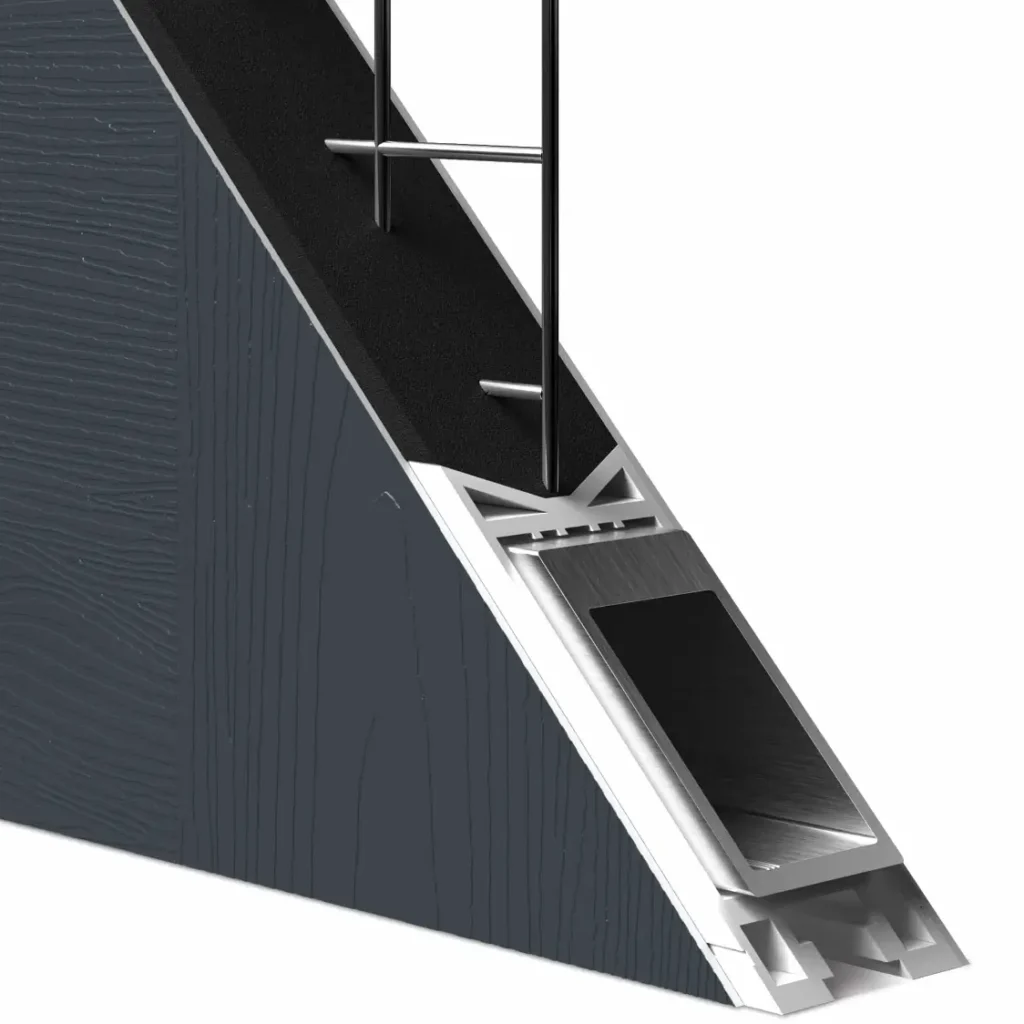
A composite door is an external door built from multiple materials bonded together to form a single, high-performance unit. Unlike traditional doors made from one material alone, composite doors combine a tough outer skin, a reinforced inner frame, and a dense insulating core — creating a door that outperforms timber and uPVC in security, thermal efficiency, and longevity.
The term “composite” simply means “made from more than one material.” It’s this combination that gives composite doors their strength. Where a timber door can rot and a uPVC door can flex, a composite door resists both — while still looking and feeling like real wood.
Composite doors have become the most popular choice for front and back doors across the UK, and with good reason. They offer the appearance of a traditional timber door, the low maintenance of uPVC, and better security than either. For most homeowners, they represent the smartest long-term investment for their home’s entrance.
Benefits of Composite Doors
We’ve been asked hundreds of times why composite doors are worth the investment over cheaper alternatives. After fitting 260–300 doors per year across the Midlands, here’s what we tell every homeowner — based on what we see in practice, not just manufacturer brochures.

Security
Composite doors are built to resist forced entry. The solid core, reinforced frame, and multi-point locking system work together to create a door that is exceptionally difficult to breach. Most composite doors meet PAS 24 security standards — the police-preferred specification for new-build properties in the UK.
Premium options take security further. Rockdoor composite doors are certified to Secured by Design, the official UK police initiative for crime prevention. Every Rockdoor features a multi-point locking system with a 3-star anti-snap cylinder as standard, plus the S-Glaze system that prevents glass from being removed from the door. If you’re comparing lock quality, our guide to the best door cylinder locks covers Ultion, Avocet, and Yale in detail.
From our experience, the single biggest factor in door security isn’t actually the door itself — it’s the cylinder lock. A cheap cylinder can be snapped in under 10 seconds. That’s why every door we fit includes a minimum 3-star anti-snap cylinder, regardless of the brand.

Energy Efficiency
The high-density polyurethane foam core delivers excellent thermal insulation — significantly better than both timber and standard uPVC doors. The denser the foam, the less heat escapes through your door, which keeps your home warmer in winter and reduces heating bills.
Replacing a draughty timber or uPVC door from the 1990s with a modern composite door can make a noticeable difference to heat retention. The improvement is particularly felt in hallways and kitchens where the door opens directly to the outside — areas where cold air rushes in every time you open an older, poorly sealed door.
Durability
A well-manufactured composite door will last 25–35 years with minimal maintenance. Whether GRP, ABS, or high-impact skin, the outer surface won’t rot, warp, or crack like timber — and it’s far more impact-resistant than uPVC panels. Composite doors handle the British weather without issue, from summer heat to winter frost, rain, and UV exposure.
We regularly remove old composite doors that are 15–20 years old during replacements, and the better-quality ones are still structurally sound — they’re being replaced for aesthetics rather than failure. Budget doors with thinner skins, however, can show signs of fading and seal deterioration within 7–10 years. This is why we only supply brands we trust to last.
Low Maintenance
Forget annual sanding, painting, and varnishing. Composite doors need nothing more than an occasional wipe down with warm soapy water. The colour is UV-stable and won’t yellow or fade over time (assuming a quality manufacturer). Hinges and locking mechanisms benefit from a drop of light lubricant — we recommend GT85 or a graphite-based spray — once or twice a year.
That’s genuinely all the maintenance they require. We have customers who’ve had their doors for 10+ years and they still look as good as the day they were fitted.
Aesthetics
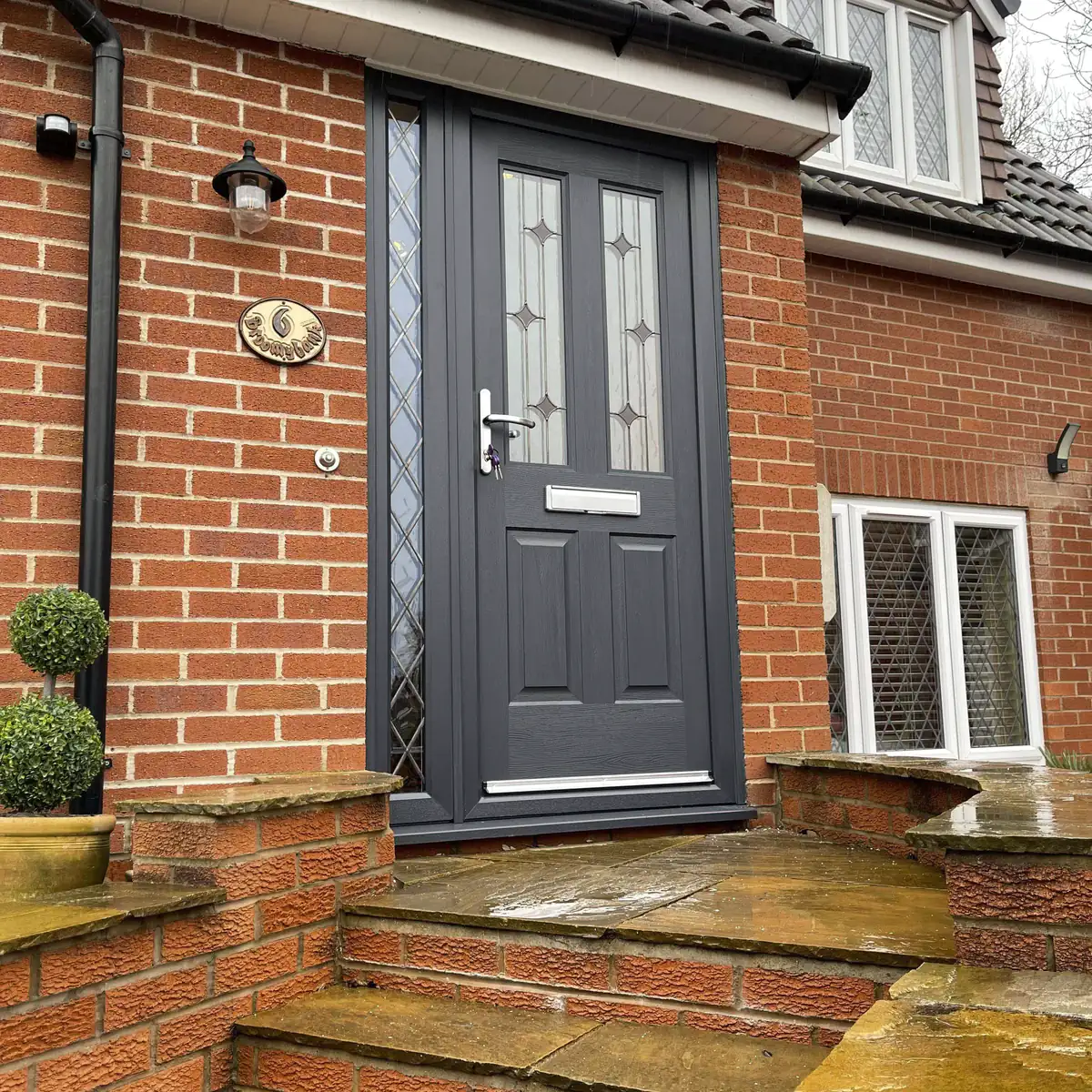
Composite doors offer far more design flexibility than uPVC. Between our Rockdoor and GRP ranges, we offer over 60 styles — from traditional Victorian and Edwardian cottage designs to sleek contemporary doors with full-height glass panels. The GRP skin replicates natural wood grain convincingly, giving you the look of timber without the upkeep.
Agate grey is now our most popular colour, overtaking anthracite grey which dominated for years. With 14 colours available in our Rockdoor range and 20+ in GRP, plus hundreds of glass designs, hardware finishes, and accessories, the customisation options are extensive.
For design inspiration, browse our installation gallery to see real doors we’ve fitted on real homes across the Midlands.
What Are Composite Doors Made Of?
Having fitted over 2,000 composite doors across the Midlands since 2010, we’ve worked with many manufacturers and seen firsthand how construction quality varies. The basic structure of a composite door is consistent, but the materials used at each layer determine how well the door performs over 10, 20, or 30 years.
Here’s what goes into a composite door, layer by layer:
Outer Skin — GRP, ABS, or High-Impact Skins
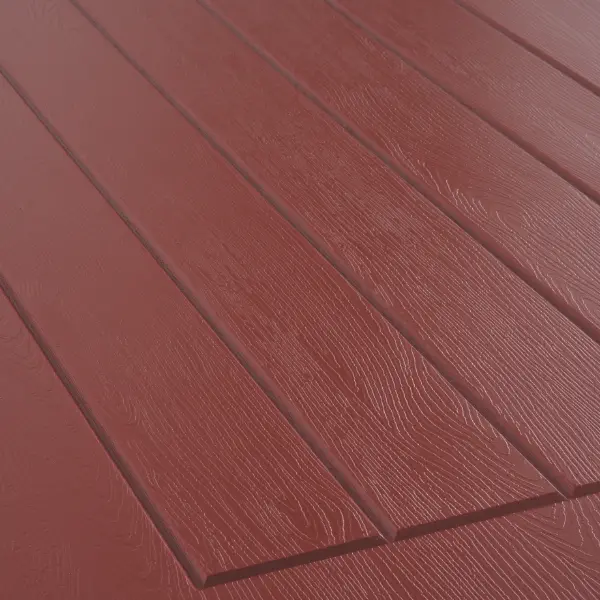
The visible surface of a composite door is its outer skin — a tough, weatherproof shell that won’t rot, crack, or require painting, and is moulded to replicate the grain of natural wood. The type and thickness of this skin varies between manufacturers, and it’s one of the biggest factors in long-term durability.
Most standard composite doors use a GRP (Glass Reinforced Plastic) skin — a proven, weather-resistant material that handles UV exposure and impact well. Brands like Solidor use a 2mm ABS plastic skin, which offers a smooth, consistent finish but is thinner and behaves differently under sustained heat. Rockdoor uses a proprietary 3mm high-impact skin — the thickest on the market — which provides superior impact resistance and UV stability compared to both standard GRP and ABS alternatives.
Thicker skins generally mean better long-term colour retention and greater resistance to surface damage. Budget composite doors with thinner skins can fade or discolour within 5–7 years, particularly in darker colours exposed to direct sunlight. This is one of the less obvious differences between brands — and one worth paying attention to.

Inner Frame — The Structural Core
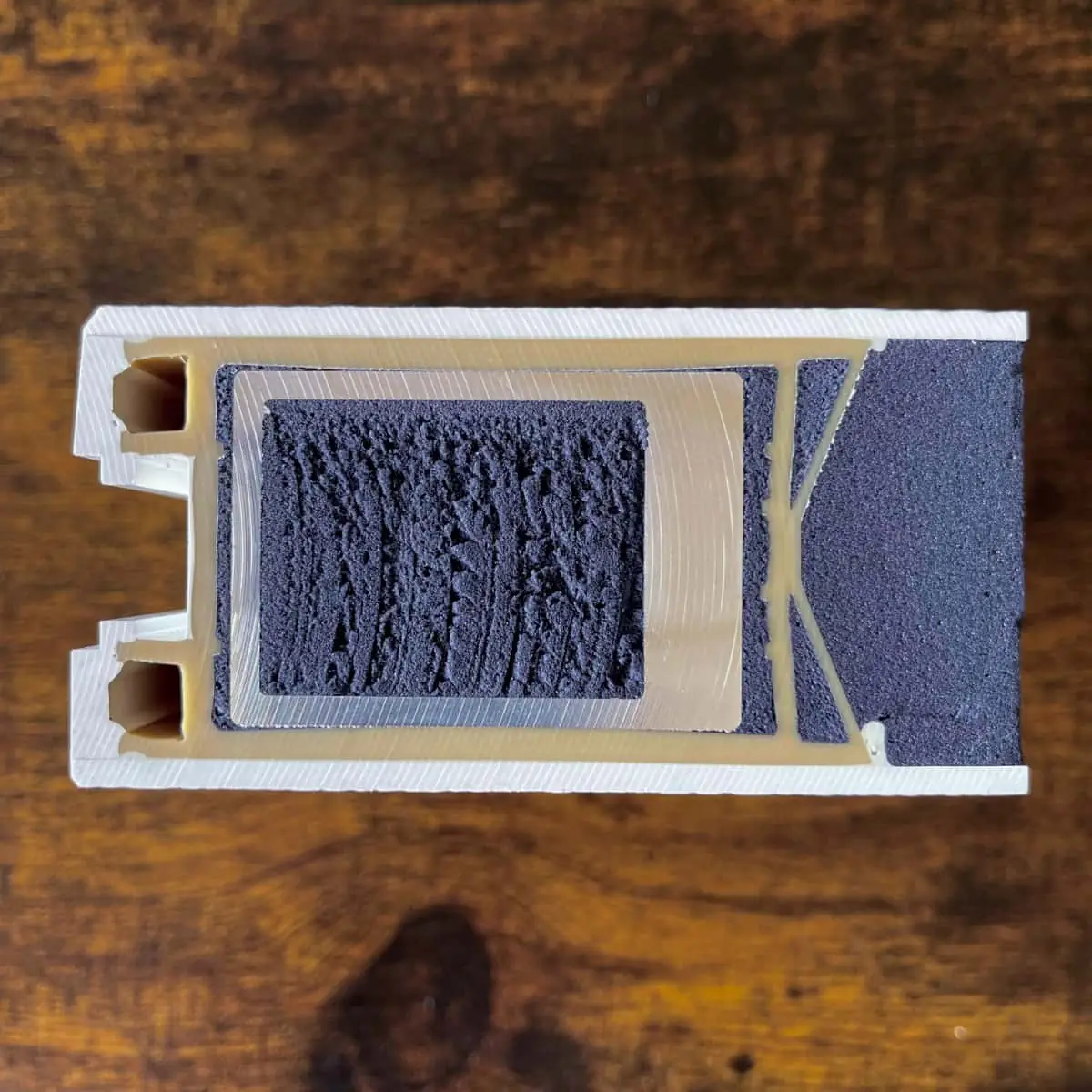
Behind the GRP skin sits the door’s structural backbone. This is where manufacturers diverge most significantly. Standard GRP composite doors typically use a timber stile and rail subframe with uPVC reinforcement. Premium brands like Rockdoor go further — using an aluminium box section inner frame that provides significantly greater rigidity and resistance to forced entry. This is one of the key reasons Rockdoor doors are rated 35% stronger than standard composite doors. For a full breakdown of Rockdoor’s construction, see our technical specification guide.
Insulating Core — High-Density Polyurethane Foam
The space between the skins is filled with high-density polyurethane foam, which provides the door’s thermal insulation and soundproofing properties. This foam core is what gives composite doors their substantial weight and solid feel — and why they insulate far better than hollow uPVC panels. The density of the foam varies between manufacturers, and it matters more than most people realise.
Denser foam means better thermal insulation, better soundproofing, and a stronger, more rigid door overall. Rockdoor uses a high-density CFC-free polyurethane core — one of the densest on the market — which is why their doors feel noticeably heavier and more solid than standard composites. GRP composite doors use a slightly less dense foam that still performs well, but won’t match Rockdoor for sound reduction or thermal efficiency.
Outer Frame — uPVC with Multi-Point Locking
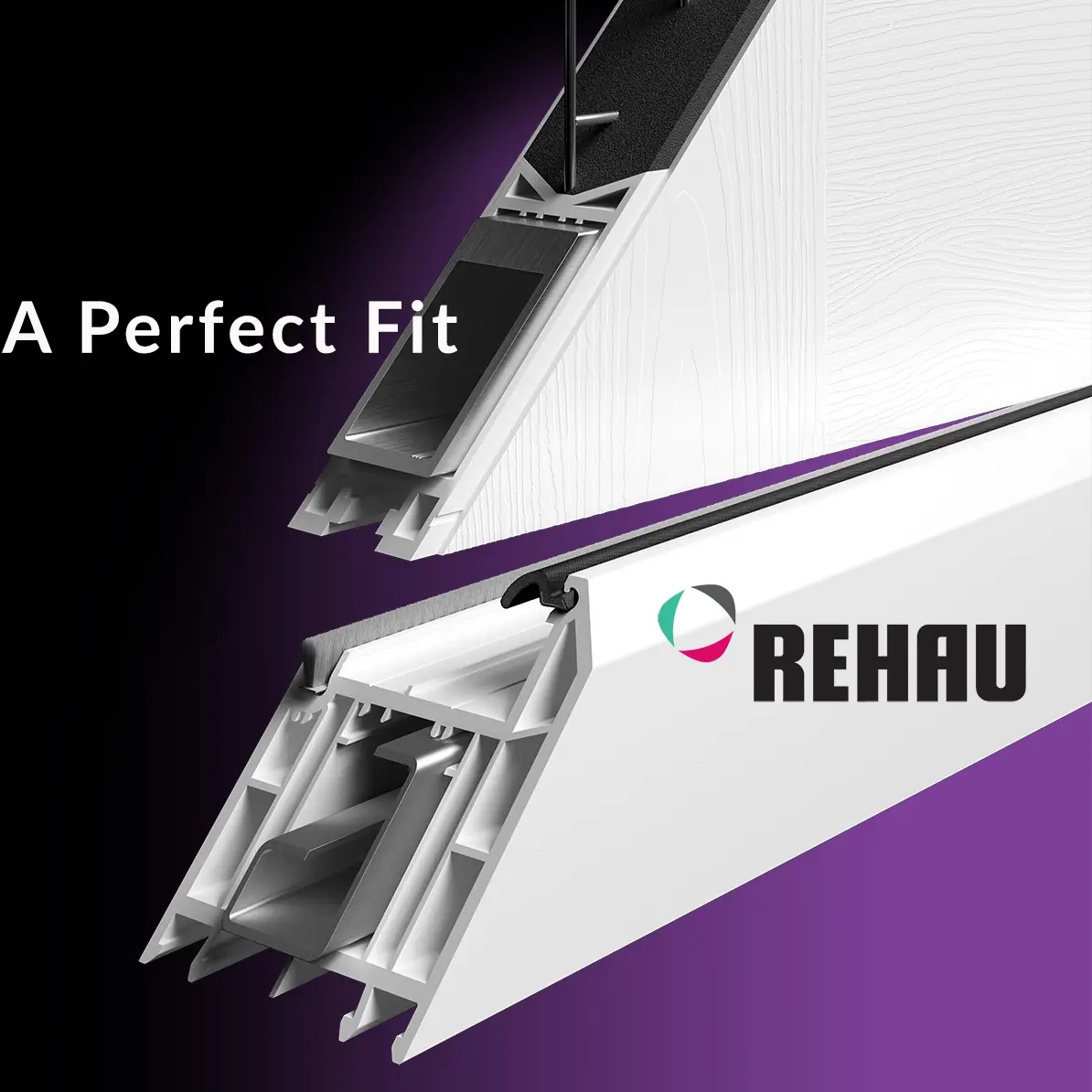
The door hangs within a uPVC outer frame, typically 70mm deep, with multi-point locking hardware built into the frame and door edge. The frame includes weather seals, drainage channels, and adjustable hinges. What many homeowners don’t realise is that the frame profile matters just as much as the door itself — a premium door in a cheap frame is a compromise.
The best composite door manufacturers specify high-quality engineered profiles. Rockdoor and Endurance both use Rehau profiles, widely regarded as among the best in the industry. Solidor uses Kömmerling profiles — another premium German-engineered system. Budget composite doors often use cheaper, unbranded frame profiles that are thinner, more brittle, and less precisely engineered — which can lead to alignment issues and draughts over time.
Reinforcement inside the frame also varies. Rockdoor uses steel reinforcing within their Rehau profiles — on both their Rockdoor and GRP composite door ranges — which provides significantly greater structural strength and resistance to forced entry than plastic reinforcement alone. Steel reinforcement does sacrifice a small amount of thermal performance compared to plastic alternatives, but the strength advantage is considerable, and for a door that needs to keep intruders out, that trade-off makes sense.
Glazing — Sealed Units or Cassette Systems
If your composite door includes glass panels, the glazing method matters for both security and longevity. Rockdoor uses a proprietary system called S-Glaze, where the glass is bonded into the door during manufacture — meaning it cannot be removed from the door.
Standard GRP doors use clip-in glazing cassettes, which are adequate but less secure. For maximum rear security, we often recommend laminated glass as an upgrade, particularly for back doors where break-ins are most common.
Types of Composite Door
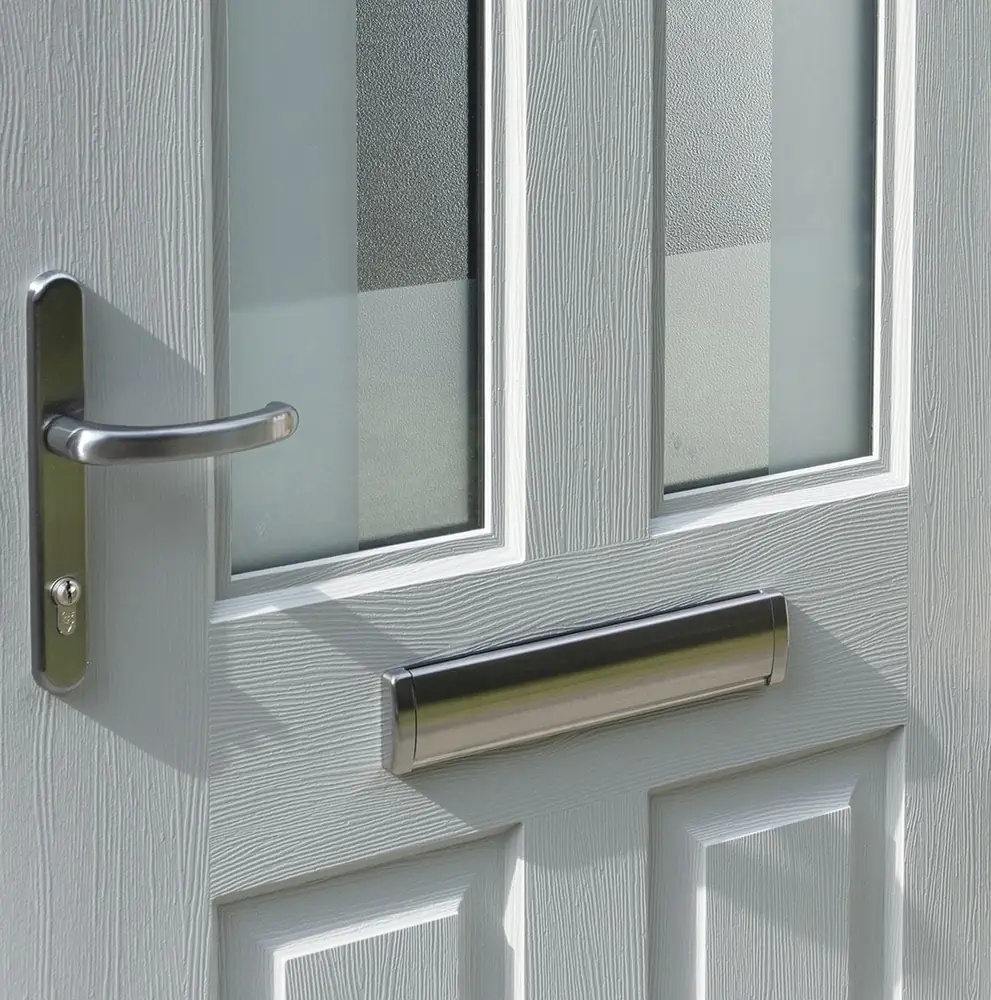
Composite doors aren’t one-size-fits-all. The right type depends on where the door will be installed, how it will be used, and what your priorities are — whether that’s kerb appeal, security, natural light, or ventilation.
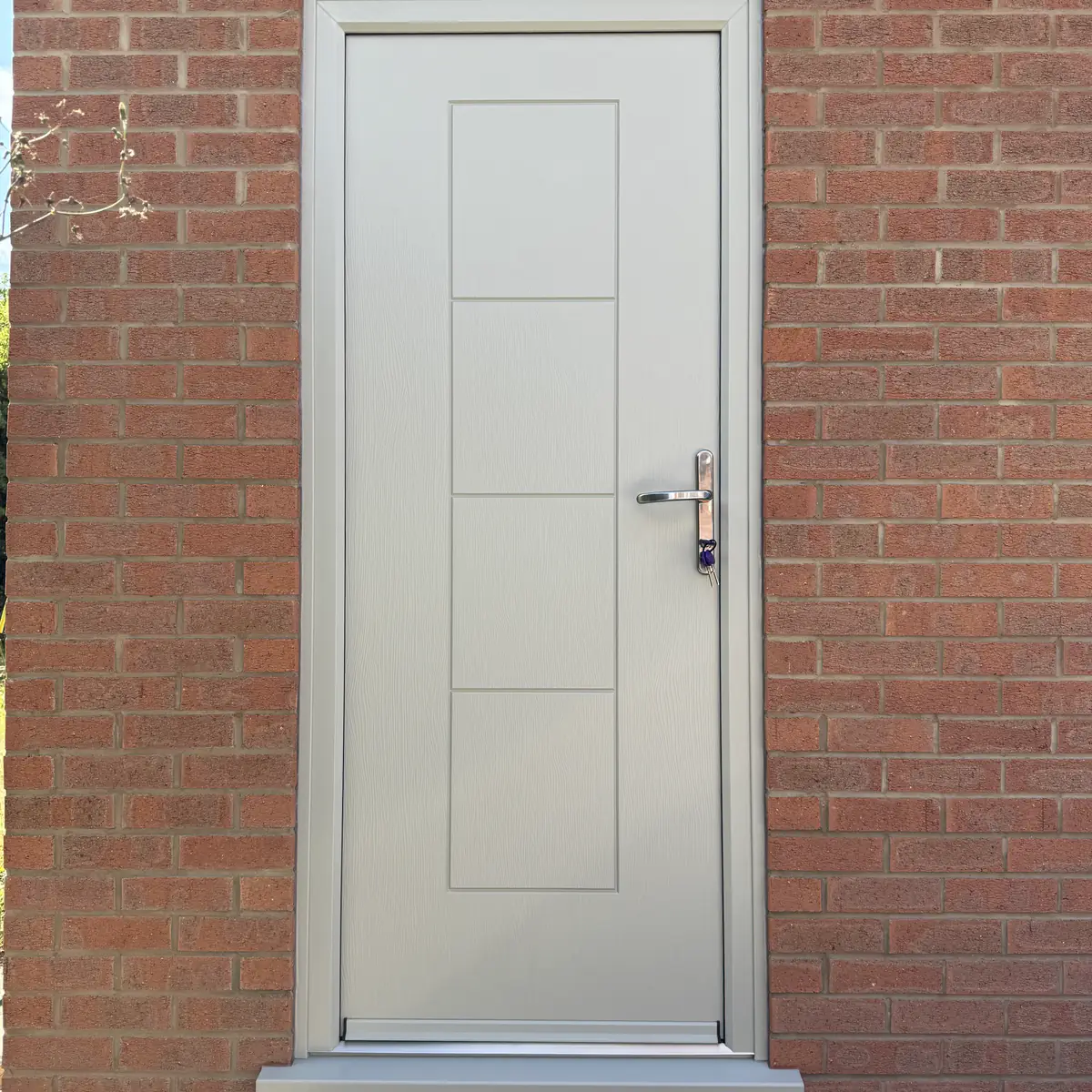
Front Doors
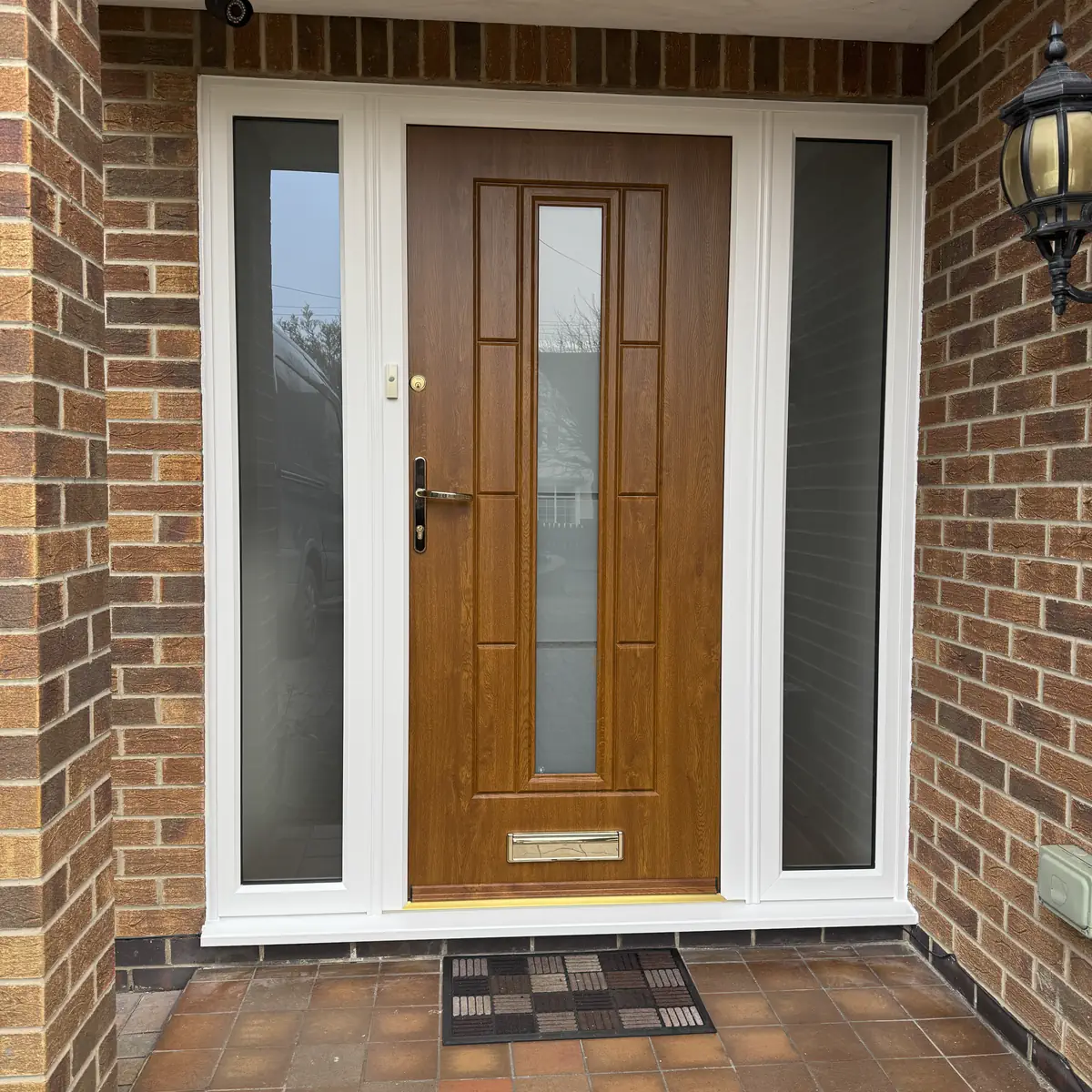
Your front door is the first thing visitors see and the primary entrance to your home. Composite front doors are our most popular product, accounting for the majority of our installations. Homeowners typically prioritise kerb appeal and design here — choosing decorative glass panels, sidelights, and premium hardware like stainless steel bar handles.
Popular styles include the Rockdoor English Cottage for period properties and the Rockdoor Vogue for contemporary homes.
Back Doors
Composite back doors need to work harder on security. Most residential break-ins in the UK occur through the rear of the property, where doors are less visible from the street. We always recommend the highest security specification for back doors — solid panels or laminated glass, robust locking systems, and if budget allows, a Rockdoor with its steel-reinforced frame and S-Glaze technology.
Our GRP composite doors also make excellent back doors, offering strong security at a lower price point. Around 30% of the doors we fit are GRP, and back doors are where they represent the best value.
French Doors
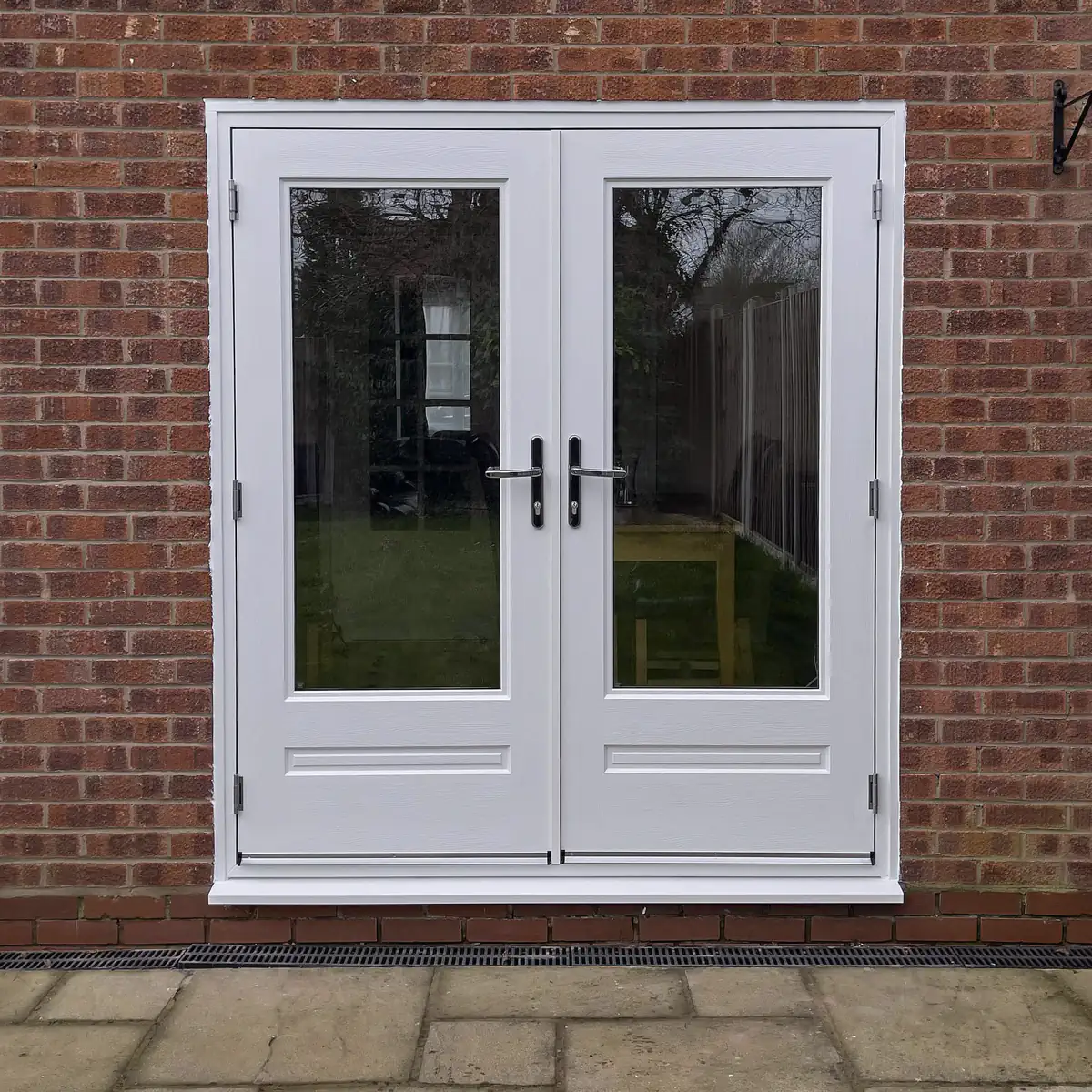
Composite French doors provide a wide opening to gardens, patios, and conservatories. They consist of two doors that open outwards from the centre, typically with full or half-height glass panels for maximum natural light. French doors are ideal where you want the composite door’s security and insulation but need a wider opening than a single door provides.
Stable Doors
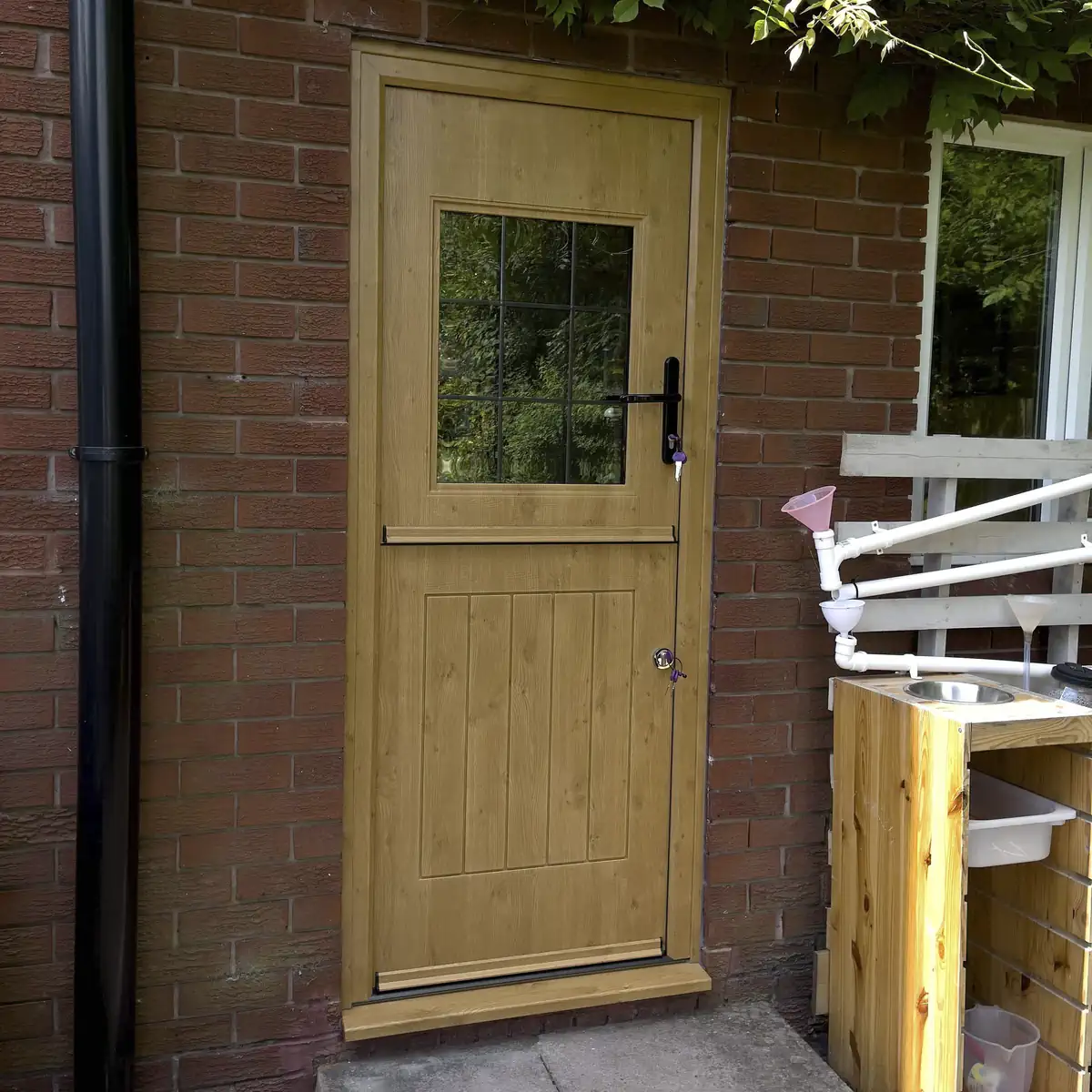
Composite stable doors split horizontally, allowing you to open the top half independently for ventilation while keeping the bottom half closed. They’re perfect for kitchens, utility rooms, and homes with pets or young children. When closed and locked, both halves function as a single secure unit with full multi-point locking.
Composite Doors vs uPVC vs Timber
Choosing the right door material depends on your priorities — security, budget, maintenance, or aesthetics. Here’s how the three main options compare based on our experience fitting all three types over the past 15 years.
| Composite | uPVC | Timber | |
|---|---|---|---|
| Security | Excellent — solid core, multi-point locking, PAS 24 as standard | Moderate — hollow panels, can flex under sustained force | Good — solid, but relies on quality locks and frame |
| Energy Efficiency | Excellent — dense foam core, superior insulation | Moderate — hollow panels, limited insulation | Poor to moderate — improves with upgrades |
| Lifespan | 25–35 years | 15–20 years | 20–30 years with regular maintenance |
| Maintenance | Wipe clean, annual lock lubrication | Wipe clean | Annual sanding, painting, sealing |
| Appearance | Realistic wood grain, 60+ styles, 30+ colours | Limited styles, plastic appearance | Authentic timber, premium look |
| Weight & Feel | Heavy, solid, substantial | Lightweight, hollow feel | Heavy, solid |
| Typical Cost (fitted) | £1,100–£2,500 | £400–£800 | £1,500–£3,000+ |
The Verdict
uPVC is the budget option. It does the job for rental properties, side entrances, or anywhere cost is the primary concern. But uPVC panels are hollow, flex under force, and lack the solid feel and security of composite. We don’t install uPVC doors — not because they’re terrible, but because composite offers so much more for a relatively small price difference.
Timber looks beautiful but demands ongoing commitment. Without regular sanding, painting, and sealing, timber doors warp, crack, and rot — particularly in the Midlands where we get plenty of rain. A neglected timber door can deteriorate within a few years and end up costing more in maintenance than it saved upfront.
Composite gives you the best of both: the appearance of timber, the low maintenance of uPVC, and better security than either. For the vast majority of homeowners, it’s the smartest long-term investment.
Not all composite doors are equal, though. If you’re weighing up premium brands, our Rockdoor vs Solidor vs Endurance comparison breaks down the key differences based on our hands-on installation experience.
Common Composite Door Problems (And How to Avoid Them)
No product is perfect, and we believe in being upfront about the issues composite doors can develop — because most of them are avoidable with the right door, the right installation, and basic maintenance. Here’s what we see in practice.
Swelling in Hot Weather
This is the most common complaint across all composite door brands. On very hot days, the outer skin absorbs heat and the door expands slightly, making it stiff to open or close. This is normal physics — it affects timber and uPVC too. The door returns to normal once it cools.
Think of it like a car parked in direct sunlight on a summer’s day. A black car becomes almost too hot to touch, while a white car stays noticeably cooler. The same principle applies to your front door. A dark-coloured composite door facing south will absorb significantly more heat than a lighter one, and that extra heat is what causes expansion.
How to minimise it: If your door faces south or gets prolonged direct sunlight, our honest recommendation is to choose a lighter colour — agate grey, cream, or white will handle the heat far better than anthracite grey or black. If you’ve got your heart set on a darker colour, it’ll still perform well, but expect some stiffness on the hottest days of the year. Always “throw the handle” when closing (lift the handle fully to engage all locking points) — this prevents the door from resting on the latch alone, which can cause long-term warping.

Fading or Discolouration
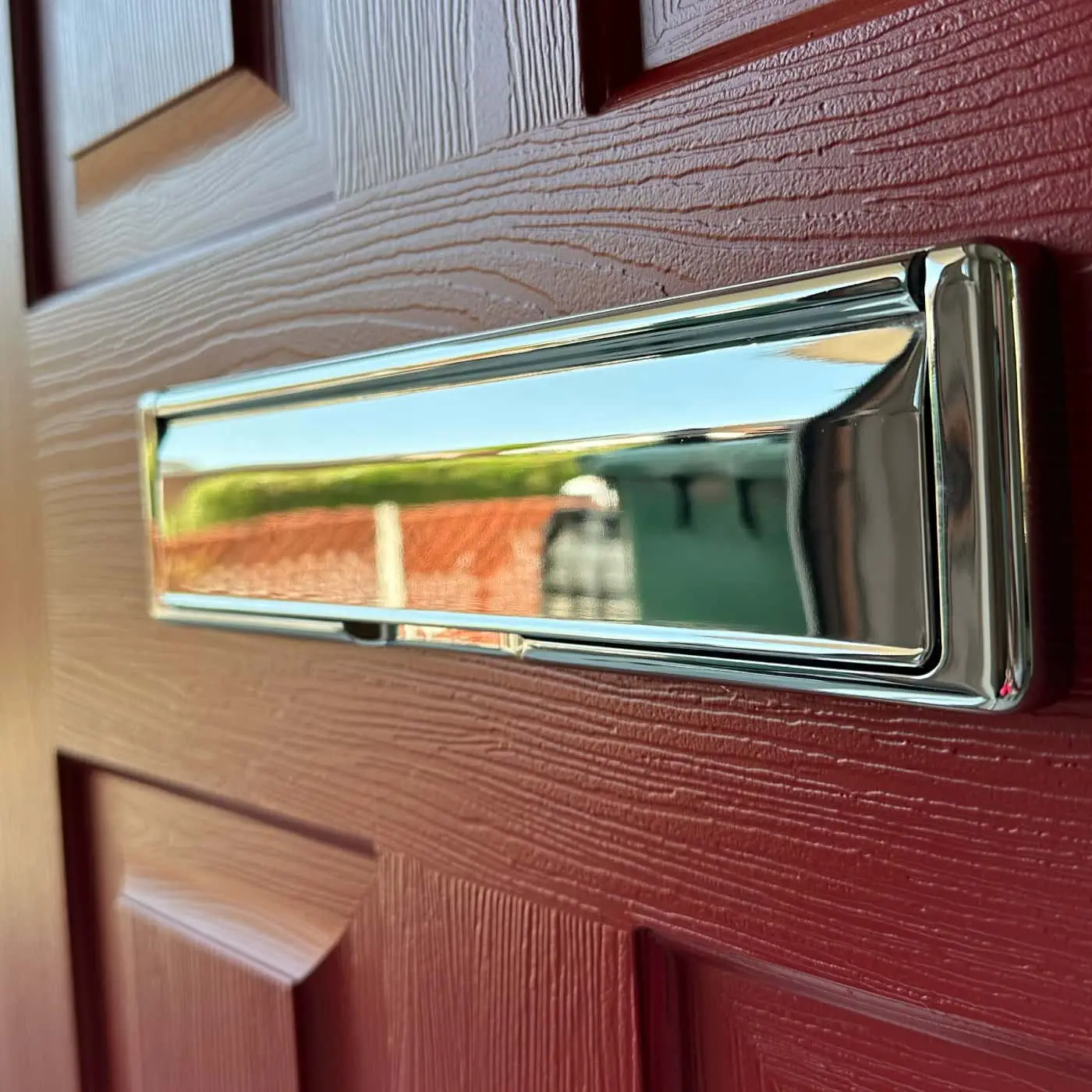
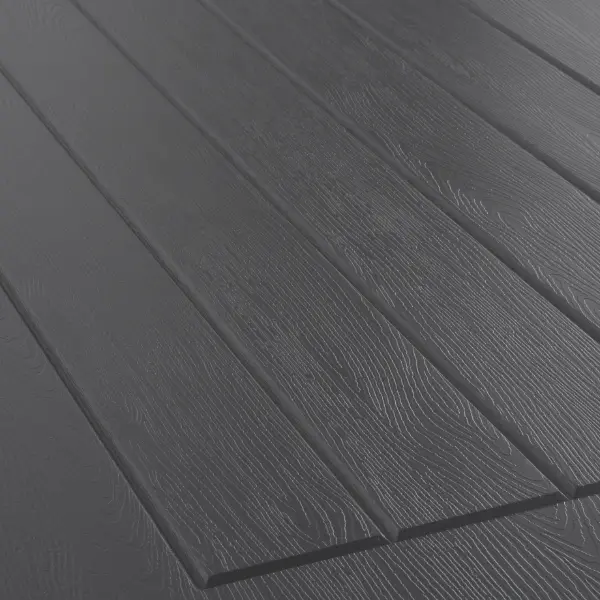
Budget composite doors can fade within 5–7 years, particularly darker colours exposed to UV. Premium brands use through-coloured, UV-stabilised skins that resist fading far better. The red door in the image is one we replaced and as you can see the skin has faded. In over 15 years and 2,000+ installations, we have never seen a faded Rockdoor door — not one. That’s across every colour, including anthracite grey and black, on south-facing properties in direct sunlight. It’s one of the reasons we recommend them so confidently.
How to avoid it: Buy from a reputable manufacturer with a proven track record on colour retention. If you want a dark colour, invest in a premium brand — cheaper doors simply don’t use the same quality of UV-stabilised skin, and the difference shows within a few years.
Sticky Locks
Locks can stiffen over time due to dust, dirt, or lack of lubrication. This is the most common maintenance issue we’re called about — and it’s almost always preventable.
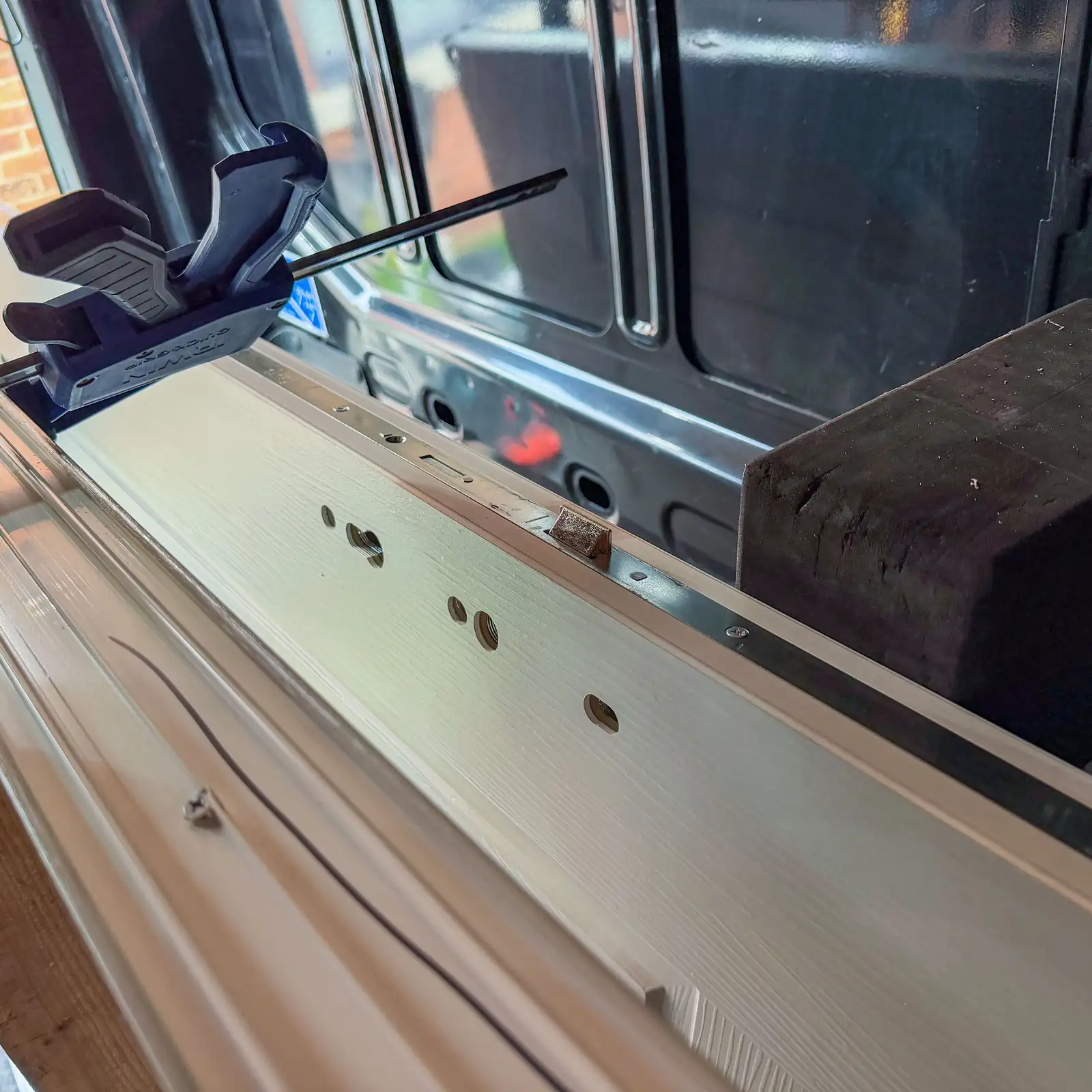
Something most homeowners won’t know: during manufacturing, locking mechanisms are CNC-machined, and the metal swarf (fine shavings) should be blown out with compressed air before the door leaves the factory. In our experience, this step sometimes gets missed. That’s why during every installation, we remove the lock and full locking mechanism from the door to inspect and clean it, if required.
It’s a small detail, but it’s the difference between a lock that operates like butter from day one and one that feels gritty or stiff straight out of the box. Most installers don’t bother — they fit the door as it arrives from the factory. We take the extra step because it’s the standard we hold ourselves to.
How to maintain it: Apply a graphite-based or silicone lubricant to the cylinder twice a year. Avoid WD-40 — it attracts dust and makes the problem worse over time. See our cylinder lock guide for more detail.

Dropped Hinges
Heavy composite doors can gradually pull down on their hinges over time, causing misalignment — but how quickly this happens depends almost entirely on the hinge type, not the door.
The hinges we fit are designed specifically for composite door weight. Rockdoor uses 3D butt hinges that are adjustable in three directions and engineered to hold their position long-term — see our Rockdoor features and specification guide for details. Our GRP composite doors use SFS hinges, which are equally robust and widely regarded as one of the best hinges on the market for composite doors. Both types hold their position exceptionally well and rarely need adjustment.
Where we see problems is with Trojan hinges — common on budget composite doors. They work fine initially, but over time they begin to slip and lose their adjustment. Once a Trojan hinge has dropped, it can’t be reliably re-adjusted — it needs replacing entirely. Flag hinges have similar issues and are more typically found on uPVC doors, where the lighter door weight is less demanding.
How to avoid it: Ask your installer what hinges they use. If the answer is Trojan or flag hinges on a composite door, that’s a red flag. Quality hinges cost the manufacturer a few pounds more per door — but save the homeowner years of frustration.
Draughts
In our experience, draughts around a composite door almost always come down to one of three things:
Poor installation. The frame must be fitted perfectly square — we check this by ensuring the gap between the door and the header is parallel across the top. If it’s wider on one side than the other, the frame isn’t square. Separately, we check for twist — the door slab should pass the frame at the top and bottom at the same time when closing. If one end passes before the other, there’s a twist in the frame, and that gap is where your draught lives. Hooks, latches, and hinge compression all need correct setup too — get any of these wrong and you’ll feel it on a windy day, regardless of how good the door is.
A bowed or warped door. If the door slab has bowed — often from not “throwing the handle” consistently — it won’t sit flat against the seals across its full height, creating gaps that let air through.
Worn or damaged seals. A dragging door can physically rip or displace the rubber seals or brush pile from the frame. Even without damage, seals compress and harden naturally over 5–10 years and should be replaced as a matter of course.
How to fix it: Start with the seals — if they’re compressed, cracked, or torn, replace them (they’re inexpensive). If draughts persist, the frame alignment, hinge compression, or door bow likely needs attention from a professional installer.
The key takeaway: most composite door problems stem from poor installation or lack of basic maintenance, not from the doors themselves. This is exactly why we handle every installation in-house and never use subcontractors — we know the door will be fitted correctly because we fit it ourselves.

Composite Door Colours
Colour choice is one of the most enjoyable parts of choosing a new composite door — and getting it right makes a huge difference to your home’s kerb appeal.
From the 260–300 doors we fit each year, anthracite grey is the runaway favourite, followed closely by agate grey. These two colours dominate because they complement virtually every property type — from red brick terraces to modern renders and stone-built homes. Black, chartwell green, and cream remain popular traditional choices, while duck egg blue and sage green have grown steadily over the past couple of years.
Our Rockdoor range offers 14 colours, while GRP composite doors are available in 20+ colours. Rockdoors include the option for dual colour — a different colour inside to match your interior décor. If you want to see how specific colours look on real homes in the Midlands, browse our installation gallery.
A word of advice from experience: if your door faces south and gets direct afternoon sun, lighter colours handle UV exposure better over the long term. Dark colours on all quality doors are UV-stabilised, but lighter shades are naturally more forgiving.

Our Composite Door Range
We supply and install two composite door ranges. Between them, they cover every budget, style preference, and security requirement. Around 70% of the doors we fit are Rockdoor, with the remaining 30% being GRP.
Rockdoor — The UK’s Most Secure Composite Door
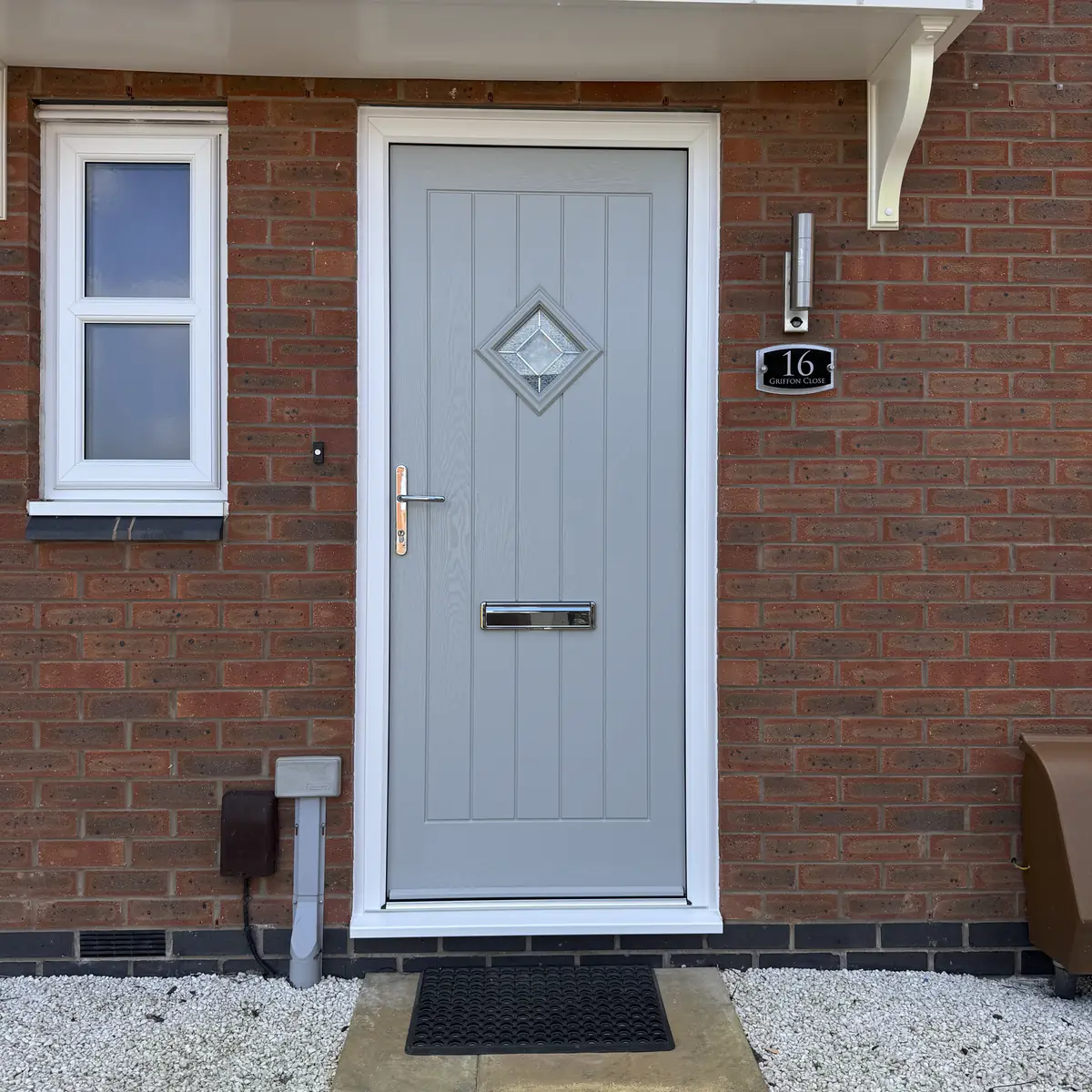
Rockdoor has been our primary product since we started in 2010, and there’s a reason for that. No other composite door on the market matches Rockdoor’s combination of security, build quality, and longevity.
Every Rockdoor features an aluminium box section inner frame (not timber like standard composites), a steel-reinforced outer frame, S-Glaze sealed glazing that can’t be removed from outside, a high-density CFC-free polyurethane foam core, and a 3-star anti-snap cylinder lock as standard.
Rockdoor is Secured by Design certified — the official UK police security accreditation — and PAS 24 tested. They come with a 10-year manufacturer’s guarantee, though in our experience they comfortably last 25+ years.
With 30+ door styles, 14 colours, and hundreds of glass and hardware combinations, there’s a Rockdoor to suit every property. Popular styles include the Jacobean for traditional homes, the English Cottage for period properties, the Vogue for contemporary designs, the Newark for maximum privacy, and the Vermont as a versatile all-rounder.
For full technical details, see our Rockdoor features and specification guide.
Our Rockdoor prices start from £1,500 fully fitted including VAT.

GRP Composite Doors — Quality at a Lower Price Point
Our GRP composite doors offer genuine composite performance — solid core, GRP skin, multi-point locking, foam insulation — at a significantly lower price than premium brands. They’re manufactured to a high standard with a polyurethane foam core, 3-star cylinder lock, and a choice of over 30 styles in 20+ colours.
GRP doors are particularly popular as back doors, where they offer excellent security and insulation without the premium price tag of a Rockdoor. They’re also a strong choice for homeowners replacing a tired uPVC door on a tighter budget — the step up in security, feel, and appearance from uPVC to GRP composite is dramatic.
We’re transparent about the differences: GRP doors use clip-in glazing cassettes rather than Rockdoor’s bonded S-Glaze system, and the inner frame is timber-reinforced rather than aluminium. They’re still a significant upgrade over uPVC and budget composites, but if maximum security is your priority, Rockdoor is the better investment.
GRP composite doors start from £1,100 fully fitted including VAT.
Composite Door Prices
We believe in transparent pricing with no hidden costs. Here’s what composite doors actually cost in 2026 — fully fitted, including VAT, old door removal, and all hardware.
| Door Type | Price Range (Fully Fitted) |
|---|---|
| GRP Composite Door | From £1,100 |
| Rockdoor Composite Door | From £1,500 |
| Composite Door with Sidelight | From £1,500 |
| Composite French Doors | From £2,500 |
| Composite Stable Door | From £1,800 |
These are real starting prices for the Midlands, not supply-only prices with fitting added later. Every quote we provide is all-inclusive: the door, frame, glazing, hardware, cylinder lock, fitting, old door removal and disposal, making good, and VAT. There’s nothing extra to pay.
Final prices depend on the brand, style, colour, glass design, hardware (bar handles, letterboxes, knockers), and whether you’re adding sidelights or toplights. Extras can add £200–£1,000 to the base price depending on specification. For a detailed breakdown of what affects composite door pricing, read our complete guide to composite door prices.
Why are our prices competitive? We’re a family business working from home with no showroom, no sales team, and no fleet of vans to maintain. Those savings go directly to our customers. We’ve seen national companies charge more for a uPVC door than we charge for a fully fitted Rockdoor.
We also offer supply-only composite doors for customers outside our installation area or those with their own installer. Supply-only prices are lower, and we deliver UK-wide. Contact us for a supply-only quote
How We Install Your Composite Door
Every installation is handled personally by Jim and Josh — no subcontractors, no outsourced labour. Here’s our straightforward 3-step process.
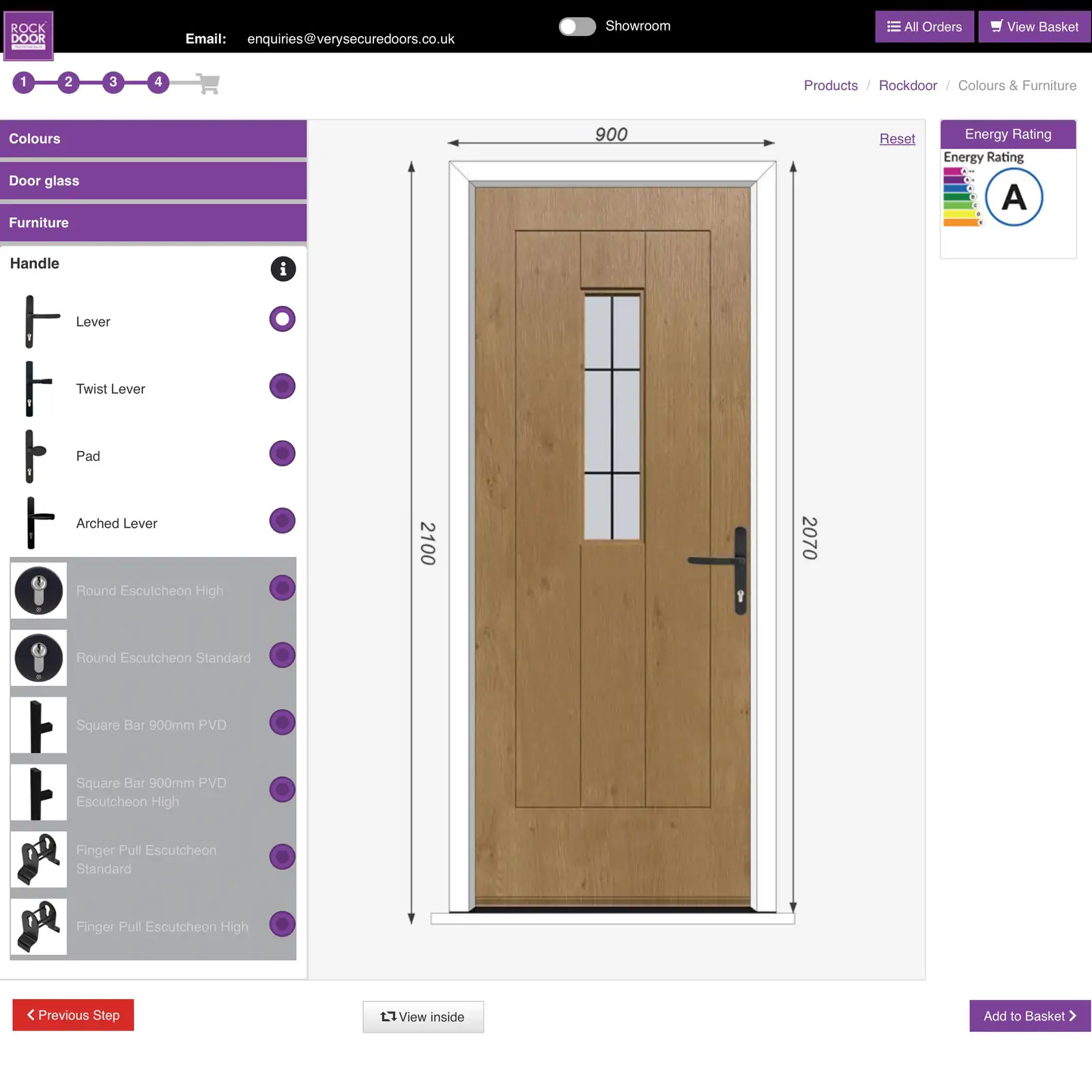
Step 1 — Email Us and Get a Price Within 24 Hours
Email us photos of your existing door (inside and outside) along with what you’re looking for — style, colour, any preferences. We’ll send you a design of your new door and a 100% accurate, all-inclusive price within 24 hours. No home visit needed at this stage, no obligation, and no sales calls. Just a straight answer.
Step 2 — Survey at a Time That Suits You
Happy with the design and price? We’ll arrange a home survey at a time that works for you — including evenings and weekends, 7 days a week. We take precise measurements, check the existing frame and brickwork, discuss any final changes to the design, and confirm your quotation. If anything changes from the original quote, we explain exactly why — but this is very rare, and it’s one of the reasons we ask for photos upfront. By seeing your existing door before we visit, we can give you an accurate price from the start.
Step 3 — Professional Installation in a Single Day
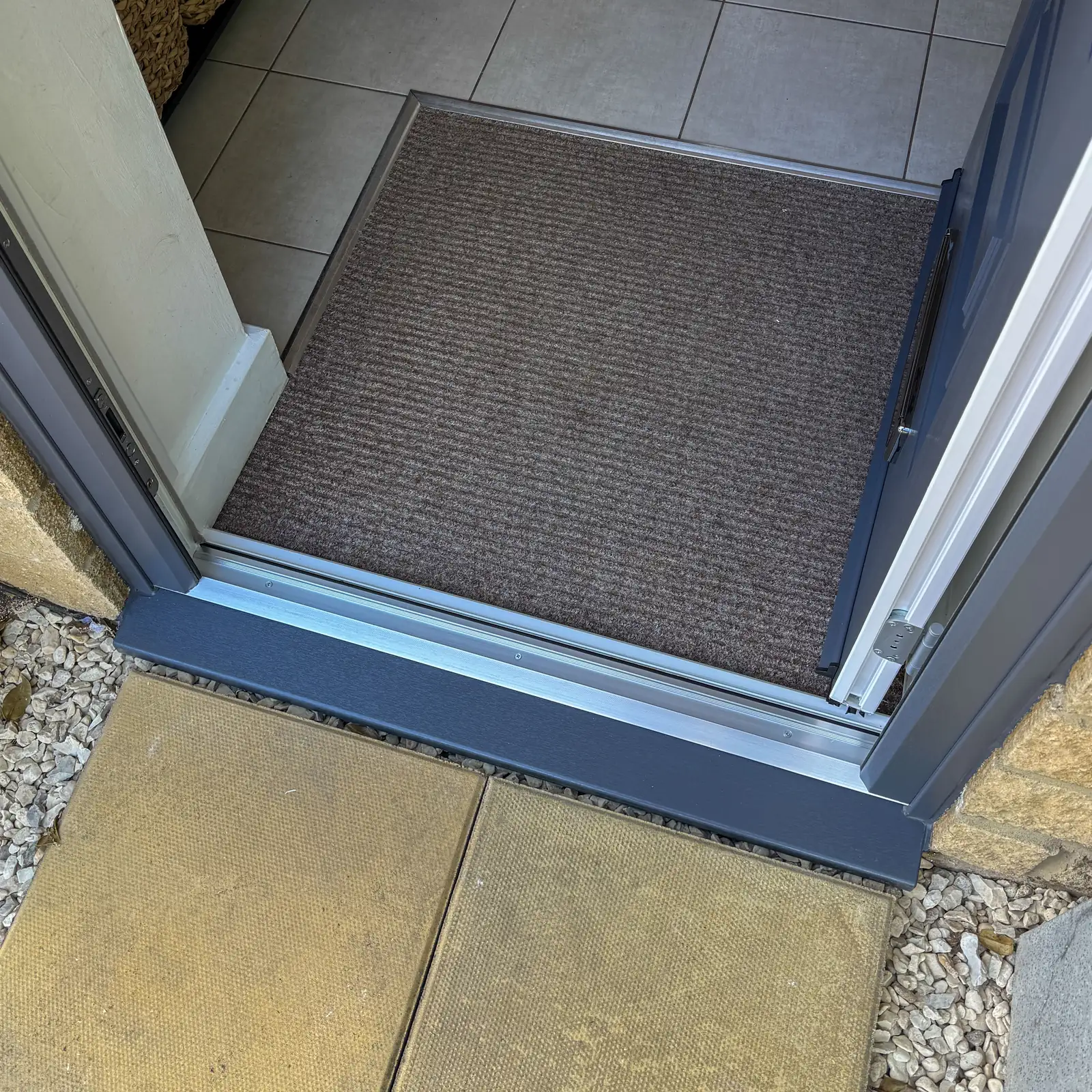
Your door is manufactured to your exact specification, typically taking 3–4 weeks. On installation day, we protect your flooring and surrounding areas, carefully remove the old door and frame, fit the new door precisely, adjust all locks and hardware for smooth operation, test everything thoroughly, remove all waste, and leave your property clean and tidy. We’ll walk you through how the locking system works and answer any questions before we leave.
The whole process — from first email to finished door — takes around 5 weeks. Every installation is CERTASS registered and meets current building regulations.
Why Choose Very Secure Doors
There are dozens of composite door installers across the Midlands. Here’s why over 2,000 homeowners have chosen us since 2010.
Father and Son, Start to Finish
When you deal with us, you deal with Jim and Josh. We answer the phone, we do the survey, we fit the door, and we handle any aftercare. There’s no salesperson quoting one thing and a fitter delivering another. You speak to the people who’ll actually be doing the work — and we take personal pride in every installation. Read more about us →
No Subcontractors, Ever
Every door we fit is fitted by us. We don’t farm work out. This means we control the quality from start to finish. If there’s ever an issue, you call us directly and we come back and sort it. No call centres, no ticket systems, no waiting.
Competitive Prices, No Overheads
We work from home. No showroom rent, no sales commissions, no fleet of branded vans. These are genuine overhead savings that we pass directly to our customers. We’re consistently cheaper than the big national installers, often significantly so — and the quality is higher because you’re getting experienced, specialist door fitters rather than general double-glazing installers.









Areas We Cover
We install composite doors across six Midlands counties from our base in Breedon-on-the-Hill, Derbyshire. Our main installation areas include:
Derby | Nottingham | Leicester | Burton upon Trent | Warwick | Nuneaton & Hinckley | Crewe
We cover Derbyshire, Nottinghamshire, Leicestershire, Staffordshire, Warwickshire, and Northamptonshire — plus surrounding areas. If you’re not sure whether we cover your location, check our full area map or get in touch and we’ll confirm.
For customers outside our installation area, we offer supply-only composite doors with UK-wide delivery. Visit our online shop or contact us for a supply-only quote.
Frequently Asked Questions
A composite door is made from multiple materials bonded together — typically an outer skin, an insulating core, a reinforced inner frame, and a uPVC outer frame with multi-point locking. Not all composite doors are the same though. Some use GRP skins, others use ABS plastic or high-impact skins. Some have foam-filled cores, others use solid timber cores. The materials used at each layer determine the door’s security, thermal performance, and longevity.
Our composite doors start from £1,100 fully fitted including VAT for a GRP composite door, and from £1,500 for a Rockdoor. Final prices depend on the style, colour, glass design, hardware, and whether you add sidelights or toplights. Every quote we provide is all-inclusive with no hidden costs. For a full pricing breakdown, read our composite door prices guide.
Significantly more secure. Composite doors have a solid core that resists forced entry, whereas uPVC doors have hollow panels that can flex and break under sustained force. All composite doors feature multi-point locking systems, and premium brands like Rockdoor are Secured by Design certified — the official UK police security standard. The cylinder lock is equally important — see our best door cylinder lock guide for details.
A quality composite door from a reputable manufacturer will last 25–35 years with minimal maintenance. Budget composite doors may show signs of fading or seal deterioration within 7–10 years. The lifespan depends heavily on the manufacturer, the quality of installation, and basic maintenance such as annual lock lubrication and occasional cleaning.
All external doors — composite, timber, and uPVC — can expand slightly in extreme heat. Composite doors may become stiff to open on very hot days, particularly darker colours that absorb more heat. This is temporary and the door returns to normal once it cools. To minimise this, always “throw the handle” (lift it fully) when closing to engage all locking points, and consider lighter colours if your door faces south with extended direct sunlight.
Based on our experience fitting 2,000+ doors, Rockdoor offers the best combination of security, build quality, and longevity. Their aluminium-reinforced frame, S-Glaze technology, and Secured by Design certification set them apart from other manufacturers. For a detailed brand comparison, read our Rockdoor vs Solidor vs Endurance guide.
Yes. Solid panel composite doors with no glazing are available in both our Rockdoor and GRP ranges. Solid doors offer the highest level of security and privacy, making them a popular choice for back doors and side entrances.
Our Rockdoor range is available in 14 colours and our GRP range in 20+ colours. Anthracite grey is by far the most popular choice, followed by agate grey. Dual colour options are available on Rockdoors only — allowing you to have a different colour on the inside to match your interior. Browse our gallery to see how different colours look on real homes.
Very little. Wipe the door down with warm soapy water a few times a year to keep it clean. Lubricate the cylinder lock and hinges with a graphite-based or silicone spray once or twice a year — avoid WD-40 as it attracts dust. Check weather seals annually and replace them if they become compressed or cracked. That’s it. No painting, sanding, or varnishing required.
Installation itself takes one day — typically 3–4 hours for a straightforward single door replacement. The overall process from initial enquiry to finished installation takes around 5 weeks, which includes design, survey, manufacture, and fitting.
Technically yes, but we don’t recommend it. The outer skin is designed to be maintenance-free and the factory-applied colour is UV-stabilised to last decades. Painting over it requires specialist preparation and exterior composite door paint — standard emulsion or gloss will peel. It’s also worth knowing that painting your composite door will void the manufacturer’s warranty. If you want to change your door’s colour, it’s often better to replace the door entirely.
The core construction is fundamentally different. A composite door has a solid, dense core — foam-filled or solid timber depending on the brand — wrapped in a tough outer skin (GRP, ABS, or high-impact). A uPVC door panel is typically a thin layer of timber sandwiched between polystyrene, housed within a hollow plastic frame reinforced with steel — far less substantial. This means composite doors are heavier, more solid-feeling, significantly more secure, and better insulated, with a far wider range of styles and a more realistic timber appearance.
Very. The dense insulating core provides excellent thermal performance — significantly better than both uPVC and timber doors. Replacing an older door with a modern composite door can noticeably improve heat retention in your hallway and reduce draughts.
Yes. While our primary service is professional installation across the Midlands, we supply composite doors UK-wide for customers who have their own installer. Supply-only orders include the complete door, frame, hardware, cylinder lock, and full manufacturer’s warranty. Contact us for a supply-only quote, or visit our online shop.
All our doors come with the full manufacturer’s warranty — 10 years for both Rockdoor and GRP composite doors. Our installation work is also covered by our own workmanship guarantee and registered through CERTASS, which provides additional consumer protection including insurance-backed guarantees. For Rockdoor, replacement parts are readily available for the lifetime of the door.
Get Your Free Quote
Email us a photo of your existing door and tell us what you’re looking for. We’ll send you a 3D design and accurate, all-inclusive price within 24 hours — no home visit needed, no obligation.